Oxford University Press's
Academic Insights for the Thinking World

Book thumbnail image

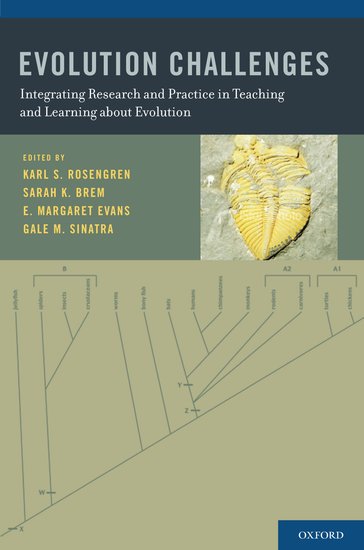
Understanding evolution on Darwin Day

By Karl S. Rosengren, Sarah K. Brem, E. Margaret Evans and Gale M. Sinatra
Today is Darwin’s birthday. It’s doubtful that any scientist would deny Darwin’s importance, that his work provides the field of biology with its core structure, by providing a beautiful, powerful mechanism to explain the diversity of form and function that we see all around us in the living world. But being of importance to one’s field is only one way we judge a scientist’s contributions.

Read More
Book thumbnail image

Emperor Meiji issues new constitution of Japan

This Day in World History
On February 11, 1889, Japan’s Emperor Meiji furthered his plan to modernize and westernize his nation by promulgating a new constitution. The new plan of government created a western-style two-house parliament, called the Diet, and a constitutional monarchy — though one with a Japanese character.

Read More
Book thumbnail image

Nelson Mandela, 22 years after his release from prison

By Kenneth S. Broun
Twenty-two years ago, on the 11th of February 1990, Nelson Mandela walked out of a South African prison, a free man for the first time in twenty-seven years. He immediately assumed the leadership role that would move South Africa from a system of apartheid to a struggling but viable democracy. No one person, not even Nelson Mandela, was solely responsible for this miracle.

Read More
Book thumbnail image

Strategic implications of a “nuclear weapons free world”

By Louis René Beres
Barack Obama still favors the creation of a “nuclear weapons free world.” This high-minded preference is more than infeasible; it is also undesirable. For Israel, in particular, a beleaguered microstate that could ultimately suffer the full fury of this American president’s misplaced idealism, a denuclearization “solution” in any form could not be tolerated.

Read More
Book thumbnail image

Homophobic bullying

Recently I learned of yet another suicide of a young gay may which has been attributed to sustained bullying at school. Phillip Parker was 14 years old when he took his own life on Friday January 20th, 2012. Surely it has to be wrong for any young person to feel so helpless that the only way to be freed from the torment of the bullies is to commit suicide.

Read More
Book thumbnail image

Charles Dickens and garbage

By Talia Schaffer
Charles Dickens was born 200 years ago this week, but he is very much alive in our culture, having become associated with two ways of seeing the world: “Dickensian” is now shorthand for filthy urban misery, but it is also linked to domestic bliss, the cozy armchair with the rubicund host, the plump goose and the fragrant, steaming punch. The man whose attack on the workhouses has resonated for two centuries is the same man who popularized the modern Christmas.

Read More
Book thumbnail image

Denim venom: future products in the style of jweats

By Mark Peters
Word blends are the bunnies of language: they breed like motherfathers. During the recent American Dialect Society meeting in Portland, plenty of blends were singled out. Assholocracy is an apt description of America, especially in an election year. Botoxionist refers to a doctor specializing in the forehead region of vain people. A brony is a bro who loves The Little Pony. That word was voted Least Likely to Succeed, but you can bet similar words will keep sprouting: particularly in the world of fashion.

Read More
Book thumbnail image

Europe: it’s not all bad

This is the very time to remind ourselves of the achievements of the EU, because if we are to make sensible choices about where we go from here, we will need to have a clear idea of both its successes and its failures.

Read More

The Dawes Act: How Congress tried to destroy Indian reservations

How would you feel if the government confiscated your land, sold it to someone else, and tried to force you to change your way of life, all the while telling you it’s for your own good? That’s what Congress did to Indian tribes 125 years ago today when, with devastating results, it passed the Dawes Act.

Read More

Odd man out, a militant Gepid, and other etymological oddities

By Anatoly Liberman
I usually try to discuss words whose origin is so uncertain that, when it comes to etymology, dictionaries refuse to commit themselves. But every now and then words occur whose history has been investigated most convincingly, and their history is worth recounting. Such is the word odd. Everything is odd about it, including the fact that its original form has not survived in English.

Read More
Book thumbnail image

From Personhood to Patienthood

by Harvey Max Chochinov

A senior colleague recently shared with me the trials of going through a bout of cancer treatment. Physicians are not known to make the best patients and the transition he described was not an easy one. At one point he said, “I wanted to hang a sign over my bed saying ‘P.I.P.’ – Previously Important Person.”

Read More
Book thumbnail image

Questions about the Tea Party

In the The Tea Party and the Remaking of Republican Conservatism, Harvard University’s Theda Skocpol and Vanessa Williamson go beyond images of protesters in Colonial costumes to provide a nuanced portrait of the Tea Party. We asked Vanessa Williamson about her research, and what was behind the grassroots protests and national movement.

Read More
Book thumbnail image

Dickens’ Oliver Twist: an excerpt

With the bicentenary of Charles Dickens‘ birth on the 7th February, here is an excerpt from one of his most popular novels, Oliver Twist, part of our Oxford World Classics series. The story of Oliver, who suffers a miserable existence in a workhouse and later escapes to London, is an unromantic portrayal of criminals, gangs, and the cruel treatment of orphans in Victorian London. Here we see Oliver in a vulnerable state in the workhouse before he is made aware of what his future holds.

Read More
Book thumbnail image

Mitt Romney’s IRA

By Edward Zelinsky
On a personal level, I enjoyed the news reports that Governor Romney holds assets worth tens of millions of dollars in his individual retirement account (IRA). These reports confirm a central thesis of The Origins of the Ownership Society, namely, the extent to which defined contribution accounts, such as IRAs and 401(k) accounts, have become central features of American life.

Read More