Oxford University Press's
Academic Insights for the Thinking World

Book thumbnail image

Antiquity and newfangleness

By Andrew Zurcher
The “Februarie” eclogue of Edmund Spenser’s pastoral collection, The Shepheardes Calender, was first published in 1579. It presents a conversation between two shepherds, a brash “Heardmans boye” called Cuddie and an old stick-in-the-mud named Thenot.

Read More
Book thumbnail image

Ben Jonson, Governor

By Ian Donaldson
During his early forties Ben Jonson was invited to act as tutor or “governor” to a couple of notoriously difficult young men. He may have won these commissions on account of his sheer physical strength as much as his equally formidable intellectual qualities.

Read More
Book thumbnail image

Public unions: What’s the big deal?

By Joseph A. McCartin
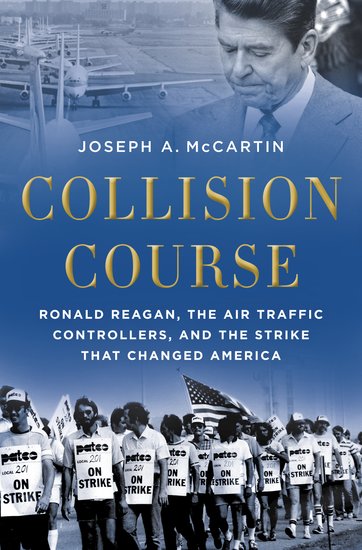
Over the course of the last 30 years, bipartisan support for public sector bargaining has eroded. And it was Reagan’s breaking of the 1981 strike by PATCO, the union of air traffic controllers, that contributed to this shift. More recently, Gov. Scott Walker in 2011 cited that action as an inspiration for his effort to strip government workers of bargaining rights in Wisconsin.

Read More
Book thumbnail image

Fidel Castro becomes Prime Minister of Cuba

This Day in World History
Dressed in army fatigues and surrounded by supporters and reporters, 32-year old Fidel Castro took the oath of office as Cuba’s prime minister on February 16, 1959. He would remain in power for nearly fifty years.

Read More
Book thumbnail image

SciWhys: a cure for Carys?

By Jonathan Crowe
Using science to understand our world can help to improve our lives. In this post and the next, I want to illustrate this point with an example of how progress in science is providing hope for the future for one family, and many others like them.

Read More

Balderdash: A no-nonsense word

By Anatoly Liberman
Unlike hogwash or, for example, flapdoodle, the noun balderdash is a word of “uncertain” (some authorities even say of “unknown”) origin. However, what is “known” about it is probably sufficient for questioning the disparaging epithets.

Read More
Book thumbnail image

An academic librarian without a library

By Michael Levine-Clark
I’m sitting in a dorm room—complete with the uncontrollable blast heat I remember from college — the space that has been my office since June, when the library shut down for a major renovation. Besides having to get used to a somewhat uncomfortable and isolated space, my colleagues and I have had to learn to be librarians without a library building, and our students and faculty have had to learn to use physical collections that are entirely offsite. And the campus community has had to think about the question of what a library is and should be, particularly the question of how to find and use our physical monographs.

Read More
Book thumbnail image

The real lessons of the Cuban Cold War crisis

By John Gittings
This year we shall recall, with a very nervous shudder, the 50th anniversary of the greatest crisis in the Cold  War – and with the knowledge that but for good fortune none of us would be here to recall it at all.

Read More
Book thumbnail image

The Road To Super Tuesday

By Elvin Lim
The Republican party has traditionally been the more conservative party not only in terms of values but also in terms of organization reform. Leaders tend to be slower than their Democratic counterparts in reforming the nomination process, and voters tend to be more deferential to the last cycle’s runner-up to the winner.

Read More
Book thumbnail image

Turning Data into Dates

By Sydney Beveridge
Cupid scours a trove of demographic data to guide his arrows. This Valentine’s Day, let Social Explorer help you map your way to love.

Read More
Book thumbnail image

ENIAC unveiled to public

This Day in World History
On February 14, 1946, officials from the army and the University of Pennsylvania assembled at that institution’s Moore School of Engineering to reveal the results of a secret government project. They unveiled the Electronic Numerical Integrator And Computer (ENIAC), the world’s first general function, programmable electronic computer.

Read More
Book thumbnail image

London Fashion Week is fast approaching

By Emily Ardizzone and Anna Wright
2012 will be a momentous year for the UK capital, and the new collections presented in London in this week will no doubt add to the growing feeling of excitement in the run up to the Olympic Games. London’s Fashion Royalty will all be present, from established design houses such as Aquascutum and Paul Smith, to new and emerging talent in the form of the Central St Martins’ Graduate show.

Read More
Book thumbnail image

Brian Epstein and the quest for a contract

By Gordon Thompson
On a cold winter’s day in early 1962, Brian Epstein and the Beatles huddled together contemplating their failed bid for a Decca recording contract and the bitter aftertaste of rejection that left emptiness in their stomachs. But hunger can feed ambition. Disappointments would ensue, but almost immediately Epstein would be the proverbial right man in the right place at the right time and meet a string of people who were looking for something not quite exactly unlike the Beatles.

Read More
Book thumbnail image

Galileo arrives in Rome for trial before Inquisition

This Day in World History
Sixty-nine years old, wracked by sciatica, weary of controversy, Galileo Galilei entered Rome on February 13, 1633. He had been summoned by Pope Urban VIII to an Inquisition investigating his Dialogue Concerning the Two Chief World Systems. The charge was heresy. The cause was Galileo’s support of the Copernican theory that the planets, including Earth, revolved around the sun.

Read More

(Homo)sexuality in Shakespeare’s Sonnets

The great actor Sir Ian McKellen, who is also well-known as a gay activist, was recently quoted in the press as saying that Shakespeare himself was probably gay. Invited to comment on this, I pointed out that there was nothing new in the idea, which for a long time has been frequently expressed especially because some of his sonnets are clearly addressed to a male.

Read More
Book thumbnail image

Remembering Anti-Lynching Day

On the evening of February 12, 1937, the National Association for the Advancement of Colored People (NAACP) commemorated its twenty-eighth anniversary at Mother AME Zion Church in Harlem. The grand, grey, neo-Gothic structure was recent to 137th Street—it had been completed in 1925—but Mother AME Zion was one of the nation’s oldest black churches, dating to the late 18th century and a reputed stop along the Underground Railroad.

Read More