Slang evolution = lush
In these videos, The Life of Slang author Julie Coleman tells us how — and how fast — slang can spread from one side of the globe to another, and gives us 26 ways of saying ‘groovy’.

Oxford University Press's
Academic Insights for the Thinking World


In these videos, The Life of Slang author Julie Coleman tells us how — and how fast — slang can spread from one side of the globe to another, and gives us 26 ways of saying ‘groovy’.
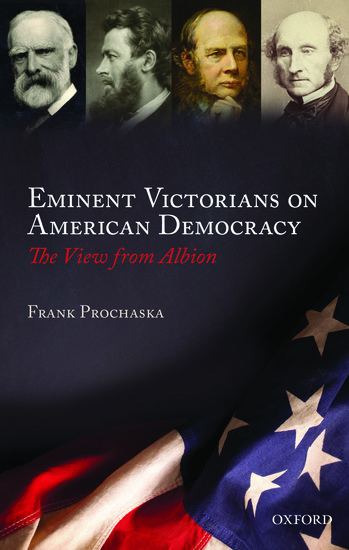
By Frank Prochaska
What would the Founding Fathers think of the candidates in the Republican primaries? If the remaining presidential hopefuls were to be asked this question in a televised debate, the ignorant and dissembling replies would be a sorry spectacle.
Professor Louis René Beres and General John T. Chain (USAF/ret.)
In world politics, irrational does not mean “crazy.” It does mean valuing certain goals or objectives even more highly than national survival. In such rare but not unprecedented circumstances, the irrational country leadership may still maintain a distinct rank-order of preferences. Unlike trying to influence a “crazy” state, therefore, it is possible to effectively deter an irrational adversary.

By Vlatko Vedral
Most of you science buffs out there will, of course, know that science progresses in abrupt jumps, and every once in a while a new theory gets discovered that forces a radical departure from previously held views. I indeed viewed the evolution of science, through what the philosopher Karl Popper called the process of “conjectures and refutations”, as another instance of information processing. But if it’s not unlikely that quantum physics will one day be surpassed, then what confidence should you have in my main thesis? Could it be that the new theory will claim that some other entity – and not a bit of information – is yet more fundamental? In other words, will the post-quantum reality be made up of some other stuff?
By Anatoly Liberman
I borrowed the title of this post from an ad for an alcoholic beverage whose taste remains unknown to me. The picture shows two sparsely clad very young females sitting in a bar on both sides of a decently dressed but bewildered youngster. I assume their age allows all three characters to drink legally and as much as they want. My concern is not with their thirst but with the word dude. After all, this blog is about the origin of nouns, verbs, and adjectives, rather than the early stages of alcoholism.

This Day in World History
Carrying a full load of goods, including 30 tons of ginseng, and finally free of the ice that had choked the harbor for weeks, the Empress of China set out from New York on February 22, 1784 for China. Just months after the British had finally evacuated the city after the Revolutionary War, American merchants were seizing the opportunity afforded by independence to enter the China trade.

By Denis Sampson
‘Once upon a time and a very good time it was there was a moocow coming down along the road.’ It is one of the most celebrated of all fictional beginnings, evoking the essence and tradition of narrative itself, telling a first story to a child, and at the same time the beginning of a very sophisticated kind of biographical fiction, the childhood and youth of an artist.

On February 23rd, Oxford University Press in New York will host four poets reading together on one night. Their poems span a broad range of forms and aesthetics, from collaborative short poems and plainspoken lyrics to a sequence of post-apocalyptic epistles. A wine reception will begin the evening at 6 p.m., with readings from the poets afterward. Oxford University Press associate editor Kristin Maffei will host the event and read a selection from her own poems. If you are a poetry fan/lover please join us. To wet your appetite for the event, we have a few selections of poetry below.
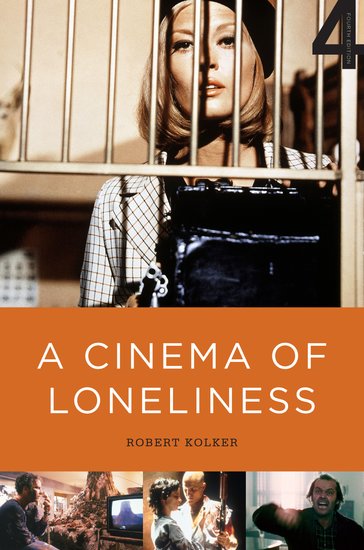
By Robert Kolker
“That’s that,” quoting Ace Rothstein at the end of Casino. I didn’t end the Martin Scorsese chapter on an optimistic note in the fourth edition of A Cinema of Loneliness. There is more than a hint that the Scorsese’s creative energies might be flagging. With this in mind, I went to see Hugo with a lot of skepticism.
This Day in World History
On February 21, 1828, the first Native American newspaper, the Cherokee Phoenix, began publication. Editor Elias Boudinot explained the paper’s purpose—to promote anything that will be to “the benefit of the Cherokees” and to prevent the tribe from “dwindl[ing] into oblivion.” Boudinot concluded his opening editorial by declaring his hope “for that happy period, when all the Indian tribes of America shall arise, Phoenix like, from their ashes.”

It’s Mardi Gras today and revellers may recognize skull and skeleton decorations also used on the Day of the Dead. Santa Muerte is the skeleton saint whose cult has attracted millions of devotees over the past decade. We wanted to ask R. Andrew Chestnut about this folk saint’s impact today.

Now that Series One and Two, plus the Christmas Special, of Downton Abbey have aired in the US and Canada, we’ve decided to compile a reading list for those serious-minded viewers who’d like to learn more about Edwardian England, World War I, life in an aristocratic household, and what lies ahead for the Crawleys and their servants. Warning: Spoilers ahead.
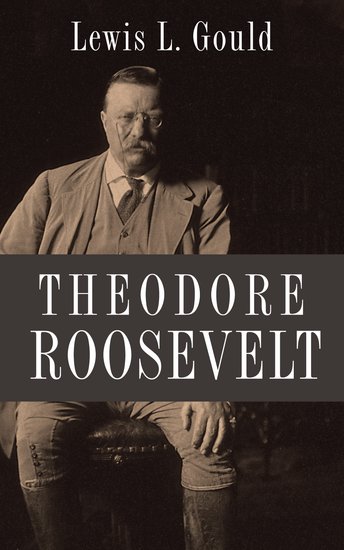
By Lewis L. Gould
When President Obama invoked the name of “Teddy” Roosevelt in his speech at Osawatomie, Kansas, in December, he seemed on safe ground in referring to his predecessor by that familiar nickname. In the world of the talking head and the political pro, everyone knows that Theodore Roosevelt was called “Teddy” by one and all. What better way to establish credentials as a keeper of the presidential heritage than to refer to “Teddy”?

By Mia Gray, Linda Lobao, and Ron Martin
“There is a paradox at the heart of our lives. As Western societies have got richer, their people have become no happier” (Layard, 2005). Layard has not been alone in questioning the relationship between economic growth and well-being. Theoretically, empirically, and politically, there is increasing dissatisfaction with growth as the main indicator of well-being. As such, there is renewed interest in analysing the institutions and conventions through which the economy and society are measured and understood.
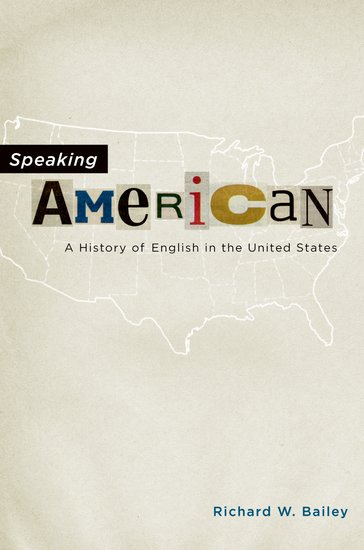
A wide-ranging account of American English, Richard Bailey’s Speaking American investigates the history and continuing evolution of our language from the sixteenth century to the present. Now it’s time to ask yourself how well you really know your American English. We’ve composed a quiz for some Friday fun. Can you speak American?

By Andrew Zurcher
The “Februarie” eclogue of Edmund Spenser’s pastoral collection, The Shepheardes Calender, was first published in 1579. It presents a conversation between two shepherds, a brash “Heardmans boye” called Cuddie and an old stick-in-the-mud named Thenot.