Oxford University Press's
Academic Insights for the Thinking World

  • Language

Monthly etymological gleanings for April 2013

By Anatoly Liberman
Thief again. One comment on thief referred to an apparently admissible Lithuanian cognate. It seems that if we were dealing with an Indo-European word of respectable antiquity, more than a single Baltic verb for “cower” or “seize” would have survived in this group. I also mentioned the possibility of borrowing, and another correspondent wondered from whom the Goths could learn such a word.

Read More
Book thumbnail image

Obrigado por participar da Semana da Biblioteca Nacional

Obrigado a todos que participaram no período de acesso gratuito à Oxford Reference e ao OED pela Semana da Biblioteca Nacional. Tanto o OED quanto a Oxford Reference oferecem algum conteúdo gratuito adicional para o público e ambas estão disponíveis para teste gratuito por um período de 30 dias.

Read More
Book thumbnail image

Gracias por participar en la Semana Nacional de Bibliotecas

Gracias a todos los que participaron en el periodo de acceso gratuito a Oxford Reference y al OED para la Semana Nacional de Bibliotecas. El OED y Oxford Reference ofrecen periodos de prueba gratuitos adicionales y ambos se encuentran disponibles por 30 días. (Las bibliotecas pueden escribir sus solicitudes para periodos de prueba gratuitos a library[dot]marketing[at]oup[dot]com).

Read More
Book thumbnail image

Thank you for participating in National Library Week

Thank you to everyone who participated in the free access period to Oxford Reference and the OED for National Library Week. Both the OED and Oxford Reference offer some additional free content for the public and are both available for 30 day free trials for libraries (Libraries can email free trial requests to library[dot]marketing[at]oup[dot]com).

Read More

Does the lily grow in the valet? Is good ballet bally good?

By Anatoly Liberman
This post is an answer to a letter I received from our correspondent Jonathan Davis. Not too long ago, I mentioned the differences in the pronunciation of niche: in the speech of most Americans it rhymes with pitch, but the rhyme niche/leash can also be heard, and it seems to be prevalent in Britain. Mr. Davis is an Englishman living in Texas and, not unexpectedly, favors the vowel of ee and sh in niche, while those around him prefer short i and ch.

Read More
Book thumbnail image

Celebre a Semana Nacional da Biblioteca com a OUP

Celebre a Semana Nacional da Biblioteca com acesso gratuito ao OED e à Oxford Reference, disponível para todos na América do Norte e do Sul até 20 de abril. Todas as pessoas terão acesso através do mesmo logon, sem necessidade de registro. Estamos liberando essa quantidade inédita de conteúdo da OUP em agradecimento a todo o trabalho vital que os bibliotecários realizam para apoiar seus patronos e em celebração à semana que honra as bibliotecas.

Read More
Book thumbnail image

Celebre la Semana Nacional de Bibliotecas con OUP

Celebre la Semana Nacional de Bibliotecas con acceso gratuito al OED y Oxford Reference, disponible para América del Norte, del Sur y el Caribe hasta el 20 de Abril. Visite cualquiera de los sitios Web y utilice libraryweek como nombre de usuario y contraseña para acceder a todo el contenido que los sitios tienen que ofrecer. Todo el mundo tendrá acceso a través del mismo nombre de usuario y contraseña y no se requiere ningún registro.

Read More
Book thumbnail image

Celebrate National Library Week with OUP

Celebrate National Library Week with free access to the OED and Oxford Reference, available to everyone in North and South America through the 20th of April. Visit either site and use the special username and password to login and access everything the sites have to offer. Everyone will have access through the same login and no registration of any kind is required.

Read More

Will boys be boys?

By Anatoly Liberman
Within a year, two recent articles on the origin of the word boy have come to my attention. This is great news. Keeping a talent of such value under a bushel and withholding it from the rest of the world would be unforgivable. Nowadays, if a philological journal does not come as a reward for the membership in a popular society, its circulation is extremely low.

Read More
Book thumbnail image

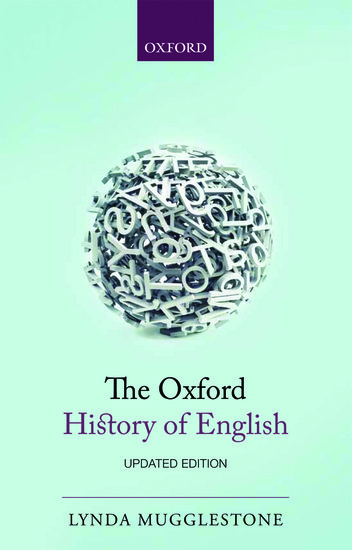
Woman – or Suffragette?

By Lynda Mugglestone
In 1903, the motto “Deeds not Words” was adopted by Emmeline Pankhurst as the slogan of the new Women’s Social and Political Union. This aimed above all to secure women the vote, but it marked a deliberate departure in the methods to be used. Over fifty years of peaceful campaigning had brought no change to women’s rights in this respect; drastic action was, Emmeline decided, now called for.

Read More
Book thumbnail image

The legacies of Margaret Thatcher’s rhetoric

By Richard Toye
The death of Margaret Thatcher has already prompted an outpouring of reflections upon her place in history. One aspect of her legacy that deserves attention is her use of rhetoric and the way in which, to a great degree, she helped reshape the language of British politics as well as the substance of policy. Historians divide about when original Thatcherism really was.

Read More

It is hard to stop thief

By Anatoly Liberman
The title of this post is meant to warn our readers that the origin of the word thief has never been discovered. Perhaps an apology is in order. I embarked on today’s seemingly thankless topic after I received a question from Denmark about the possible ties between Danish to “two” and tyv “thief.”

Read More
Book thumbnail image

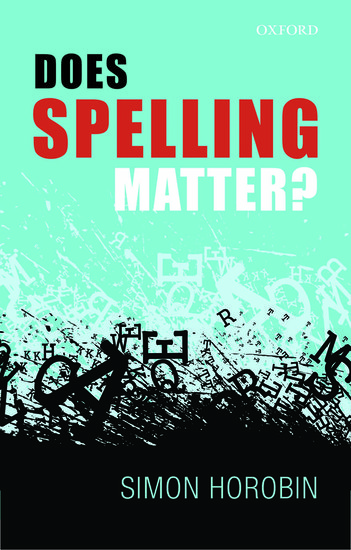
Does spelling matter?

By Simon Horobin
As part of his agenda to improve primary school education, Michael Gove plans to invest more teaching time in driving up standards of spelling; his proposals include a list of 162 words which all eleven-year old children will be expected to spell correctly. As his critics were quick to point out, Gove’s belief in the importance of accurate spelling was somewhat undermined by a number of misspellings in the White Paper itself; Tristram Hunt gleefully suggested that Gove, “of all people,” should be able to spell bureaucracy.

Read More
Book thumbnail image

An Oxford Companion to Game of Thrones

The long-awaited third season of Game of Thrones premiers on HBO 31 March 2013 and Oxford University Press has everything you need to get ready, whether you’re looking to brush up on your dragon lore, forge your own Valyrian steel, or learn about some of the most dramatic real-life succession fights culled from our archives.

Read More

No great shakes? You are mistaken

By Anatoly Liberman
I am saying goodbye to the Harlem Shake. The miniseries began two weeks ago withdance, moved on to twerk and twerp, and now the turn of the verb shake has come round. Reference books say little about the origin of shake. They usually list a few cognates and produce the Germanic etymon skakan (both a’s were short)

Read More