Oxford University Press's
Academic Insights for the Thinking World

  • Language

The Harlem Shake and English etymology

By Anatoly Liberman
American schools dance nonstop. A wild display of “flailing arms and wriggling torsos,” known as the Harlem Shake, is the latest addition to our civilization. High school “kids” writhe eel-like on the floor, chairs, and tables, fall, sometimes break arms and legs, and have fun, which is the unassailable backbone of our educational system. At some places, teachers and principals dance with the kids and thus double the amount of fun.
Read More
Book thumbnail image

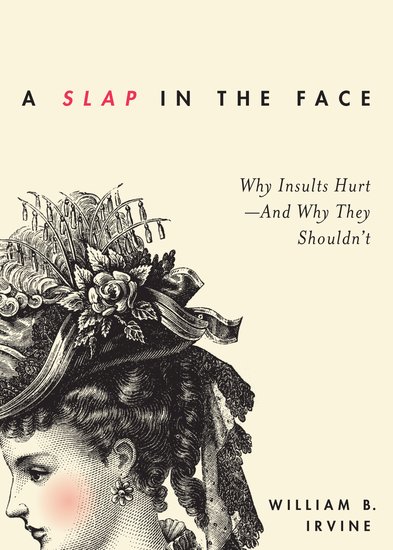
My favorite insult

By William Irvine
When friends heard that I was working on a book on insults, I typically had some explaining to do: “It is not a book of insults; it is a book about insults and the role they play in human society.” They would go on to ask whether, in my research, I had come across any good insults. Indeed I had. In the process of doing research, I had not only read every insult anthology I could get my hands on but categorized the insults I found there.

Read More

Monthly etymology gleanings for February 2013

By Anatoly Liberman
My usual thanks to those who have commented on the posts, written me letters privately or through OUP, and corrected the rare but irritating typos. I especially appreciate comments that deal with the languages remote from my sphere of interest: Arabic, Farsi, Romany, and so forth. But, even while dealing with the languages that are close to my area of expertise (for example, Sanskrit and Frisian), quite naturally, I feel less comfortable in them than in English, German, or Icelandic (my “turf”).

Read More

Out of Shakespeare: ‘Aroint thee’

By Anatoly Liberman
Dozens of words have not been forgotten only because Shakespeare used them. Scotch (as in scotch the snake), bare bodkin, and dozens of others would have taken their quietus and slept peacefully in the majestic graveyard of the Oxford English Dictionary but for their appearance in Shakespeare’s plays. Aroint would certainly have been unknown but for its appearance in Macbeth and King Lear.

Read More

‘Guests’ and ‘hosts’

By Anatoly Liberman
The questions people ask about word origins usually concern slang, family names, and idioms. I cannot remember being ever asked about the etymology of house, fox, or sun. These are such common words that we take them for granted, and yet their history is often complicated and instructive. In this blog, I usually stay away from them, but I sometimes let my Indo-European sympathies run away with me. Today’s subject is of this type.

Read More
Book thumbnail image

‘Dr. Murray, Oxford’: a remarkable Editor

Dictionaries never simply spring into being, but represent the work and research of many. Only a select few of the people who have helped create the Oxford English Dictionary, however, can lay claim to the coveted title ‘Editor’. In the first of an occasional series for the OxfordWords blog on the Editors of the OED, Peter Gilliver introduces the most celebrated, Sir James A. H. Murray.

Read More
Book thumbnail image

National Libraries Day UK

Ever wondered what the Latin word for owl is? Or what links Fred Perry and Ping Pong? Maybe not, but you may be able to find the answers to these questions and many more at your fingertips in your local library. As areas for ideas, inspiration, imagination, and information Public Libraries are stocked full of not only books but online resources to help one and all find what they need.

Read More
Book thumbnail image

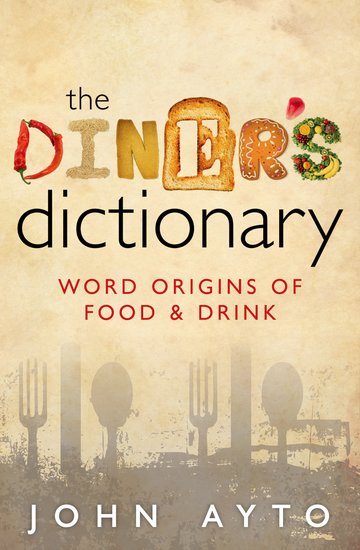
Quiz on the word origins of food and drink

Did you know that ‘croissant’ literally means ‘crescent’ or that oranges are native to China? Do you realize that the word ‘pie’ has been around for seven hundred years in English or that ‘toast’ comes from the Latin word for ‘scorch’? John Ayto explores the word origins of food and drink in The Diner’s Dictionary. We’ve made a little quiz based on the book. Are you hungry for it?

Read More

Monthly etymology gleanings for January 2013, part 2

By Anatoly Liberman
I am picking up where I left off a week ago.
Mare and Mars. Can they be related?
The chance is close to zero. Both words are of obscure origin, and attempts to explain an opaque word by referring it to an equally opaque one invariably come out wrong.

Read More
Book thumbnail image

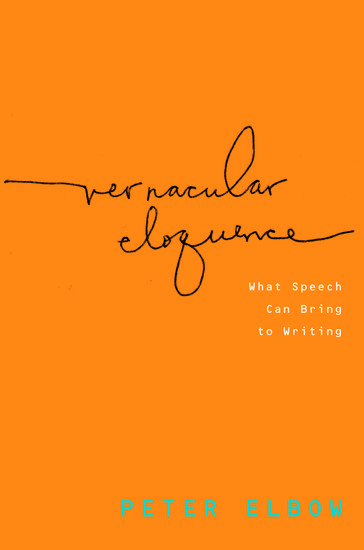
Maybe academics aren’t so stupid after all

By Peter Elbow
People who care about good language tend to assume that casual spoken language is full of chaos and error. I shared this belief till I did some substantial research into the linguistics of speech. There’s a surprising reason why we — academics and well-educated folk — should hold this belief: we are the greatest culprits. It turns out that our speech is the most incoherent. Who knew that working class speakers handle spoken English better than academics and the well-educated?

Read More
Book thumbnail image

Are you still writing 2012 on your tweets?

Twitter is a joke factory, where professional comics and civilian jesters crank out one-liners round the clock. In that joke factory, there are popular models. Every day, new jokes play on phrases such as “Dance like no one is watching,” “Sex is like pizza,” and “When life hands you lemons.” While the repetition can be maddening, I’m impressed by how, inevitably, there’s always another good joke lurking in even the most tired formula.

Read More

Monthly etymology gleanings for January 2013, part 1

By Anatoly Liberman
Last time I was writing my monthly gleanings in anticipation of the New Year. January 1 came and went, but good memories of many things remain. I would like to begin this set with saying how pleased and touched I was by our correspondents’ appreciation of my work, by their words of encouragement, and by their promise to go on reading the blog in the future. Writing weekly posts is a great pleasure.

Read More

Wrenching an etymology out of a monkey

By Anatoly Liberman
Primates have given Germanic language historians great trouble. In the most recent dictionary of German etymology (Kluge-Seebold), the entry Affe “ape” is one of the most detailed. In the revised version of the OED, monkey is also discussed at a length, otherwise rare in this online edition. Despite the multitude of hypotheses, the sought-for solution is not in view.

Read More
Book thumbnail image

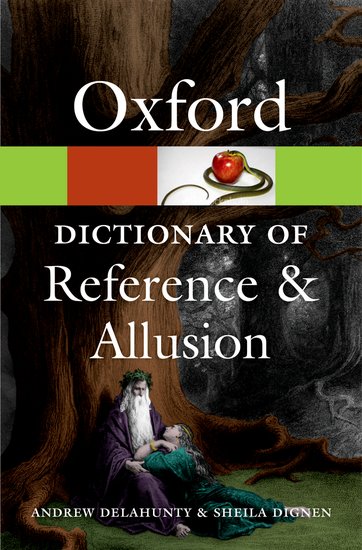
Do you know your references and allusions?

Are you an Athena when it comes to literary allusions, or are they your kryptonite? Either way, the Oxford Dictionary of Reference and Allusion can be your Henry Higgins, providing fascinating information on the literary and pop culture references that make reading and entertainment so rich. Take this quiz, Zorro, and leave your calling card.

Read More
Book thumbnail image

Chaucer in the House of Fame

By Jonathan Dent
By the time Geoffrey Chaucer died in 1400, he had been living for almost a year in obscurity in a house in the precincts of Westminster Abbey, and on his death he was buried in a modest grave in the church’s south transept. The poet’s last few months had not been his happiest. At the close of a decade in which he had gradually retired from the various administrative offices he had occupied under Edward III and Richard II, Richard’s deposition by Henry Bolingbroke in September 1399 had turned Chaucer’s world upside down.

Read More

Drinking vessels: ‘goblet’

By Anatoly Liberman
One more drinking vessel, and I’ll stop. Strangely, here we have another synonym for bumper, and it is again an old word of unknown origin. In English, goblet turned up in the fourteenth century, but its uninterrupted recorded history began about a hundred years later. Many names of vials, mugs, and beverages probably originated in the language of drinkers, pub owners, and glass manufacturers. They were slang, and we have little chance of guessing who and in what circumstances coined them.

Read More