Coffee or tea?
By Anatoly Liberman
It will be seen that the main question about tea is the same as about coffee, namely: How did the form tea conquer its numerous rivals?

Oxford University Press's
Academic Insights for the Thinking World
By Anatoly Liberman
It will be seen that the main question about tea is the same as about coffee, namely: How did the form tea conquer its numerous rivals?

This Day in World History
On December 7, 374, after a quickly arranged baptism and eight days of instruction, Ambrose was consecrated as a bishop. No one, perhaps, was more surprised by this turn of events than the new bishop himself.

By Adrian R Bell and Richard S. Dale
Pilgrimages, saints, shrines, indulgences and miracles were central to western medieval culture and religious experience. Yet, although much has been written, what has often been overlooked by historians is the economic underpinning of medieval religious beliefs and practices.
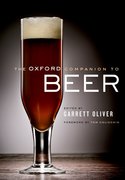
Rice is not the first thing that comes to mind when you are drinking a nice, cold beer. And if you’re a beer connoisseur, even less so. For many years, it has been considered to be an affront to the institution of craft beer making to use rice. However, some beer makers are toying with the use of rice in beer again as homage to the practices that occurred before the Prohibition. This counterculture attitude reflects how beer brewers are looking to the past to evolve current drinkers’ palates. The following excerpt from the The Oxford Companion to Beer goes into detail on exactly how rice is used. Enjoy!

Now that the calendar has turned the page to December, holiday season is in full swing. Aside from the lights and decorations flooding streets and buildings everywhere, this is the season of holiday parties! We will be celebrating The Oxford Companion to Beer through the month of December, and to kick off the month, we are turning our attention to hosting a holiday beer tasting.

On World AIDS Day 2011, we speak with Dr Martin S. Hirsch, MD, FIDSA to find out the latest news on the global fight against AIDS. Dr. Hirsch is editor-in-chief of The Journal of Infectious Diseases, professor of medicine at Harvard Medical School, professor of infectious diseases and immunology at the Harvard School of Public Health, and a physician at Massachusetts General Hospital. -Nicola Burton, Blog Editor
Thanksgiving is all about tradition, and if you are like my family, your dinner will probably be served with wine. But having recently spent some time with The Oxford Companion to Beer and its Editor-in-Chief Garrett Oliver, I am thinking about adding a little twist to the end of the meal.

By Ian Donaldson ‘Of all styles he loved most to be named honest, and hath of that an hundred letters so naming him’, wrote Ben Jonson’s Scottish friend, William Drummond, after Jonson had visited him at his castle at Hawthornden on the River Esk, seven miles south of Edinburgh, in 1618. ‘Honest’ seems a reasonable […]
By Anatoly Liberman
All sources inform us about the Arabic-Turkish home of the word coffee, though in the European languages some forms were taken over directly from Arabic, so that the etymological part of the relevant entry in dictionaries and encyclopedias needs modification. There is a possibility of coffee being connected with the name of the kingdom of Kaffa, but this question need not bother us at the moment. The main puzzle is the development of the form coffee rather than its distant origin.

By Brian Cummings
Like many people I first came across the Book of Common Prayer in a church pew; I must have been in my late teens. But it felt as if I already knew the book: many things in it were already familiar, like the marriage vows ‘for better for worse, for richer for poorer, in sickness and in health, to love and to cherish, till death us do part.’
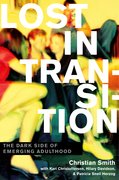
By Christian Smith
There was a time in American culture, only a few generations ago, when religious differences were major. Baptists were not Methodists, and both were definitely not Presbyterians. Catholics were absolutely not Protestant, and Protestants doubted that Catholics were even Christians. Jews and Mormons were whole other species. Non-religious Americans were beyond the pale. And Muslims, Buddhists and Hindus were heathen living in faraway places. The problem with that world, we now see, was the destructive bigotry, misunderstanding, conflict and sometimes hatred that went with it. Let us call that world one of sectarian conflict.
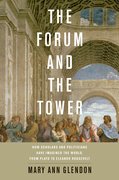
The “need for public servants who can negotiate . . . moral minefields with wisdom and integrity is more urgent than ever,” says Mary Ann Glendon, author of the new book The Forum and the Tower: How Scholars and Politicians Have Imagined the World, from Plato to Eleanor Roosevelt. “It is hard to resist,” she continues, “the conclusion of the classical philosophers that no polity can afford to neglect the nurture and education of future citizens and statespersons.”

By Colin McGinn
This fall OUP will publish three books by me. They are substantial new works of academic philosophy, on unrelated subjects. How did I manage to produce three books in such a short time when one is usually regarded as quite enough by itself?

By Mark Peters
With the arrival of the new Muppet movie, Kermit, Miss Piggy, Beaker, and our other felt friends are everywhere. There’s no escaping Jim Henson’s creations, and few of us would want to (unless the movie happens to suck, which is doubtful, given the stewardship of Jason Segel, who showed major Muppet mojo in the heartbreaking and spit-taking Forgetting Sarah Marshall). It’s a good time to look at the history of the word Muppet, which has some meanings that would make the Swedish Chef bork with outrage.

By Christian Meier
Hesiod and Homer brought order to the world of the gods for the Greeks, describing their genealogical connections, allocating honours, powers, and areas of responsibility among them, and giving them distinct appearances. This is how Herodotus put it.
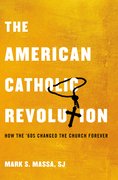
The American Catholic Church of today is a product of many dramatic transformations, especially those that took place in the 1960s. Here is an excerpt from The American Catholic Revolution: How the Sixties Changed the Church Forever where Mark S. Massa recounts some of the practices Archbishop James Francis McIntyre instituted in Los Angeles.