Oxford University Press's
Academic Insights for the Thinking World

  • Arts & Humanities

Book thumbnail image

We also give thanks for beer

Thanksgiving is all about tradition, and if you are like my family, your dinner will probably be served with wine. But having recently spent some time with The Oxford Companion to Beer and its Editor-in-Chief Garrett Oliver, I am thinking about adding a little twist to the end of the meal.

Read More
Book thumbnail image

Honest Ben

By Ian Donaldson ‘Of all styles he loved most to be named honest, and hath of that an hundred letters so naming him’, wrote Ben Jonson’s Scottish friend, William Drummond, after Jonson had visited him at his castle at Hawthornden on the River Esk, seven miles south of Edinburgh, in 1618.  ‘Honest’ seems a reasonable […]

Read More

The phonetic taste of coffee

By Anatoly Liberman
All sources inform us about the Arabic-Turkish home of the word coffee, though in the European languages some forms were taken over directly from Arabic, so that the etymological part of the relevant entry in dictionaries and encyclopedias needs modification. There is a possibility of coffee being connected with the name of the kingdom of Kaffa, but this question need not bother us at the moment. The main puzzle is the development of the form coffee rather than its distant origin.

Read More
Book thumbnail image

The simile of St Paul’s

By Brian Cummings
Like many people I first came across the Book of Common Prayer in a church pew; I must have been in my late teens. But it felt as if I already knew the book: many things in it were already familiar, like the marriage vows ‘for better for worse, for richer for poorer, in sickness and in health, to love and to cherish, till death us do part.’

Read More
Book thumbnail image

Religious tolerance: karma, Christ, whatever?

By Christian Smith

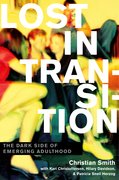
There was a time in American culture, only a few generations ago, when religious differences were major. Baptists were not Methodists, and both were definitely not Presbyterians. Catholics were absolutely not Protestant, and Protestants doubted that Catholics were even Christians. Jews and Mormons were whole other species. Non-religious Americans were beyond the pale. And Muslims, Buddhists and Hindus were heathen living in faraway places. The problem with that world, we now see, was the destructive bigotry, misunderstanding, conflict and sometimes hatred that went with it. Let us call that world one of sectarian conflict.

Read More
Book thumbnail image

No fooling with the republic

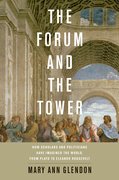
The “need for public servants who can negotiate . . . moral minefields with wisdom and integrity is more urgent than ever,” says Mary Ann Glendon, author of the new book The Forum and the Tower: How Scholars and Politicians Have Imagined the World, from Plato to Eleanor Roosevelt. “It is hard to resist,” she continues, “the conclusion of the classical philosophers that no polity can afford to neglect the nurture and education of future citizens and statespersons.”

Read More
Book thumbnail image

Performing the triple

By Colin McGinn
This fall OUP will publish three books by me. They are substantial new works of academic philosophy, on unrelated subjects. How did I manage to produce three books in such a short time when one is usually regarded as quite enough by itself?

Read More
Book thumbnail image

Fake squid, psychiatric patients, and other Muppet meanings

By Mark Peters
With the arrival of the new Muppet movie, Kermit, Miss Piggy, Beaker, and our other felt friends are everywhere. There’s no escaping Jim Henson’s creations, and few of us would want to (unless the movie happens to suck, which is doubtful, given the stewardship of Jason Segel, who showed major Muppet mojo in the heartbreaking and spit-taking Forgetting Sarah Marshall). It’s a good time to look at the history of the word Muppet, which has some meanings that would make the Swedish Chef bork with outrage.

Read More
Book thumbnail image

Gods and priests

By Christian Meier
Hesiod and Homer brought order to the world of the gods for the Greeks, describing their genealogical connections, allocating honours, powers, and areas of responsibility among them, and giving them distinct appearances. This is how Herodotus put it.

Read More
Book thumbnail image

His Eminence of Los Angeles

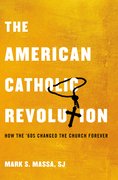
The American Catholic Church of today is a product of many dramatic transformations, especially those that took place in the 1960s. Here is an excerpt from The American Catholic Revolution: How the Sixties Changed the Church Forever where Mark S. Massa recounts some of the practices Archbishop James Francis McIntyre instituted in Los Angeles.

Read More
Book thumbnail image

Nellie Bly begins record round-the-world trip

This Day in World History
At 9:40:30 in the morning of November 14, 1889, an American woman began a trip abroad. It was not just any trip, though: journalist Nellie Bly was out to best the legendary journey of Phileas Fogg, the British gentleman who was the hero of Victor Hugo’s bestselling novel, Around the World in Eighty Days. Bly’s whirlwind world trip was heavily promoted by Joseph Pulitzer’s newspaper the New York World.

Read More
Book thumbnail image

Augustine of Hippo born

This Day in World History
On November 13, 354, in a small town named Tagaste in Roman Numidia (modern Algeria) near the port of Hippo (now Annaba), Augustine—one of the preeminent early Christian thinkers—was born. Though his mother was a devout Christian, he was not baptized as an infant.

Read More
Book thumbnail image

Sesame Street premieres

This Day in World History
November 10, 1969, was a sunny day for children around the world—children of all ages. That was the day that Sesame Street, the groundbreaking brainchild of Children’s Television Workshop, debuted on public television.

Read More
Book thumbnail image

From Murdoch to Trollope: a familiar intrigue

By John Bowen
The Murdoch ‘phone-hacking’ affair, being investigated today by a House of Commons select committee, seems the most contemporary of stories, chock-full of hacked mobile phones, high-tech surveillance equipment and secret video-recordings. But although the technology might have changed, it is a world that would have been only too familiar to nineteenth-century author Anthony Trollope. He was as fascinated as we are by what lies behind the public face of politics: the personal passions, rivalries and love affairs, the ins and outs of office, the spectacular rises and equally rapid falls.

Read More
Book thumbnail image

“What Brings Mr. Epstein Here?” 9 November 1961

By Gordon Thompson
The transformation of the Beatles from four musicians with humble roots into British cultural icons (second only to Shakespeare in some minds) began in Liverpool, even if a recent decision by the Trademark Trial and Appeals Board of the United States Patent and Trademark Office may attempt to shape how we remember those roots in the future. Ironically, that decision comes shortly before a relevant anniversary in Beatles history.

Read More
Book thumbnail image

Refuting Sunstein

Ideological Segregation in Various Media Channels

Democracy is most effective when citizens have accurate beliefs (Downs 1957; Becker 1958). To form such beliefs, individuals must encounter information that will sometimes contradict their preexisting views. Guaranteeing exposure to information from diverse viewpoints has been a central goal of media policy in the United States and around the world (Gentzkow and Shapiro 2008). New technologies such as the Internet could either increase or decrease the likelihood that consumers are exposed to diverse news and opinion.

Read More