Academic publishing gets a close-up
A recent Publishers Weekly story highlighted some of the innovative work that many university presses are undertaking: video marketing.

Oxford University Press's
Academic Insights for the Thinking World

A recent Publishers Weekly story highlighted some of the innovative work that many university presses are undertaking: video marketing.
By Lynne Murphy
For 20 years, 14 of those in England, I’ve been giving lectures about the social power afforded to dictionaries, exhorting my students to discard the belief that dictionaries are infallible authorities. The students laugh at my stories about nuns who told me that ain’t couldn’t be a word because it wasn’t in the (school) dictionary and about people who talk about the Dictionary in the same way that they talk about the Bible.
By Anatoly Liberman
I am impressed. Not long ago I asked two riddles. Who coined the phrase indefatigable assiduity and who said that inspiration does not come to the indolent? The phrase with assiduity turns up on the Internet at once (it occurs in the first chapter of The Pickwick Papers), but John Cowan pointed out that Dickens may have used (parodied?) a popular cliché of that time.
By Anatoly Liberman
Bigot will wait until the end of this miniseries, because some time ago (26 October 2011) I published a special post on this word and now have only a short remark to add to it. But beggars and buggers cry out for recognition and should not be denied it.

By Michael Moore
My first job after veterinary school in 1983 was for the International Whaling Commission examining the efficacy of explosive harpoons for killing fin whales on an Icelandic whaling vessel. Later, I encountered a very different way of killing whales.
By Anatoly Liberman
What does it take to be a successful etymologist? Obviously, an ability to put two and two together. But all scholarly work, every deduction needs this ability. The more words and forms one knows, the greater is the chance that the result will be reasonably convincing.

It’s big, it’s red, and it’s here. Valentine’s Day strikes fear into the hearts of men and women around the Western world like nothing else can. But you needn’t run scared of the Hallmark branded teddy bears. Oh no. Follow the sprinkling of rose petals, the sweet aroma of scented candles, and the dulcet tones of Phil Collins up the stairs to the luxury boudoir that is Oxford University Press.

Today is National Libraries Day in the United Kingdom, and hundreds of activities and events are taking place in public libraries of all shapes and sizes — from the multi-million pound Library of Birmingham, to the tiniest local libraries run by volunteers — in order to celebrate our wonderful librarians, and the libraries they run. To celebrate National Libraries Day, we asked a few of our staff what they love about public libraries.
By Richard S. Grossman
Although the dollar has had no legal connection to gold since 1973, the gold standard continues to hold an almost mystical appeal for many politicians and commentators. The 2012 Republican Platform called for the creation of a commission to study the possible restoration of the link between the dollar and gold. When asked about the gold standard this summer, Sen. Rand Paul (R-KY), a potential 2016 Republican presidential nominee, replied: “We need to think about our currency that once upon a time had a link to a commodity, and I think we should study it.”
By Anatoly Liberman
Reference works: I received three questions.
(1) Our correspondent would like to buy a good etymological dictionary of English. Which one can be recommended?
Why brothel? We will begin with the customer. Broþel surfaced in Middle English and meant “a worthless person; prostitute.” The letters –el are a dead or, to use a technical term, unproductive suffix, but even in the days of its efflorescence it was rarely used to form so-called nomina agentis (agent nouns), the way –er is today added to read and work and yields reader and worker.

By Alice Northover
Word of the Year season in the English-speaking world has come to a close. Oxford Dictionaries kicked off the annual reflection (and often infuriation) regarding words that were particularly relevant this past year. Here’s a brief round-up of the various words singled out by dictionaries, linguists, and enthusiasts.
By Anatoly Liberman
At the end of the nineteenth century, while working on the issue of the OED (then known as NED: New English Dictionary) that was to feature the word gray, James A. H. Murray sent letters to various people, asking their opinion about the differences between the variants gray and grey.
By Anatoly Liberman
The shades of gray multiply (as promised in December 2013). Now that we know that greyhounds are not gray, we have to look at our other character, grimalkin. What bothers me is not so much the cat’s color or the witch’s disposition as the unsatisfactory state of etymology.
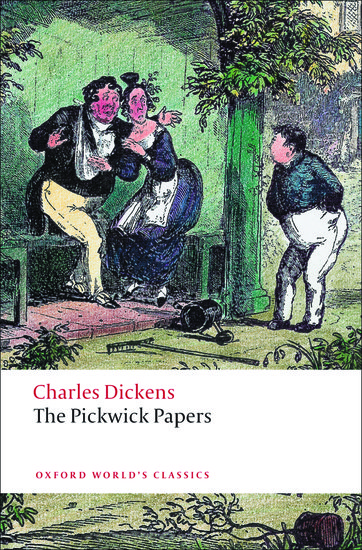
Some festive quotations courtesy of Oxford World’s Classics
By Anatoly Liberman
I am returning to greyhound, a word whose origin has been discussed with rare dedication and relatively meager results. The component –hound is the generic word for “dog” everywhere in Germanic, except English. I am aware of only one attempt to identify –hound with hunter (so in in the 1688 dictionary by Rúnolfur Jónsson).