Oxford University Press's
Academic Insights for the Thinking World

Lincoln’s rhetoric in the Gettysburg Address

Perhaps no speech in the canon of American oratory is as famous as the “Dedicatory Remarks” delivered in a few minutes, one hundred and fifty years ago, by President Abraham Lincoln. And though school children may no longer memorize the conveniently brief 272 words of “The Gettysburg Address,” most American can still recall its opening and closing phrases.

Read More
Book thumbnail image

What makes music sacred?

By Laura Davis
I’ve spent a lot of time in churches throughout my life. I was baptized in the Episcopal Church, raised Methodist, and am a converted Catholic. I’ve worked in Presbyterian, Episcopalian, Lutheran, and Methodist churches and spent a summer in Eastern Europe singing in a Romanian Orthodox church.

Read More
Book thumbnail image

Helping smokers quit during Lung Cancer Awareness Month

Smoking causes the majority of lung cancers – both in smokers and in people exposed to secondhand smoke. To mark Lung Cancer Awareness Month, Nicotine & Tobacco Research Editor David J. K. Balfour, D.Sc., has selected a few related articles, which can be read in full and for free on the journal’s website. He also invited Elyse R. Park, PhD, MPH, to share what really helps smokers quit.

Read More
Book thumbnail image

Place of the year 2013: Spotlight on Syria

As we continue to tally the votes for Place of the Year 2013, Joshua Hagen, co-author of Borders: A Very Short Introduction, shares some background information on the history of Syria. After you’ve read the reasons surrounding why Syria made the shortlist, cast your vote for what you think the place of the year should be. We’ll announce the winner on Monday, 2 December 2013.

Read More
Book thumbnail image

Does Mexican immigration lead to more crime in US cities?

By Aaron Chalfin
Since 1980, the share of the US population that is foreign born has doubled, rising from just over 6% in 1980 to over 12% in 2010. Compounding this demographic shift, the share of the foreign born population of Mexican origin also doubled, leading to a quadrupling of the fraction of US residents who are immigrants from Mexico

Read More
Book thumbnail image

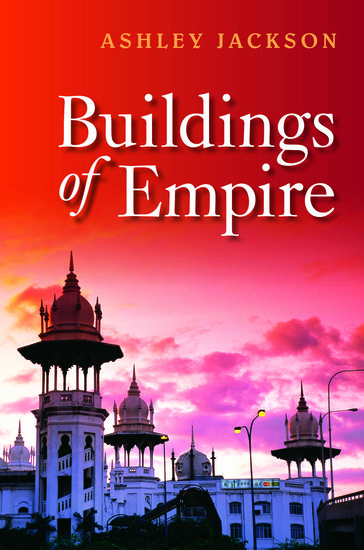
Top five buildings of Empire

By Ashley Jackson
All around the world the British built urban infrastructures that still dominate towns and cities, as well as developing complex transport networks and the ports and railway stations that gave access to them. The Empire’s creation of cityscapes and lines of communication is easy to overlook, so much has it become part of the fabric of the world in which we live that it has been rendered unremarkable.

Read More
Book thumbnail image

Looking forward to AAR/SBL 2013

By Alyssa Bender
With a little over one week until American Academy of Religion/Society for Biblical Literature 2013, a lot of us at the Oxford University Press office are getting excited to head to Baltimore. As to what we’re all looking forward to, that varies, from new products, to meeting authors, to food we can’t wait to try.

Read More

Stan Lee on what is a superhero

What is a superhero? What is a supervillain? What are the traits that define and separate these two? What cultural contexts do we find them in? And why we need them? Editors Robin S. Rosenberg, PhD and Peter Coogan, PhD collected a series of essays examining these questions from both major comic book writers and editors, such as Stan Lee and Danny Fingeroth, and leading academics in psychology and cultural studies, such as Will Brooker and John Jennings.

Read More
Book thumbnail image

Elinor Ostrom and institutional diversity

By Paul Dragos Aligica
The issue of institutional diversity, a key theme in the work of the 2009 Nobel Prize in Economics co-recipient, Elinor Ostrom, is one of the major challenges confronting national states and global governance in our time.

Read More
Book thumbnail image

Worn out wonder drugs

By Dr Donna Lecky
It is undeniable that the discovery of antibiotics changed modern medicine. However, from their mass production in 1943, antibiotics have gone from being dubbed the wonder drug to being an issue of serious global concern.

Read More

Characters from The Iliad in ancient art

The ancient Greeks were enormously innovative in many respects, including art and architecture. They produced elaborate illustrations on everything from the glory of the Parthenon to a simple wine cup. Given its epic nature and crucial role in Greek education, many of the characters in the Iliad can be found in ancient art. From the hero Achilles to Hector’s charioteer, these depictions provide great insight into Greek culture and art.

Read More
Book thumbnail image

Five most influential economic philosophers

By Tomas Sedlacek
Descartes’s scientific approach to perceiving the world unquestionably represented a huge breakthrough, and this is doubly true for economists. We have seen that the notion of the invisible hand of the market existed long before Smith.

Read More

Is it a dog’s world?

By Steven Heine
Like a number of other traditional East Asian cultural phenomenon, such as kabuki, kimono, kimchee, and kung fu—just sticking to terms that start with the letter “k”—the koan as the main form of literature in Zen Buddhist monastic training has been widely disseminated and popularized in modern American society.

Read More
Book thumbnail image

Catching up with Marcela Maxfield

By Alyssa Bender
The publishing industry can be a little mysterious for those of us who don’t work inside it. I sat down with Religion & Theology Editorial Assistant Marcela Maxfield to discover the daily grind of one of the many people at Oxford University Press (OUP) who shepherd books from idea to crisp bound paper.

Read More