Oxford University Press's
Academic Insights for the Thinking World

  • History

Book thumbnail image

Reflections on Ebbets Field

By Daniel Campo
At the turn of the 20th century, the baseball team in Brooklyn was known as the Superbas and they played ball at Washington Park, between First and Third streets along Third Avenue near the Gowanus Canal. While the park was convenient for its patrons, located in a densely developed part of the borough and connected to trolley lines on 3rd and 5th avenues, fans and players frequently complained about the awful odors emanating from the canal and nearby industrial works.

Read More
Book thumbnail image

Woman – or Suffragette?

By Lynda Mugglestone
In 1903, the motto “Deeds not Words” was adopted by Emmeline Pankhurst as the slogan of the new Women’s Social and Political Union. This aimed above all to secure women the vote, but it marked a deliberate departure in the methods to be used. Over fifty years of peaceful campaigning had brought no change to women’s rights in this respect; drastic action was, Emmeline decided, now called for.

Read More
Book thumbnail image

Latin America in the world today

By Ilan Stavans
The Hispanic world is in the news lately, and the news is mostly good. Latinos in the United States are a growing political force, and developments in Latin America are at the forefront of world affairs. To start with, Latinos, the largest minority in the United States (approximately 57 million strong and slated to double by 2030), are acknowledged to be the deciding factor in Barack Obama’s re-election.

Read More
Book thumbnail image

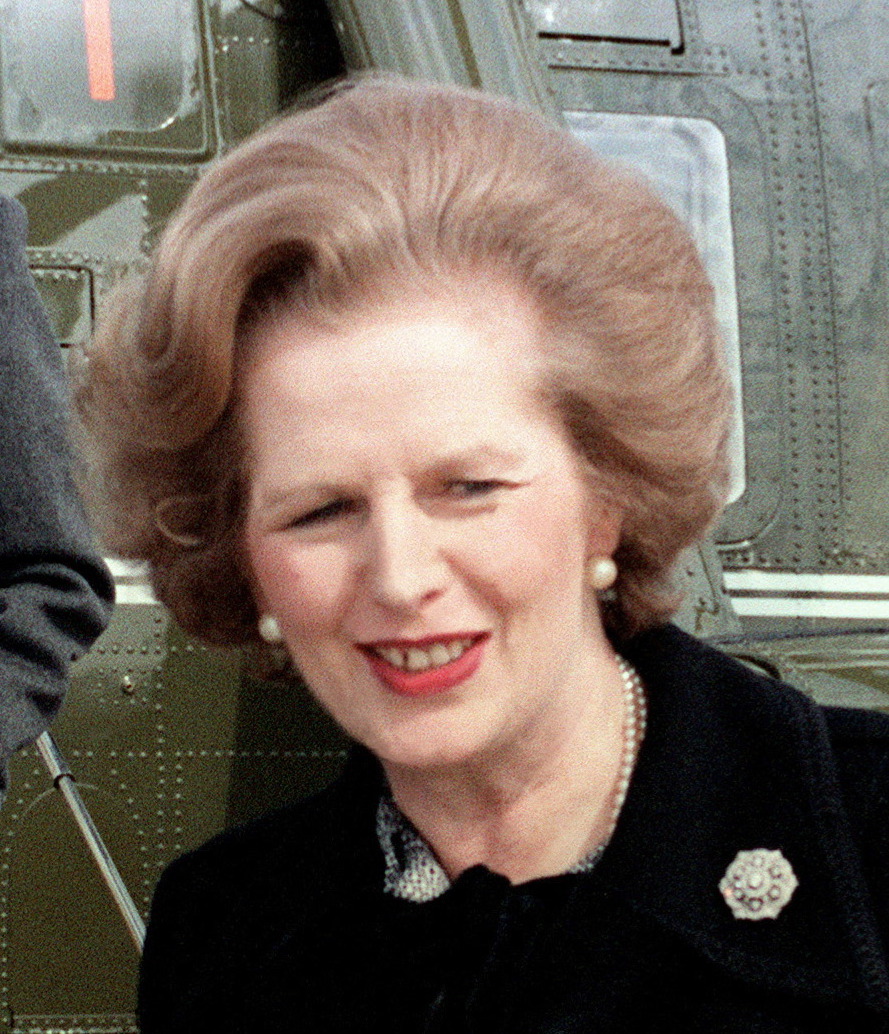
The legacies of Margaret Thatcher’s rhetoric

By Richard Toye
The death of Margaret Thatcher has already prompted an outpouring of reflections upon her place in history. One aspect of her legacy that deserves attention is her use of rhetoric and the way in which, to a great degree, she helped reshape the language of British politics as well as the substance of policy. Historians divide about when original Thatcherism really was.

Read More
Book thumbnail image

Remembering Margaret Thatcher

By Matthew Flinders
Could it be that far from the all-powerful ‘Iron Lady’ that Margaret Thatcher was actually a little more vulnerable and isolated than many people actually understood?

Read More
Book thumbnail image

Holocaust Remembrance Day

By Katharina von Kellenbach
Holocaust Remembrance Day was originally declared a state holiday in Israel in 1951. The date, the 27th of the month of Nissan, was chosen in memory of the Warsaw Ghetto Uprising. In the United States, a week-long series of “Days of Remembrance of the Victims of the Holocaust” was ratified by US Congress in 1979 to coincide with Yom HaShoah, which falls sometime during April or May.

Read More
Book thumbnail image

Yom HaShoah and everyday genocide

For the historian Mary Fulbrook, the history of the small town of Będzin hits close to home. Her mother was a refugee from Nazi Germany and a close friend to the wife of Uda Klausa, a one-time civilian administrator in that small town so close to the infamous concentration camp Auschwitz. What role did Klausa, as countless local functionaries across the Third Reich, play in facilitating Nazi policy? Fulbrook traveled to Bedzin with her son to film a series of videos exploring the subject as a companion to her book, A Small Town Near Auschwitz: Ordinary Nazis and the Holocaust.

Read More
Book thumbnail image

Environmental History’s growing pains

By Nancy C. Unger
In the fall of 1994 I was invited to offer my university’s first environmental history course. Entering this unchartered territory, I scrambled to find sample syllabi and appropriate books. Nearly two decades later, environmental history is a standard course offering, and my university, like so many others, boasts a thriving Environmental Studies major as well as a major in Environmental Science

Read More
Book thumbnail image

Jack the Ripper and the case of Emma Smith

By Paul J. Ennis
Many people are puzzled by the phenomenon of ripperology. What kind of person has a grim fascination with a serial killer famous for not getting caught? For me, and many fellow ripperologists, the appeal is not Jack per se, but the atmosphere of Whitechapel in the 1880s. The case is a window into a forgotten world and one that shows us how that world was experienced by the common man.

Read More
Book thumbnail image

Kenyatta confirmed as Kenyan president but ethnic politics remain

By Gabrielle Lynch
On Saturday 30 March 2013, Kenya’s Supreme Court unanimously decided that Kenya’s presidential election — which had been held on 4 March — was conducted in a free, fair, transparent, and credible manner, and that Uhuru Kenyatta and William Ruto of the Jubilee Alliance were validly elected. Raila Odinga of the Coalition for Reform and Democracy (CORD) publicly disagreed with the court’s findings, but emphasised the supremacy of the constitution and wished Kenyatta and Ruto luck in implementing the 2010 constitution.

Read More
Book thumbnail image

On the 100th anniversary of the assembly line

By Vincent Curcio
On 1 April 1913, Henry Ford symbolically pressed a lever that catapulted factory workers into the modern era. That lever was the assembly line, which was started at his Highland Park factory on that date. From then on the organized chaos and time-wasting labor of the typical factory floor were transformed into a process that was much quicker and economical, and far less strenuous.

Read More
Book thumbnail image

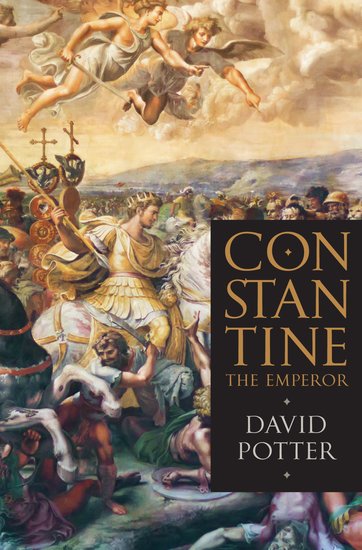
Constantine and Easter

By David Potter
Christians today owe a tremendous debt to the Roman emperor Constantine. He changed the place of the Church in the Roman World, moving it, through his own conversion, from the persecuted fringe of the empire’s religious landscape to the center of the empire’s system of belief. He also tackled huge problems with the way Christians understood their community.

Read More
Book thumbnail image

Blogging oral history

It’s been six months since we at Oral History Review (OHR) started blogging regularly at the OUPblog, so we think now is a good time to look back on the last few months. We’ve discussed everything from the historiography of oral history to the challenges of recording interviews on recent history, and we’ve approached these issues with essays, q&as, timelines, quizzes, and podcasts.

Read More
Book thumbnail image

Oh! what a lovely conclave

By Stella Fletcher
“Carnival time is over,” the newly-elected Pope Francis is reported to have said when he was offered an ermine-trimmed mozzetta such as most of his predecessors had worn round their shoulders during the winter season. He may not have been alluding to the thirteen-day sede vacante which had just reached its much-anticipated conclusion, but it does seem fair to say that this papal interregnum was arguably the jolliest on record.

Read More