Oxford University Press's
Academic Insights for the Thinking World

  • History

Book thumbnail image

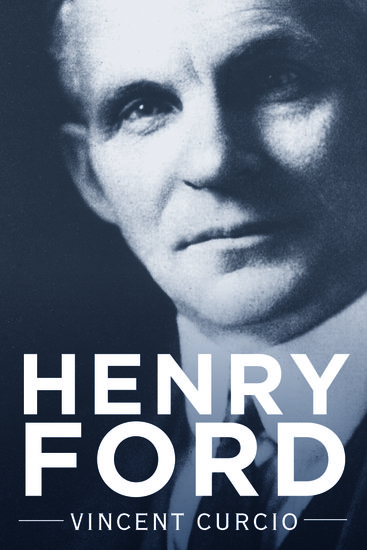
The Henry Ford you know

By Vincent Curcio
When you hear the name “Henry Ford” do you feel a certain shiver inside? Does a sober look come over your face as you mumble, “Well, he was a terrible anti-Semite”? You aren’t wrong of course, as many books and articles have documented through the years. In fact, that reaction probably places you in the majority. Of course, you know about the Model T and the assembly line too.

Read More
Book thumbnail image

The Oi! movement and British punk

By Matthew Worley
According to the Daily Mail, Oi! records were ‘evil’. According to the Socialist Worker, Oi! was a conduit for Nazism. According to the NME, Oi! was a means to inject ‘violent-racist-sexist-fascist’ attitudes into popular music. The year is 1981, and on 3 July the Harmbrough Tavern is set ablaze in the London borough of Southall.

Read More
Book thumbnail image

Remembering Jack the Ripper

By John Randolph Fuller
From April 1888 to February 1891, history’s most infamous cold case emerged when a series of 11 murders ripped through London’s working-class Whitechapel district. All of the murdered were women, and most were prostitutes. Whitechapel was one of the poorest areas in London and by the 1880s some of England’s grimiest industries, such as tanneries and breweries, had become established there.

Read More
Book thumbnail image

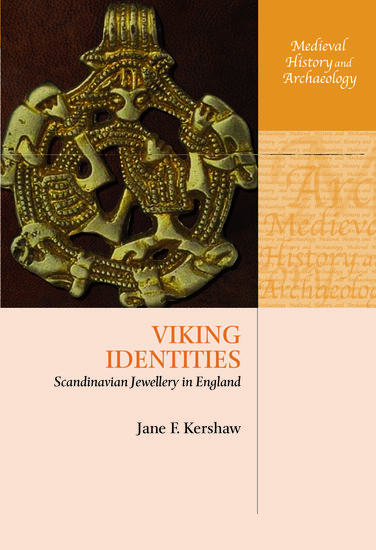
Unearthing Viking jewellery

By Jane Kershaw
There’s a lot we still don’t know about the Vikings who raided and then settled in England. The main documentary source for the period, the Anglo-Saxon Chronicle, simply tells us that Viking armies raided Britain’s coastline from the late eighth century. Raiding was followed by settlement, and by the 870s, the Vikings had established a territory in the north and east of the country which later became known as the ‘Danelaw’.

Read More
Book thumbnail image

Freedom Day and democratic transition

By Robert P. Inman and Daniel L. Rubinfeld
Despite the recognized virtues of democratic rule, both for protection of personal rights and liberties and for economic progress, the current list of world governments still classifies 46 of all countries, or 25%, as dictatorships. Rulers in these existing dictatorial regimes resist the transition to democracy, often at a high cost each year in lives and resources.

Read More
Book thumbnail image

Closeted/Out in the quadrangles

By Monica L. Mercado
“That was my radio show!” narrator David Goldman exclaimed, looking at copies of classified ads placed in the University of Chicago’s student newspaper during the late 1960s and early 1970s, when he was an undergraduate student. Goldman, a retired math teacher and one of the founders of the gay liberation movement at the University of Chicago, recently contributed his story to the Center for the Study of Gender and Sexuality (CSGS) research project.

Read More

The life of a nation is told by the lives of its people…

America has a rich and diverse history which shows itself in its music, politics, film, and culture. The power of biography helps to illuminate larger questions of war, peace, and justice and in exploring the lives of the figures that helped to shape America’s history we can discover more about our past.

Read More
Book thumbnail image

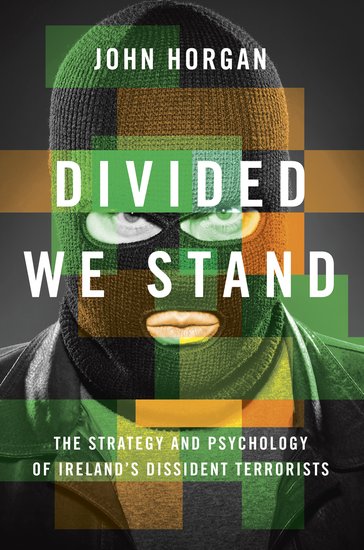
20 years since the Bishopsgate bombing

By John Horgan
On 24 April 1993, the city of London was brought to a standstill. A massive terrorist bomb exploded at the NatWest tower, killing one person and injuring at least 40 more. The truck bomb, planted by the Irish Republican Army (IRA) was designed to strike at the financial heartland of London, and it succeeded. In addition to the human casualties, what has since become known as the Bishopsgate bomb caused $1 billion in financial damages.

Read More
Book thumbnail image

Editing an encyclopedia

By Dr. David Milne
When I was invited to review the second volume of Odd Arne Westad’s and Melvyn Leffler’s The Cambridge History of the Cold War in 2010, I compared the enterprise to Denis Diderot’s Encyclopédie — which I intended both as a compliment and as a criticism. Sweeping in its coverage, the Encyclopédie aimed to capture the main currents of Enlightenment thinking.

Read More
Book thumbnail image

The environmental history of Russia’s steppes

By David Moon
When I started researching the environmental history of Russia’s steppes, I planned my visits to archives and libraries for conventional historical research. But I wanted to get a sense of the steppe environment I was writing about, a context for the texts I was reading; I needed to explore the region. I was fortunate that several Russian and Ukrainian specialists agreed to take me along on expeditions and field trips to visit steppe nature reserves.

Read More
Book thumbnail image

Top five untrue facts about Hitler

By Thomas Weber
It has been thirty years this month since the master forger Konrad Kujau had his fifteen minutes of fame. Kujau managed to fool Stern magazine in Germany and the Sunday Times into believing that Hitler had secretly kept a diary. On 25 April 1983, Stern went public with the sensational story that Hitler’s diaries – which Kujau had penned in the late 70s and early 80s – had surfaced and that the history of the century had to be rewritten. By 6 May, it had become clear that two of the most venerable German and British publications had become the laughing stock of their nations. While no-one still believes that Hitler kept a diary, many other untrue facts about Hitler have been surprisingly resilient

Read More
Book thumbnail image

Jackie Robinson and Branch Rickey

15 April 2013 marked the fifth Jackie Robinson Day, commemorating the 66th anniversary of Jackie Robinson’s debut with the Brooklyn Dodgers, an event which broke baseball’s racial barrier. In each game that is now played on 15 April, all players wear Jackie Robinson’s iconic #42 (also the title of a new film on Robinson). Thirty years ago, historian and ardent baseball fan Jules Tygiel proposed the first scholarly study of integration in baseball, shepherded by esteemed Oxford editor, Sheldon Meyer: Baseball’s Great Experiment.

Read More
Book thumbnail image

Celebrating Bicycle Day

By Amanda Feilding
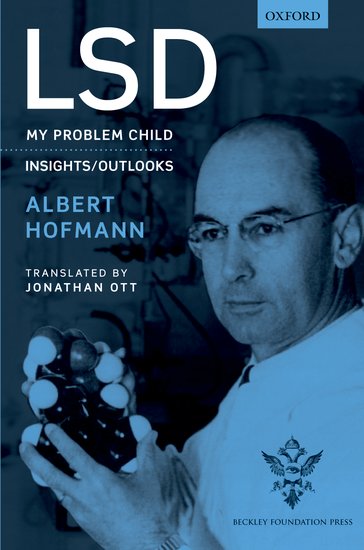
Albert Hofmann was one of the most important scientists of our time, who through his famous discovery of LSD, crossed the bridge from the world of science into the spiritual realm, transforming social and political culture in his wake. He was both rationalist and mystic, chemist and visionary, and in this duality we find his true spirit.

Read More
Book thumbnail image

Our treaties, ourselves: the struggle over the Panama Canal

By Natasha Zaretsky
In March 1978, Ada Smith, a fifty-six-year old woman from Memphis, sat down at her typewriter and wrote an angry letter to Tennessee’s Republican Senator Howard Baker. She explained that until recently, she had always been proud of her country, and “its superiority in the world.” But now her pride had turned to fear: “After coming through that great fiasco Vietnam, which cost us billions in dollars and much more in American blood, we are now faced with another act of stupidity, which, in the years to come, could be even more costly.”

Read More
Book thumbnail image

Border Control in America before Ellis Island

By Hidetaka Hirota
On the seventeenth of April 1907, 11,747 immigrants arrived in the Ellis Island landing station in New York, marking a record high in terms of the number of people processed on a single day at the station, where 17 million newcomers landed between 1892 and 1954. This arrival was part of a broader landmark immigration wave.

Read More