Oxford University Press's
Academic Insights for the Thinking World

  • History

Book thumbnail image

Fidel Castro becomes Prime Minister of Cuba

This Day in World History
Dressed in army fatigues and surrounded by supporters and reporters, 32-year old Fidel Castro took the oath of office as Cuba’s prime minister on February 16, 1959. He would remain in power for nearly fifty years.

Read More
Book thumbnail image

The real lessons of the Cuban Cold War crisis

By John Gittings
This year we shall recall, with a very nervous shudder, the 50th anniversary of the greatest crisis in the Cold  War – and with the knowledge that but for good fortune none of us would be here to recall it at all.

Read More
Book thumbnail image

ENIAC unveiled to public

This Day in World History
On February 14, 1946, officials from the army and the University of Pennsylvania assembled at that institution’s Moore School of Engineering to reveal the results of a secret government project. They unveiled the Electronic Numerical Integrator And Computer (ENIAC), the world’s first general function, programmable electronic computer.

Read More
Book thumbnail image

Galileo arrives in Rome for trial before Inquisition

This Day in World History
Sixty-nine years old, wracked by sciatica, weary of controversy, Galileo Galilei entered Rome on February 13, 1633. He had been summoned by Pope Urban VIII to an Inquisition investigating his Dialogue Concerning the Two Chief World Systems. The charge was heresy. The cause was Galileo’s support of the Copernican theory that the planets, including Earth, revolved around the sun.

Read More
Book thumbnail image

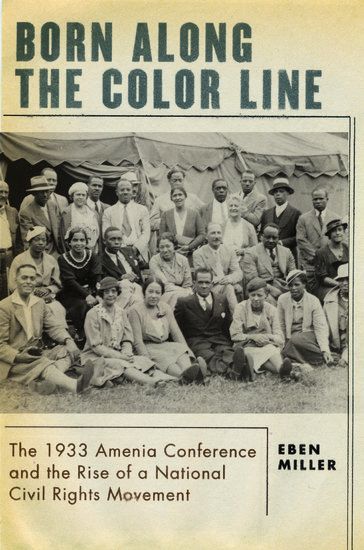
Remembering Anti-Lynching Day

On the evening of February 12, 1937, the National Association for the Advancement of Colored People (NAACP) commemorated its twenty-eighth anniversary at Mother AME Zion Church in Harlem. The grand, grey, neo-Gothic structure was recent to 137th Street—it had been completed in 1925—but Mother AME Zion was one of the nation’s oldest black churches, dating to the late 18th century and a reputed stop along the Underground Railroad.

Read More
Book thumbnail image

Emperor Meiji issues new constitution of Japan

This Day in World History
On February 11, 1889, Japan’s Emperor Meiji furthered his plan to modernize and westernize his nation by promulgating a new constitution. The new plan of government created a western-style two-house parliament, called the Diet, and a constitutional monarchy — though one with a Japanese character.

Read More
Book thumbnail image

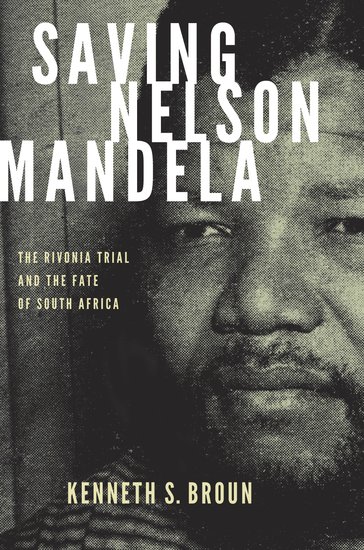
Nelson Mandela, 22 years after his release from prison

By Kenneth S. Broun
Twenty-two years ago, on the 11th of February 1990, Nelson Mandela walked out of a South African prison, a free man for the first time in twenty-seven years. He immediately assumed the leadership role that would move South Africa from a system of apartheid to a struggling but viable democracy. No one person, not even Nelson Mandela, was solely responsible for this miracle.

Read More

The Dawes Act: How Congress tried to destroy Indian reservations

How would you feel if the government confiscated your land, sold it to someone else, and tried to force you to change your way of life, all the while telling you it’s for your own good? That’s what Congress did to Indian tribes 125 years ago today when, with devastating results, it passed the Dawes Act.

Read More
Book thumbnail image

Ulysses: 90 years on…

On this day in 1922, James Joyce’s Ulysses was first published in its entirety, although the publication history of the book is nearly as complex as the novel itself. Here, we’ve picked one of our favourite extracts from the Oxford World’s Classics edition.

Read More
Book thumbnail image

Buenos Aires founded

This Day in World History
On February 2, 1536, Spanish explorer Pedro de Mendoza founded the city he named Nuestra Señora Santa María del Buen Aire—Buenos Aires, Argentina. The new town was meant to spearhead the Spanish effort to colonize the interior of South America. It came less than two years after conquistadors had returned to Spain from Peru with treasures seized from the Inca empire.

Read More
Book thumbnail image

Mahatma Gandhi is assassinated

This Day in World History
The 78-year-old man was walking to a prayer meeting with the support of two grandnieces. A man stepped out of the crowd and greeted him. The old man returned the salutation when, suddenly, the other man pulled out a pistol and shot three times. Half an hour later, Mohandas Gandhi—the leading figure of India’s independentce movement and the leading exponent of nonviolent resistance—was dead.

Read More
Book thumbnail image

Egypt’s Revolution a Year Later

Nearly a year has passed since the huge crowds in Cairo’s Tahrir Square rallied to overthrow former Egyptian President Hosni Mubarak. Yet, the Egyptian public remains loathe to articulate a coherent vision for Egypt, and “that is the challenge going forward,” says Steven A. Cook, CFR’s top Egypt expert.

Read More