Oxford University Press's
Academic Insights for the Thinking World

  • History

Book thumbnail image

Online resources for oral history

After listening to this week’s podcast with managing editor Troy Reeves and oral historian extraordinaire Doug Boyd, you might think the Oral History Review has fallen prey to corporate sponsorship. Let me assure you, dear audience, that we are not in bed with Starbucks, E-Harmony, or General Mills. Instead, it seems Doug, guest editor of our special issue “Oral History in the Digital Age” and author of “OHMS: Enhancing Access to Oral History for Free,” is prone to elaborate metaphors when describing oral history best practices.

Read More
Book thumbnail image

People of computing

According to Oxford Reference the Internet is “[a] global computer network providing a variety of information and communication facilities, consisting of interconnected networks using standardized communication protocols.” Today the Internet industry is booming, with billions of people logging on read the news, find a recipe, talk with friends, read a blog article (!), and much more.

Read More
Book thumbnail image

The History of the World: Nixon visits Moscow

22 May 1972 The following is a brief extract from The History of the World: Sixth Edition by J.M. Roberts and O.A. Westad. In October 1971 the UN General Assembly had recognized the People’s Republic as the only legitimate representative of China in the United Nations, and expelled the representative of Taiwan. This was not […]

Read More
Book thumbnail image

The Trojan War: fact or fiction?

By Eric Cline
The Trojan War may be well known thanks to movies, books, and plays around the world, but did the war that spurred so much fascination even occur? The excerpt below from The Trojan War: A Very Short Introduction helps answer some of the many questions about the infamous war Homer helped immortalize.

Read More
Book thumbnail image

The missing children of early modern religion

By Alec Ryrie
I’ve been working on the ‘lived experience’ of early modern religion: what it was actually like to be a Protestant in 16th or 17th-century Britain. And I’ve become more and more convinced there’s a crucial element of the story almost completely missing from the standard accounts: children.

Read More
Book thumbnail image

Musings on the Eurovision Song Contest

By Alyn Shipton
When the first Eurovision Song Contest was broadcast in 1956, the BBC was so late in entering that it missed the competition deadline, so it was first shown in my native England in 1957. Nonetheless, it seems as if this curious example of pan-European co-operation, which started with seven countries and is now up to 40, has been around forever.

Read More
Book thumbnail image

The History of the World: Israel becomes a state

From the beginning of the Nazi persecution the numbers of Jews who wished to settle in Palestine rose. As the extermination policies began to unroll in the war years, they made nonsense of British attempts to restrict immigration, which was the side of British policy unacceptable to the Jews; the other side – the partitioning of Palestine – was rejected by the Arabs.

Read More
Book thumbnail image

Oral history and hearing loss

By Caitlin Tyler-Richards
When perusing the internet for innovations in the oral history discipline, I generally seek out new voices, intuitive platforms and streamless presentations. Embarrassingly, I rarely consider the basics of oral history collection and production, the act of sharing someone’s story with a wider audience. That is one of several reasons I so enjoyed Brad Rakerd’s contribution to Oral History Review issue on Oral History in the Digital Age, “On Making Oral Histories More Accessible to Persons with Hearing Loss.”

Read More

The real secret behind Gatsby

The Great Gatsby is one of the best-known American novels, but weirdly, and strangely reflective of Gatsby himself, one of the least understood. The much-awaited Baz Lurhmann version of The Great Gatsby opens in the United States tomorrow, and like Gatsby himself — as a new trailer reminds us — the novel is “guarding secrets.”

Read More
Book thumbnail image

The limits of American power, a historical perspective

By Christopher Nichols
Just when, where, why, and how should American power be used? Current assumptions about the near omnipresence—though far from omnipotence—of US power, its influence and its reach are now shaky. Yet these same assumptions coexist alongside widely shared views that such power could and should be used.

Read More
Book thumbnail image

International humanitarianism in the United States

By Julia Irwin
Each year on 8 May, the Red Cross and Red Crescent societies of dozens of nations unite in celebration of World Red Cross/Red Crescent Day. This global event observes the birthday of Henry Dunant, one of the founders of the International Committee of the Red Cross and Red Crescent (ICRC), and commemorates the humanitarian principles that this organization represents.

Read More
Book thumbnail image

John Snow and cholera: how myth helped secure his place in history

By Sandra Hempel
The high-profile marking of John Snow’s bicentenary on March 15th would have surprised the great man. The London School of Hygiene and Tropical Medicine, the WellcomeTrust, and The Lancet were among the august UK organisations to honour him, with events including an exhibition, three days of seminars, and a gala dinner. The physician was also celebrated in the United States where he has a large fan base.

Read More
Book thumbnail image

Cinco de Mayo and the insurgent taco

On the fifth of May, many in the US and Mexico will celebrate Cinco de Mayo, the commemoration of Mexico’s victory over the French at the Battle of the Puebla in 1862. In this excerpt from Planet Taco: A Global History of Mexican Food, Jeffrey Pilcher looks at Cinco de Mayo and the first written instance of the word “taco.”

Read More
Book thumbnail image

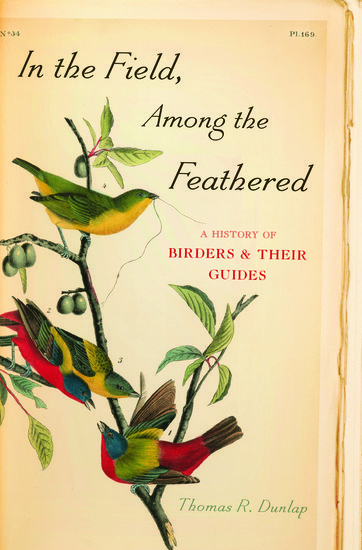
A day for birds, birds for a lifetime

By Thomas R. Dunlap
Bird Day began in 1894 as part of the wildlife conservation movement that sprang up in response to the slaughter of the bison and the Passenger Pigeon. Birds always had a large role, for they were threatened but also familiar and fascinating. More than any other form of life they drew and held people, becoming for many a lifelong interest, passion, and even obsession.

Read More
Book thumbnail image

Is diplomatic history dying?

By Timothy J. Lynch
Despite lying at the intersection of both history and international relations — two of the most popular disciplines in the contemporary arts academy — diplomatic history is seen as old-fashioned. New, trendier, and leftier approaches have risen. Consider that of the 45 historians at the University of Wisconsin in 2009, 13 (or 29 per cent) specialized in gender, race, and ethnicity; only 1 (or 2 per cent) studied diplomatic history or US foreign policy.

Read More
Book thumbnail image

State and private in China’s economy

By Tim Wright
The central story of China’s economic reforms and the resulting economic miracle has been the move from a centrally planned to a largely market economy, and the emergence of a market-based and mainly private sector alongside the old state-owned sector. Most quantitative trends are still in that direction, and legal and institutional reforms, notably stronger property rights within a situation of limited rule of law, have provided some support.

Read More