Oxford University Press's
Academic Insights for the Thinking World

  • Arts & Humanities

Book thumbnail image

Richard Burbage: Shakespeare’s first Hamlet

By Bart van Es
The death of Richard Burbage in 1619 caused a minor scandal. So lavish was the outpouring of grief that it threatened to overshadow official mourning for Queen Anne who had died a few days before. Shakespeare’s leading actor had a legendary status in the seventeenth century. It is also a minor scandal that he is not more famous today.
Read More
Book thumbnail image

Papal resignations through the years

After eight years, Pope Benedict announced on Monday 11 February that he would step down as pontiff within two weeks. While abdication is not unheard of, it is the first papal resignation in almost 600 years. A Dictionary of Popes gives an overview of those who gave up the Papacy before him. Full entries can be found on Oxford Reference.

Read More
Book thumbnail image

Jazz lives in the African American National Biography

By Scott Yanow
When I was approached by the good folks at Oxford University Press to write some entries on jazz artists, I noticed that while the biggest names (Louis Armstrong, Duke Ellington, Charlie Parker, Miles Davis, John Coltrane, etc.) were already covered, many other artists were also deserving of entries. There were several qualities that I looked for in musicians before suggesting that they be written about.

Read More
Book thumbnail image

A quiz on Prohibition

How much do you know about the era of Prohibition, when gangsters rose to power and bathtub gin became a staple? 2013 marks the 80th anniversary of the repeal of the wildly unpopular 18th amendment, initiated on 17 February 1933 when the Blaine Act passed the United States Senate. To celebrate, test your knowledge with this quiz below, filled with tidbits of 1920s trivia gleaned from The Oxford Encyclopedia of Food and Drink in America: Second Edition.

Read More
Book thumbnail image

The tragic death of an actor

By Maya Slater
The farce is at its height: the old clown in the armchair is surrounded by whirling figures in outlandish doctors’ costumes, welcoming him into their brotherhood with a mock initiation ceremony. He takes the Latin oath: ‘Juro’, falters. His face crumples. The audience gasps – is something wrong? But the clown is grinning now, all is well, the dancing grows frenzied, the play rushes on to its end. Not till the next day will the audience find out what happened afterwards. They carried the clown off the stage in his chair, and rushed him home. He was coughing blood, dying. He asked for his wife, and for a priest to confess him. They failed to arrive before he died.

Read More
Book thumbnail image

The abdication of Pope Benedict XVI

Gerald O’Collins, SJ
“Pope Benedict is 78 years of age. Father O’Collins, do you think he’ll resign at 80?” “Brian,” I said, “give him a chance. He hasn’t even started yet.” It was the afternoon of 19 April 2005, and I was high above St Peter’s Square standing on the BBC World TV platform with Brian Hanrahan. The senior cardinal deacon had just announced from the balcony of St Peter’s to a hundred thousand people gathered in the square: “Habemus Papam.” Cardinal Joseph Ratzinger had been elected pope.

Read More
Book thumbnail image

Comfort food

By Georgia Mierswa
This Valentine’s Day-themed tech post was supposed to be just that—a way to show that all that sexy metadata powering the Oxford Index’s sleek exterior has a sweet, romantic side, just like the rest of the population at this time of year. I’d bounce readers from a description of romantic comedies to Romeo and Juliet to the three-act opera Elegy for Young Lovers, and then change the Index’s featured homepage title to something on the art of love to complete the heart shaped, red-ribboned picture.

Read More
Book thumbnail image

Valentine’s Day serenades

Love is in the air at Oxford University Press! As we celebrate Valentine’s Day, we’ve asked staff members from our offices in New York, Oxford, and Cary, NC, to share their favorite love songs. Read on for their selections, and be sure to tell us what your favorites are too. Happy Valentine’s Day!

Read More
Book thumbnail image

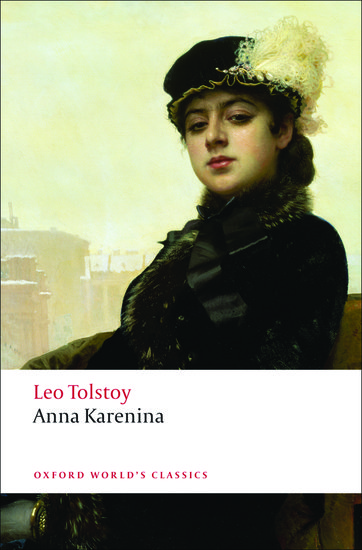
Anna Karenina’s happiness

It’s Valentine’s Day on Thursday, so let us celebrate the happiness of brief, all-encompassing love. We’ve paired a scene from the recent film adaptation of Anna Karenina, currently nominated for fours Oscars, with an excerpt of the novel below. In it, Anna and Vronsky discuss the happiness of their newfound love.

Read More
Book thumbnail image

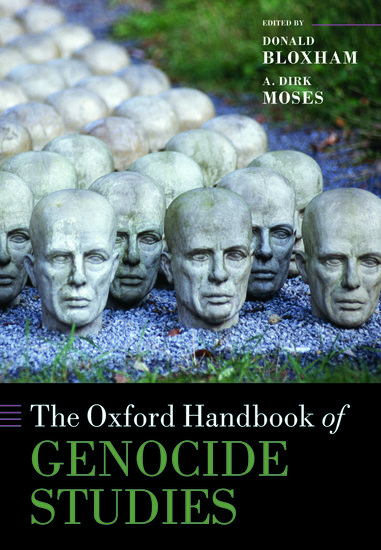
The essential human foundations of genocide

By Louis René Beres
“In the end,” says Goethe, “we are creatures of our own making.” Although offered as a sign of optimism, this insight seems to highlight the underlying problem of human wrongdoing. After all, in the long sweep of human history, nothing is more evident and palpable than the unending litany of spectacular crimes.

Read More
Book thumbnail image

Harry Christophers on Melgás

In January 2013 Oxford University Press published a beautiful setting of Salve Regina by Portuguese composer Diogo Dias Melgás (1638-1700). This edition, part of the Musica Dei donum series, is the first published version of the work and includes detailed performance and editorial notes by early music specialist Sally Dunkley. In this video, Harry Christophers […]

Read More
Book thumbnail image

On this day: the 50th anniversary of Sylvia Plath’s death

Philip Carter
Today, 11 February 2013, marks the 50th anniversary of the death of the poet Sylvia Plath (1932-1963). It is an event that has significantly shaped biographies and critical studies of her work — particularly following the publication of Ariel (1965), her posthumous collection edited and prepared by Ted Hughes. Then, as now, many reviewers regarded these poems as foretelling the circumstances of her death. Plath’s biography in the Oxford DNB offers an alternative perspective.

Read More
Book thumbnail image

The strange career of Birth of a Nation

Today represents a red letter day — and a black mark – for US cultural history. Exactly 98 years ago, D.W. Griffith’s Birth of a Nation premiered in Los Angeles. American cinema has been decisively shaped, and shadowed, by the massive legacy of this film.

Read More
Book thumbnail image

Quiz on the word origins of food and drink

Did you know that ‘croissant’ literally means ‘crescent’ or that oranges are native to China? Do you realize that the word ‘pie’ has been around for seven hundred years in English or that ‘toast’ comes from the Latin word for ‘scorch’? John Ayto explores the word origins of food and drink in The Diner’s Dictionary. We’ve made a little quiz based on the book. Are you hungry for it?

Read More
Book thumbnail image

His name was George F. Babbitt.

Sinclair Lewis was the first US writer to be awarded the Nobel Prize in Literature. Known for his insightful and critical depictions of American society, one of Lewis’ most famous works was Babbitt. In honor of the anniversary of Lewis’ birth (7 February 1885), we’ve crept into the archives and dug up some pages from Babbitt for you to enjoy.

Read More
Book thumbnail image

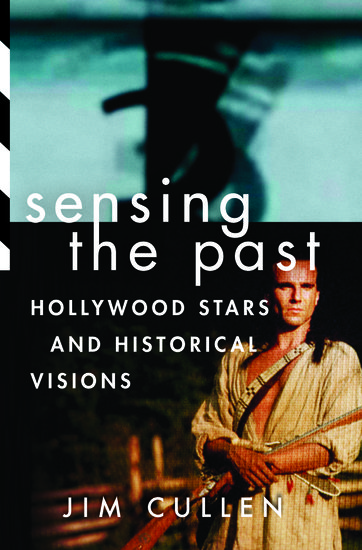
Based on a “true” story: expecting reality in movies

By Arthur P. Shimamura
This year’s academy award nominations of Argo, Lincoln, and Zero Dark Thirty, attest to our fascination of watching “true stories” depicted on the screen. We adopt a special set of expectations when we believe a movie is based on actual events, a sentiment the Coen Brothers parodied when they stated at the beginning of Fargo that “this is a true story,” even though it wasn’t.

Read More