Oxford University Press's
Academic Insights for the Thinking World

Book thumbnail image

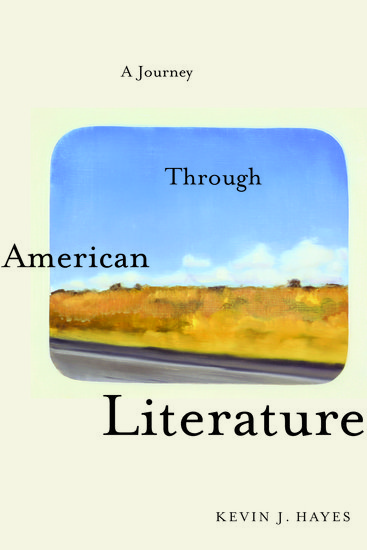
Playing with American Literature

By Kevin J. Hayes
Does anyone remember the card game Authors? I do. When we were children, my brother and sister and I had great fun playing the game. Authors was quite basic: its rules were the same as the rules for Go Fish. In Go Fish, players ask, “Do you have any aces?” or “Do you have any queens?” In Authors, alternatively, players ask, “Do you have any Shakespeares?” or “Do you have any Tennysons?”

Read More
Book thumbnail image

Could a calorie tax or cuts in farm subsidies reduce obesity?

By Julian M. Alston and Abigail M. Okrent
Every day — whether in the supermarket, in restaurants, in the workplace, or preparing meals at home — each US adult makes hundreds of decisions about what foods to buy, what to eat, and when. From those myriad decisions has come an unwelcome, progressive rise in obesity and the social costs of obesity-related illness. In less than thirty years, the prevalence of obese Americans has more than doubled, and now more than one-third of adult Americans are obese.

Read More
Book thumbnail image

The Brooklyn Bridge opens

This Day in World History
On May 24, 1883, the Brooklyn Bridge opened to great fanfare. With schoolchildren and workers enjoying a rare holiday, thousands flocked from Brooklyn and Manhattan to attend the dedication, led by President Chester Arthur and New York Governor Grover Cleveland. The crowd cheered as Emily Roebling — wife of the chief engineer and an integral figure in its construction — became the first person to cross. That night, fireworks illuminated the sky.

Read More
Book thumbnail image

Obama v. Romney on Afganistan strategy

By Andrew J. Polsky
Several weeks ago, when asked about his policy on Afghanistan, Republican presidential-nominee-in-waiting Mitt Romney said he would wait until he had spoken to his military commanders before deciding on a timetable to withdraw American troops. A recent report by David E. Sanger in the New York Times makes clear the striking difference in approach between Romney and President Barack Obama. Obama decided last year that he would conclude his Afghan troop surge in September 2012 and hold fast to his withdrawal timetable without conferring with General David H. Petraeus.

Read More

Bigger in size but equally ignorant: ‘shark’

By Anatoly Liberman
The fishy series in this blog began with shrimp, reached the heights of prawn, and now, bypassing countless intermediate steps, will offer a discussion of shark. I am sorry to admit that despite the monster’s size and voracity I can say deplorably little about the chosen subject, but, since I always deal with obscure vocabulary, I suffer from self-inflicted wounds and have no reason to complain. Before I come to the point, an apology is in order. While compiling my voluminous bibliography of English etymology, I didn’t encounter references to Tom Jones’s publication on shark.

Read More
Book thumbnail image

Fears and celebrations

By Louis René Beres
Once each year, on my birthday, I look closely in the mirror, much more closely than on ordinary days. Each year, I grow more apprehensive, of the unavoidable ebbing away of life, of the lingering loneliness that has come ever so incrementally with the death of others, of the gnawing obligation as a husband, father and grandfather to stay alive myself, and of the utterly certain knowledge that there is nothing I can ever do to meet this “responsibility.”

Read More
Book thumbnail image

Afghanistan’s other regional casualty

By Alexander Cooley
As NATO leaders gather in Chicago to garner international support for an Afghanistan drawdown and stabilization strategy, they should also consider the overlooked toll that the campaign has taken on the adjacent Central Asian states. Western security assistance has made the Central Asian states more authoritarian and more corrupt, while these trends are only likely to deteriorate as the drawdown of US and ISAF forces accelerates.

Read More
Book thumbnail image

Decoding the beauty of pearls

By Nori Satoh
How beautiful pearls are. Pearls emit a complex pattern of brightness, each with completely different color combination. They have attracted human beings, especially women, for long time, but simultaneously they have attracted biologists with a long-standing question of how pearl oysters generate such beautiful biomineralized materials.

Read More
Book thumbnail image

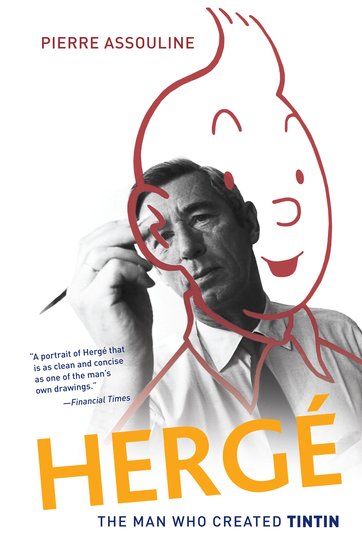
The soul of a child, Hergé

Georges Prosper Remi, better known to the world as Hergé, was born on 22 May 1907. A Belgian comic book artist with almost no formal training, he is best remembered for the enduring character of Tintin. The boy adventurer with his trusted dog, Snowy, at his side has captured the hearts and minds of children and adults across the world. Nevertheless, from Steven Spielberg’s 3D film to the controversy over Tintin au Congo, Tintin’s creator remains elusive. We offer a glimpse into the life and personality of the “father of Tintin” with an excerpt from Hergé by Pierre Assouline.

Read More
Book thumbnail image

Ortelius publishes first world atlas

This Day in World History
On May 22, 1570, bookmaking and map-making history were made. Abraham Ortelius, a Flemish book collector and engraver published the Theatrum Orbis Terrarum (Epitome of the Theater of the World) — the world’s first atlas.

Read More
Book thumbnail image

On hearing compositions for the first time

Bob Chilcott is one of the most active choral composers and conductors in Britain today. His 2012 conducting schedule will take him to Poland, Denmark, Spain, Germany, China, Japan, USA, and Canada, as well as to the Royal Albert Hall for the premiere of “The Angry Planet” at the BBC Proms. He spoke to us about hearing his compositions for the very first time and the different qualities that international choirs bring to his music.

Read More
Book thumbnail image

Time-travelling to distant climates

By Jan Zalasiewicz and Mark Williams
Imagine that time machine has finally been invented. All of the ancient Earth can now be visited. One could experience the world as it was: see long-dissipated cloud systems with one’s own eyes, feel ancient rain and primeval winds, and sense the warmth of prehistoric sunshine on one’s back. A safari into the ancient past with just 5 stops were allowed. Where would one choose to go?

Read More
Book thumbnail image

Emotion, interest, and motivation in children

By Kenneth Barish
When talking about children’s emotions, it is difficult to avoid saying things that are not already commonly known, or even common sense. Recent advances in the psychology and neuroscience of emotions, however, now offer us a new understanding of the nature of emotion. In childhood and throughout life, our emotions guide our thoughts and our imagination, our behavior and our moral judgments.

Read More