Oxford University Press's
Academic Insights for the Thinking World

Book thumbnail image

Charles Lindbergh, a new hero

By Thomas Kessner
He came as it were from nowhere, setting out on May 20, 1927 on a journey. The non-stop New York to Paris flight was a dream of many great aviators, and they had failed — many of them tragically — to achieve it. Six, all with sterling war records, had died or disappeared trying. The prevailing theory of the experts was to put together a crew of three or four, build a big plane to withstand the stresses and turbulence of the transatlantic flight, strap on as many engines as you can, and fill the fuel tanks to the brim.

Read More
Book thumbnail image

Da Gama reaches Calicut, India

This Day in World History
On May 20, 1498, sailing for the Portuguese crown, Vasco da Gama reached Calicut, India. Having successfully sailed around the southern tip of Africa, da Gama had pioneered a sea route from Europe to Asia that bypassed the Muslim nations that controlled the overland spice trade.

Read More
Book thumbnail image

The Dark Lady in ink and paper

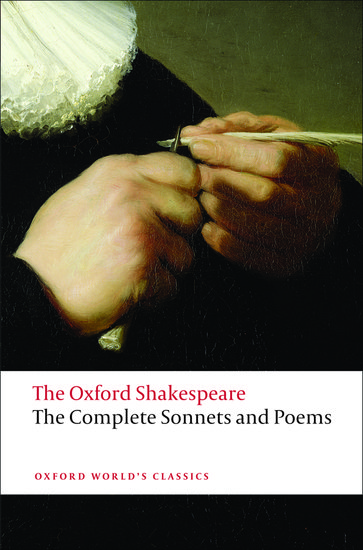
On 20 May 1609, Shakespeare’s sonnets were first published in London by Thomas Thorpe (work now found in the Folger Library). The Bard was nearing the end of his play-writing career and soon to retire. A lifetime of poetry was gathered together and printed — possibly without the permission of the author. To celebrate, we’ve excerpted Sonnet 127 and additional commentary from our Oxford World Classics edition edited by Colin Burrow — The Oxford Shakespeare: The Complete Sonnets and Poems. Enjoy the Dark Lady of Shakespeare’s poetry.

Read More
Book thumbnail image

Happy Birthday, Mr. President

It’s John F. Kennedy’s 45th birthday at Madison Square Garden on 19 May 1962. Only it’s not. His real birthday is ten days in the future. That compelling mass schmaltz that Americans do with an underlying, knowing absurdity saturates the event. After she has characteristically missed her cue on at least two occasions, the host Peter Lawford finally (and with inadvertent irony) introduces the “late Marilyn Monroe”.

Read More
Book thumbnail image

Laughing in the art museum

By Cynthia Freeland
Art museums are not churches, but sometimes it feels as if you should behave with equal decorum inside. They seem meant to inspire reverence with their cool interiors and marble staircases. The guards eye visitors like the suspicious librarians of my childhood who always hissed “Whisper!” to noisy school groups. I once was glared at by another visitor when I burst out laughing in the Tate Modern Museum at Andy Warhol’s silver Elvis with guns. The combination of the Southern crooner posing as a macho gun-slinging cowboy with Warhol’s glitzy treatment was just too funny. I wanted to tell that woman she was missing the joke.

Read More
Book thumbnail image

A man’s true worth

A comparison of the Peale and Simpson portraits reveals curious similarities. Yarrow is wearing the same style knit cap in both, although the stripes are in different colors. The collar and buttons of his jacket are the same. He has a white shirt and red waistcoat in both paintings, but his jacket is unbuttoned in the Simpson to show more of the waistcoat. Even the pose, forehead wrinkles, and whiskers are the same in the two paintings. Yarrow looks significantly older in the Simpson painting, although he was in fact only three years older. Whether the difference stems from Peale’s desire to produce a flattering image or from some illness that caused Yarrow’s appearance to age rapidly is not known.

Read More
Book thumbnail image

The evolution of orchids

By Alec Pridgeon
“Blasphemy”! That was the only remark that anyone heard from the woman after she stormed out of the orchid society meeting in Florida. Taken aback for a moment, the speaker continued his talk on orchid evolution to an otherwise appreciative audience.

Read More
Book thumbnail image

How are cures invented?

By Jonathan Slack
When I arrived in the USA as a professor I was surprised to find how specialized American scientists are. Most US biomedical labs just seem to work on one molecular pathway or even one molecule.

Read More
Book thumbnail image

Ghost hunting: Research memories of Tessa Verney Wheeler

By Lydia Carr
The path of the biographer is littered with terrors. Few, to be fair, match the risks listed on the fieldwork forms put out by various Institutes of Archaeology, those exhaustive documents intended to pinpoint every potential danger (and indemnify the sponsoring department against paying for more than a reasonable number of snakebite treatments). But as I’ve often said, biographic research, at least regarding twentieth-century subjects, resembles nothing as much as the first five minutes of a Doctor Who episode, or the last five pages of a M.R. James story.

Read More
Book thumbnail image

A case of mistaken identity

Since Peale took the painting with him back to Philadelphia, Yarrow obviously did not pay for it. There is no record of whether Peale displayed it in the museum or showed it to the American Philosophical Society. He died in 1829, but the museum continued to operate. When it finally closed in 1852, Peale’s grandson Edmund came across the painting and mistakenly labeled it “Billy Lee,” thinking his grandfather had painted the body servant of George Washington. That the portrait might be of Lee was not an unreasonable assumption. Peale knew him during the terrible winter at Valley Forge.

Read More
Book thumbnail image

Montréal is founded

This Day in World History
Paul de Chomedey, Sieur de Maisonneuve, jumped from the wooden boat onto land. Falling to his knees, he blessed the ground. His followers also came ashore and built an altar, where a Jesuit father offered a blessing. “You are a grain of mustard-seed,” he said, “that shall rise and grow till its branches overshadow the earth.” With these words, French settlers founded Ville-Marie de Montréal — Montréal, Canada — on May 17, 1642.

Read More

Applications in medical education

We at OUP are no strangers to the changes in publishing and all the different forms a ‘book’ can take. One of our recent medical titles has been adapted as an iPad application (or ‘app’) — Cardiac Imaging Cases: Cases in Radiology for iPad — so we asked the co-author what it’s like to practice and learn medicine in this new form.

Read More
Book thumbnail image

Well-being: David Cameron’s happiness index

By Siobhan Farmer and Barbara Hanratty
In case you hadn’t noticed, wellbeing is what you need. From companies promoting food supplements to lifestyle magazines, think-tanks and Government departments, wellbeing is on everyone’s agenda.  Happiness, quality of life, life satisfaction – it doesn’t seem to matter that we don’t know exactly what it is – we definitely want some. 

Read More
Book thumbnail image

On independence and the continuation of monarchy

This week, Christine Grahame, convenor of the Scottish National Party’s Justice committee, has urged the linkage of the forthcoming Scottish referendum on independence to a referendum on the continuation of monarchy. Her proposal curiously mirrors discussions in the ruling circles of a once-revolutionary England.

Read More
Book thumbnail image

It’s Ecology, not Environmental Science

By David Gibson
“You’re an ecologist, so tell me, should I replace all the incandescent bulbs in my house with fluorescent bulbs? And, what about these new light-emitting diode (LED) bulbs?” Well, I have a reasonably well-informed opinion on this issue, but it’s not really my expertise. “Perhaps then you can tell me more about the problem of invasive species?” Now you’re talking; this is something that ecologists can help with.

Read More

After ‘shrimp’ comes ‘prawn’

By Anatoly Liberman
Several people pointed out to me that I cannot distinguish a shrimp from a prawn, and I am afraid they are right. The picture copied for the shrimp post had the title “Shrimp cocktail,” but the shrimp there are too big and are really prawns. In any case, I decided to atone for my mistake and write a post on the etymology of prawn. This plan was hard to realize, because the origin of prawn is really, that is, hopelessly unknown: the word exists, but no one can say where it has come from. It is strange that more or less the same holds for shrimp and shark, though both are less opaque. There must have been some system behind calling those sea creatures. The fishermen who coined such names had a reason to call a shrimp a shrimp and a prawn a prawn.

Read More