Oxford University Press's
Academic Insights for the Thinking World

Amazing!

By Anatoly Liberman
Words, as I have noted more than once, live up to their sense. For instance, in searching for the origin of amaze, one encounters numerous truly amazing reefs. This is the story. Old English had the verb amasian “confuse, surprise.”

Read More
Book thumbnail image

Tale of two laboratories

By Istvan Hargittai
The Los Alamos National Laboratory came to life in 1943 as the concluding segment of the Manhattan Project to produce the atomic bombs for the US Army. In August 1945, these bombs were dropped over Hiroshima and Nagasaki.

Read More
Book thumbnail image

Seven historical facts about financial disasters

By Richard S. Grossman
In the early 1600s, the King of Sweden declared that copper, along with silver, would serve as money. He did this because he owned lots of copper mines and thought that this policy would increase the public’s demand for copper—and also its price, making him much wealthier.

Read More
Book thumbnail image

What has psychology got to do with the Internet?

By Yair Amichai-Hamburger
I believe that the Internet has special characteristics which together create an exceptional environment for the user. To start with, many websites allow you to maintain your anonymity. You may do this by assuming a pseudonym, using your initials or just “leaving the space blank”. This characteristic frees people from many of the issues that constrict them in their day to day offline lives.

Read More
Book thumbnail image

FDR, Barack Obama, and the president’s war powers

By Richard Moe
Barack Obama earlier this year became the first president in recent memory to propose limiting the powers of his office when he called for reigning in the use of drones. “Unless we discipline our thinking, our definitions, our actions,” he said on 23 May 2013.

Read More
Book thumbnail image

Why does this baby cry when her mother sings?

This mesmerizing video has received over 21 million views, and is spreading rapidly through social media. The baby is 10 month-old Mary Lynne Leroux, who weeps as her mother Amanda sings My Heart Can’t Tell You No, a song most recently popularized by Sara Evans.

Read More
Book thumbnail image

Discussing capital markets law

There are many mechanisms for raising capital — debt, derivatives, equity, high yield products, securitization, and repackaging – which fund and drive fund the economy. But as international financial markets move and shift as the world changes, regulations and legal frameworks must also adapt rapidly.

Read More
Book thumbnail image

To medical residents

By Heidi Moawad
The completion of residency training is a time of key decisions. For residents, the assessment of several strong job options is a long-awaited reward after years of preparation. However, unlike the regimented and scheduled process of residency applications and interviews culminating in match day during the fourth year of medical school, the search for a job or fellowship is self-directed, individualized, and without a set end point or deadline.

Read More
Book thumbnail image

An Oxford Companion to hosting the most explosive Guy Fawkes Night

By Daniel Parker
For over 400 years, bonfires, fireworks, and effigies have burned on November 5th to commemorate the failed Gunpowder Plot put together by Guy Fawkes and twelve other conspirators. With a little help from OUP, you could out-shine all previous Bonfire Night celebrations. So pick up your Roman Candles, grab some sparklers, and join me as we run down OUP’s top five tips for hosting the perfect Guy Fawkes Night.

Read More
Book thumbnail image

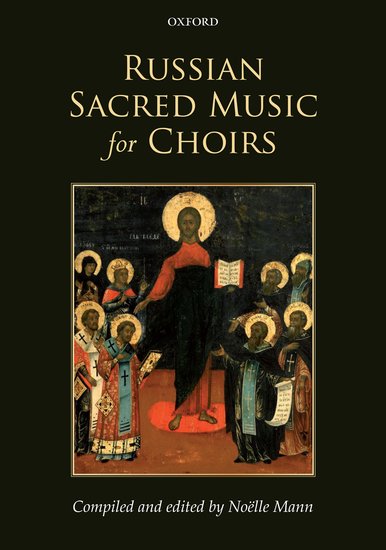
Russian choral music: the joy of discovering ‘unknown unknowns’

By Kristian Hibberd
I first met its editor Noëlle Mann in the late 1990s as I began my PhD at the University of London. During the course of my studies, I had met (and often had the privilege of being taught by) some incredibly gifted, dedicated musicians and academics. Noëlle was all of that but what struck me most profoundly was the irresistible drive and boundless energy she applied to any venture to which she committed herself

Read More
Book thumbnail image

A few things to remember, this fifth of November

As you prepare to gather round a bonfire and to ‘ooh’ and ‘ahh’ at fireworks, don’t forget (indeed, ‘remember, remember’) that you’re part of a well-established national tradition. What’s now known as the Gunpowder Plot was uncovered on the night of Monday 4 November 1605 when Thomas Knyvett, keeper of Whitehall Palace, led a second search of the vaults under the House of Lords.

Read More
Book thumbnail image

Add a fourth year to law school

By Edward Zelinsky
President Obama has joined with other critics of contemporary legal education in calling for the reduction of law school to a two year program. The President and these other critics are wrong. Indeed, the remedy they propose for the ills of legal education has it exactly backward.

Read More
Book thumbnail image

Announcing the Place of the Year 2013 Shortlist: Vote for your pick

In honor of Oxford’s 20th edition of the acclaimed Atlas of the World, we put together a longlist of 20 places around the globe for our yearly Place of the Year competition. The votes have been tallied, the geography committee has provided their essential input, and the shortlist nominees have been decided upon.

Read More
Book thumbnail image

A close call: the victory of John Adams

Today marks the 217th anniversary of the start of the third election of the president of the United States on 4 November 1796. Still a young country, the election was center stage that year as George Washington decided to stop running. Many patriots were viable candidates, but John Adams had served as vice president under Washington and was an obvious choice for a candidate.

Read More
Book thumbnail image

Drone technology and international law

By Frederik Rosén
Drone technology presents us with a quantum leap in the history of seeing in war: a history moving from hilltops and watchtowers to the use of binoculars, balloons and airplanes and then on to radar, night vision, satellites…and drones. Drone technology brings us closer than ever to the battleground. It is a medium of proximity and visibility.

Read More