Oxford University Press's
Academic Insights for the Thinking World

Book thumbnail image

Two difficult roads from empire

By Martin Thomas
Britain’s impending withdrawal from Afghanistan and France’s recent dispatch of troops to the troubled Central African Republic are but the latest indicators of a long-standing pattern. Since 1945 most British and French overseas security operations have taken place in places with current or past empire connections.
Read More
Book thumbnail image

Persecution in medicine

By Arpan Banerjee
Recently I had the good fortune to see an excellent production of Bertolt Brecht’s play The Life of Galileo at the Birmingham Repertory Theatre. Brecht has a tenuous connection with the medical profession: he registered in 1917 to attend a medical course in Munich and found himself drafted into the army, serving in a military VD clinic for a short while before the end of the war.

Read More
Book thumbnail image

Preparing for International Council for Commercial Arbitration 2014

By Rachel Holt and Jo Wojtkowski
Oxford University Press is extremely excited to be attending the twenty-second International Council for Commercial Arbitration (ICCA) conference, to be held at the InterContinental Miami, Florida, on 6-9 April 2014. This year’s theme, Legitimacy: Myths, Realities, Challenges gives opportunity for practitioners, scholars and judges to explore the issues surrounding, what has been dubbed by some, the legitimacy crisis.

Read More
Book thumbnail image

Preparing for the 2014 ASIL/ILA annual meeting

By Jo Wojtkowski
This year’s joint ASIL/ILA Annual Meeting is of historic importance for the international law community. It is the first time that ASIL and the International Law Association (ILA) have joined forces to create a single combined conference of epic proportions. According to ASIL it is “expected to be one of the largest in international law history.”

Read More
Book thumbnail image

The American Noah: neolithic superhero

By William D. Romanowski Reports suggest that Hollywood’s sudden interest in Bible movies is driven by economics. Comic book superheroes may be losing their luster and the studios can mine the Bible’s “action-packed material” without having to pay licensing fees to Marvel Entertainment. Maybe this explains why director Darren Aronofsky’s pitch to studio executives was […]

Read More
Book thumbnail image

Word histories: conscious uncoupling

By Simon Thomas
Gwyneth Paltrow and Chris Martin (better known as an Oscar-winning actress and the Grammy-winning lead singer of Coldplay respectively) recently announced that they would be separating. While the news of any separation is sad, we can’t deny that the report also carried some linguistic interest.

Read More

Is Amanda Knox extraditable from the United States to Italy?

The Amanda Knox case is complex in view of Italy’s complicated procedure in matters involving serious crimes. These crimes are tried before a special court called the Court of Assizes. These courts have two professional judges and six lay judges, much like a jury in Anglo-American cases.

Read More

Philosophy and its history

If you go into a mathematics class of any university, it’s unlikely that you will find students reading Euclid. If you go into any physics class, it’s unlikely you’ll find students reading Newton. If you go into any economics class, you will probably not find students reading Keynes.

Read More
Book thumbnail image

A question of consciousness

By Susan Blackmore
The problem of consciousness is real, deep and confronts us any time we care to look. Ask yourself this question ‘Am I conscious now?’ and you will reply ‘Yes’. Then, I suggest, you are lured into delusion – the delusion that you are conscious all the time, even when you are not asking about it.

Read More
Book thumbnail image

Western (and other) perspectives on Ukraine

By Robert Pyrah
Untangling recent and still-unfolding events in Ukraine is not a simple task. The western news media has been reasonably successful in acquainting its consumers with events, from the fall of Yanukovich on the back of intensive protests in Kiev, by those angry at his venality and signing a pact with Russia over one with the EU, to the very recent moves by Russia to annex Crimea.

Read More
Book thumbnail image

China’s exchange rate conundrum

Ronald McKinnon
In late February, the slow appreciation of China’s currency was interrupted by a discrete depreciation from 6.06 to 6.12 yuan per dollar. Despite making front page headlines in the Western financial press, this 1% depreciation was too small to significantly affect trade in goods and services—and hardly anything compared to how floating exchange rates change among other currencies.

Read More
Book thumbnail image

Dementia on the beach

By Cretien van Campen
If you think it makes little sense to take persons with dementia to the beach, it will surprise you that a nursing home in Amsterdam has built a Beach room. In this room, residents can enjoy the feeling of sitting in the sun with their bare feet in the sand. The room is designed to improve the well-being of these residents. The garden room at the centre of the home has recently been converted into a true ‘beach room’, complete with sand and a ‘sun’ which can be adjusted in intensity and heat output.

Read More
Book thumbnail image

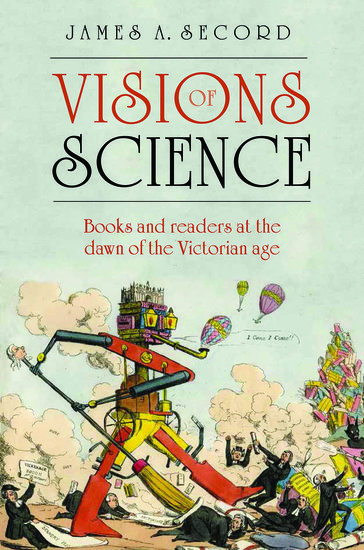
When science stopped being literature

By Jim Secord
We tend to think of ‘science’ and ‘literature’ in radically different ways.  The distinction isn’t just about genre – since ancient times writing has had a variety of aims and styles, expressed in different generic forms: epics, textbooks, lyrics, recipes, epigraphs, and so forth.

Read More

Etymology as a profession

By Anatoly Liberman
Two or three times a year I receive questions about what the profession of an etymologist entails. I usually answer them briefly in my “gleanings,” and once I even devoted a post to this subject. Perhaps it won’t hurt if I return to the often-asked question again.

Read More
Book thumbnail image

Monuments Men and the Frick

By Stephen Bury
At rare moments in time a library can have a singular impact on history. The recent release of George Clooney’s film Monuments Men (2014) has triggered an interest in the role that the Frick Art Reference Library played in the preparation of maps identifying works of art at risk in Nazi-occupied Europe. For the first time in history a belligerent was taking care of cultural treasures in a war zone.

Read More