Oxford University Press's
Academic Insights for the Thinking World

  • History

Book thumbnail image

A small town near Auschwitz: 70 years on

By Mary Fulbrook
Take a trip to the Polish town of Będzin today, and there is not a lot to see. The ruins of the old castle rise above the town; a Lidl supermarket helps the casual traveller searching in vain for an open pub or restaurant. This certainly does not seem to be a key location on the trail to Auschwitz, now the epicentre of what might be called Holocaust tourism.

Read More
Book thumbnail image

African Americans at the Olympic Games

By Robert Repino
Though they were conceived for idealistic reasons and designed to celebrate universal human aspirations, the modern Olympic Games have served as a stage for the world’s political and social struggles. Virtually every political controversy — from wars to ideological conflicts to human rights struggles — have managed to find expression every four years in the athletic events and in the media campaigns that go with them. Perhaps no group has influenced the Games more — both as athletes and as human rights pioneers — than African Americans, whose very participation in the modern games has been one of many tiny steps forward in the progress toward a more just world.

Read More

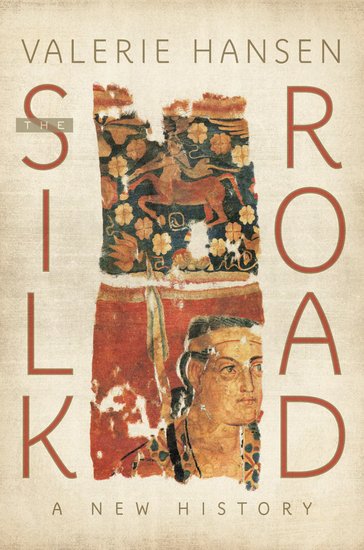
Facts about the Silk Road

The ‘Silk Road’ was a stretch of shifting, unmarked paths across massive expanses of deserts and mountains – not a real road at any point or time. Archaeologists have found few ancient Silk Road bridges, gates, or paving stones like those along Rome’s Appian Way. They are best seen from the air…

Read More
Book thumbnail image

London’s Burning!

Today we are celebrating the UK publication of The Day Parliament Burned Down, in which the dramatic story of the nineteenth century national catastrophe is told for the first time. In this blog post, author Caroline Shenton presents the top ten London fires that have changed the face of the capital city.

Read More
Book thumbnail image

Making prisoners work: from hulks to helping victims

By Susan Easton and Christine Piper
In July 2012, two prisoners lost their application for judicial review of two Prison Service Instructions which implement the Prisoners’ Earnings Act 1996. This Act demands that a deduction of up to 40% from the wages of prisoners in open prisons is imposed.

Read More
Book thumbnail image

History lessons from Beijing taxi drivers

By Valerie Hansen
“You have made a grave error in deciding to focus on the history of the Silk Road. The most important, and the most interesting, period in all of Chinese history is the third century, after the overthrow of the Han dynasty, when China was divided into three major kingdoms.” The Beijing taxi driver was dead earnest. Like many other drivers he listened regularly to radio broadcasts about Chinese history.

Read More
Book thumbnail image

An ODNB guide to the people of the London 2012 opening ceremony

By Philip Carter
Where do you stand on Friday’s opening ceremony for the 2012 Olympic Games? Delighted, inspired, a little bit baffled? There’s a possibility, we realize, that not all of the show’s 1 billion-strong audience will have caught every reference. So here’s the Oxford Dictionary of National Biography guide to some of those who made it possible.

Read More
Book thumbnail image

The medieval origins of 20th century anti-semitism in Germany

By Nico Voigtländer and Hans-Joachim Voth
When the Black Death struck in Europe, it killed between 30 and 70 percent of the population. What could account for such a catastrophe? Quickly, communities started to blame Jews for the plague. Pogroms occurred all over Switzerland, Northern France, the Low Countries, and Germany. Typically, the authorities in a location would be alerted to the “danger” by a letter sent from another town (Foa 2000). In typical cases, the city council then ordered the burning of the entire Jewish community.

Read More
Book thumbnail image

How radioactivity helps scientists uncover the past

By Claudio Tuniz
Neanderthal was once the only human in Europe. By 40,000 years ago, after surviving through several ice ages, his days (or, at least, his millennia) were numbered. The environment of the Pleistocene epoch was slightly radioactive, the same way it is today, but this was not Neanderthal’s problem. The straw that broke the camel’s back was the arrival of a new human

Read More
Book thumbnail image

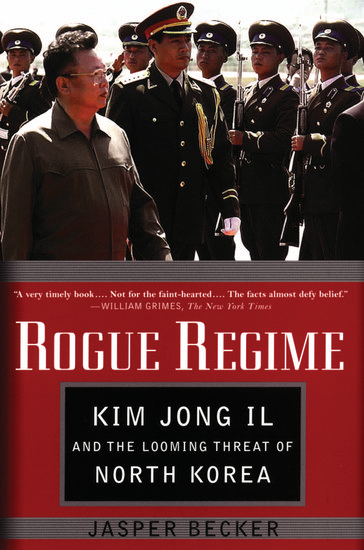
Olympic confusion in North and South Korea flag mix-up

By Jasper Becker
Do North and South Korea belong to the same country? Are they the same race sharing the same history and language? The answers to these questions are far from clear even to the Koreans themselves. It depends on the day really or the Olympics. In the 2000, 2004, and 2006 Olympics the two countries joined together at the games’ opening ceremonies and marched in matching uniforms behind the Korean Unification Flag.

Read More
Book thumbnail image

British Olympic lives

By Mark Curthoys
The London Games have unsurprisingly stimulated renewed interest in Britain’s Olympic heritage. The National Archives has made available online records of the modern Olympic and Paralympic Games. Chariots of Fire (1981), the film which tells the story of the sprint gold medals won in Paris in 1924 by Harold Abrahams and Eric Liddell, has been re-released. English Heritage commemorative blue plaques have recently been unveiled in London at the homes of Abrahams and his coach Sam Mussabini.

Read More
Book thumbnail image

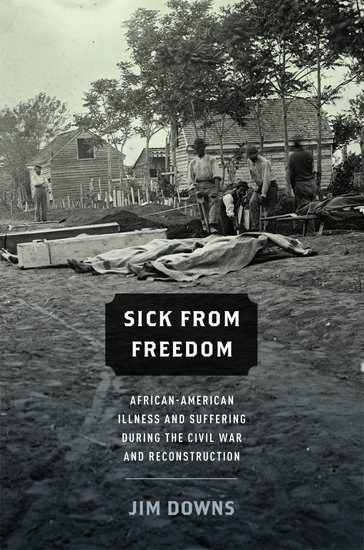
Dispelling the myths of emancipation

The story of the Civil War has never been simple: from slavery to states rights, liberation to sharecropping, the loss of life on the battlefield with bullet wounds to in the camps with illness. As new scholarship for the sesquicentennial emerges, many myths are shattering. One such myth is exactly how liberating emancipation was.

Read More
Book thumbnail image

Rosalind Franklin: the not-so-dark lady of DNA

By Jenifer Glynn
If Rosalind Franklin had lived, she would have been 92 today. But she died at 37, five years after the discovery of the structure of DNA had been announced by Watson and Crick. As Crick confessed later (but never confessed to her), “the data which really helped us to obtain the structure was mainly obtained by Rosalind Franklin”.

Read More
Book thumbnail image

No Panacea: Why a draft wouldn’t stop a war

Andrew J. Polsky
The long conflicts in Iraq and Afghanistan have prompted a number of politicians and pundits to recommend a return to conscription. On several occasions Charles Rangel, the Democratic representative from New York City, has introduced bills to revive the draft. Stanley McChrystal, former military commander in Afghanistan, has urged that the country not fight another war without a draft. His call was the point of departure for noted journalist Thomas E. Ricks, who proposes a law mandating universal service for all 18-year-olds, with an option for either military or civilian public service.

Read More
Book thumbnail image

Was Elizabeth I Richard II?

The Kent Archives have a cache of Dering letters — begging letters, affectionate letters, letters full of gossip and news. One of them came with an enclosure that caught my attention: it was the handwritten transcript of a conversation, almost a playlet. It rang bells; I remembered reading it years back, although most of the details were beyond recall. The document recorded an encounter between Queen Elizabeth I and William Lambarde, a legal theorist and pioneering antiquarian

Read More

Who really deciphered the Egyptian Hieroglyphs?

The polymath Thomas Young (1773-1829) — physicist, physiologist, physician and polyglot, among several other things — became hooked on the scripts and languages of ancient Egypt in 1814, the year he began to decipher the Rosetta Stone. He continued to study the hieroglyphic and demotic scripts with variable intensity for the rest of his life, literally until his dying day.

Read More