Oxford University Press's
Academic Insights for the Thinking World

  • History

Book thumbnail image

The flatterers: Sweet-talking the American people

By Andrew J. Polsky
If there is one thing on which Mitt Romney and Barack Obama agree, it is this: We, the American people, are wonderful. “We are the children and grandchildren and great-grandchildren of the ones who wanted a better life, the driven ones.” We have always been determined to “build a better life” for ourselves and our children. (Romney)

Read More

Jericho: The community at the heart of Oxford University Press

We’re delighted to announce that the Oxford University Press Museum, based at OUP’s Oxford publishing office, reopens today following extensive refurbishment. Archivist Martin Maw celebrates the occasion by taking a look at the historic links between OUP and Jericho, the local area.

Read More

Top 3 differences between The Colbert Report and The Daily Show

How does being a guest on The Colbert Report compare to being a guest on The Daily Show? Here’s a breakdown!
More Face Time with Everyone: Backstage at The Daily Show was a blur; I had no sooner arrived than I was in make-up, met Jon, and was heading out into the lights. By contrast, I had lots of time at The Colbert Report to see the stage, meet the producers, and chat with sundry tech people.

Read More
Book thumbnail image

The political impossibility of the Ryan-Romney budget

By Andrew J. Polsky
Pain has no political constituency. This fundamental rule of American politics (and democratic systems more generally) points up the difficulty of enacting or sustaining public policies that leave large numbers of citizens worse off. Politicians dread casting votes on legislation that will impose costs on any significant group of constituents, lest the opposition seize on the issue in the next election. Austerity policies typically spell defeat for the political party or coalition that imposes them.

Read More
Book thumbnail image

Josquin des Prez

By Jesse Rodin
No figure in Western music poses a greater challenge to the writing of history than Josquin des Prez (ca. 1450–1521). That’s because there is no composer of comparative fame — musicians regularly speak Josquin’s name in the same breath as Bach, Beethoven, or Brahms — about whom so very little is known.

Read More
Book thumbnail image

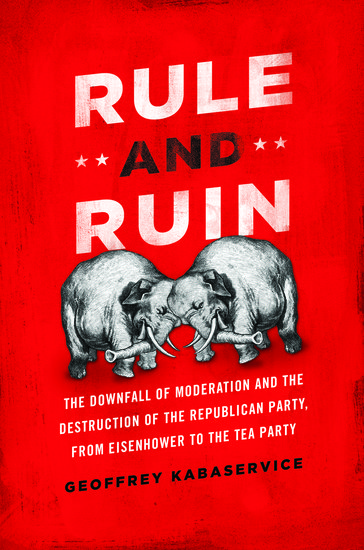
The Decline and Fall of the American Political Convention

By Geoffrey Kabaservice
Will you be tuning in to watch this year’s Republican and Democratic national conventions in the hope of seeing something of historic significance? The managers of both conventions are working hard to make sure that you don’t get your wish. From their standpoint, the best convention is a precooked and tightly controlled event that passes placidly and without controversy into the annals of national forgetfulness.

Read More
Book thumbnail image

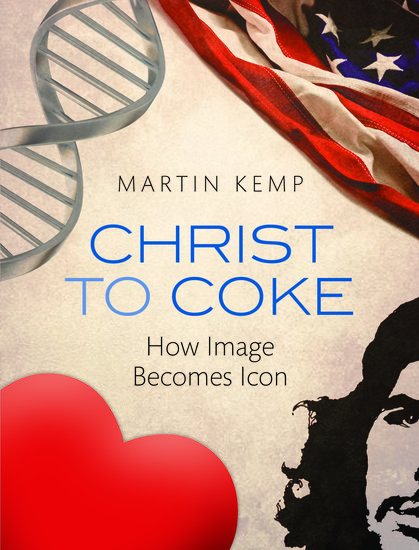
Martin Kemp vs John Gittings: Icons of Peace

Today, John Gittings and Martin Kemp will be discussing icons of peace. Human history is dominated by war, but can we forge a different narrative? In The Glorious Art of Peace, former Guardian journalist John Gittings argues that progress depends on a peaceful environment, identifying iconic proponents of peace such as Confucius and Gandhi. Art historian Martin Kemp’s Christ to Coke looks at the creation of some of our peacetime icons and traces the things they have in common.

Read More
Book thumbnail image

The Roman Republic: Not just senators in togas

When we gaze back at the ancient world of the Roman Republic, what images are conjured in our minds? We see senators clad in togas, and marching Roman legions. The Carthaginian Hannibal leading his elephants over the Alps into Italy, Julius Caesar crossing the Rubicon and his murder on the Ides of March. These images are kept fresh by novels and comic books, and by television series like Rome and Spartacus: Blood and Sand.

Read More
Book thumbnail image

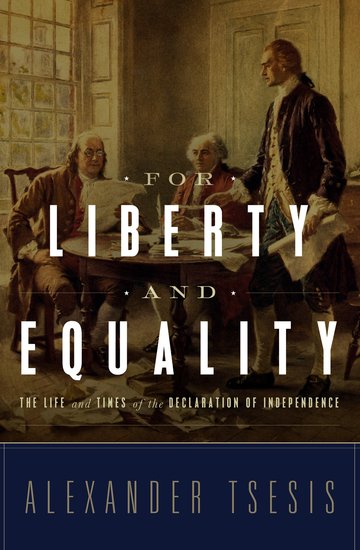
The Declaration of Independence and campaign finance reform

By Alexander Tsesis
The Supreme Court’s recent equation of personal and corporate campaign contributions has vastly increased corporate and super-PAC donations during this election year. The Court’s premise that corporations deserve the same right to political speech as ordinary people is a modernist interpretation that would have sounded completely foreign to the framers of the Declaration of Independence. I

Read More
Book thumbnail image

The difficulty of insider book theft

By Travis McDade
On Sunday, the New York Times reported on the wholesale looting of the prestigious Girolamini Library in Naples, Italy, by its director, Marino Massimo de Caro. He seems to have treated the place as his own personal collection, stealing and selling hundreds — maybe thousands — of rare and antiquarian books during his 11 month tenure. This has provoked the normal amount of head-shaking and hand-wringing. But what is most striking — aside from the embarrassing appointment of the unqualified de Caro to the job in the first place — is how terrible a thief he was.

Read More
Book thumbnail image

Did we really want a National Health Service?

By Nick Hayes
For most today, it’s difficult to imagine a British hospital system where treatment is not ‘free’ at the point of delivery, paid for out of national taxation, because in our imagination, the alternatives conjure pejorative images of the Americanisation of health. Those today opposed to decentralisation also echo the concerns of earlier health reformers like Dr Stark Murray, who thought the pre-nationalised hospital system simply disparate and chaotic.

Read More
Book thumbnail image

The Demise of the Toff

By William Doyle
Born to tenants of a country squire in Yorkshire, I knew about what my grandmother called ‘toffs’ at an early age. The squire was a toff. As a child I scarcely realised that the squire and his lifestyle were already relics of a fast-disappearing pattern of society.

Read More
Book thumbnail image

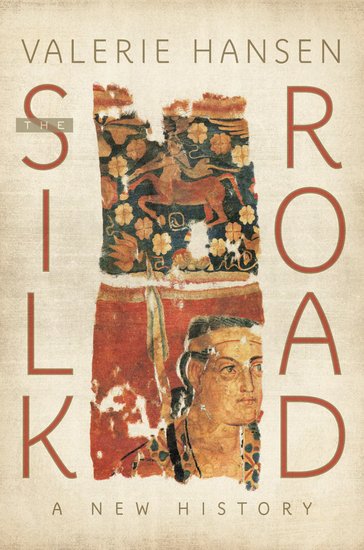
Even more facts about the Silk Road

By Valerie Hansen
The “Silk Road” was a stretch of shifting, unmarked paths across massive expanses of deserts and mountains — not a real road at any point or time. I previously examined the historical documents and evidence of the silk road, but here are a few more facts from camels to Marco Polo on this mysterious route. The peak years of the Silk Road trade were between 500 and 800 C.E., after the fall of the Han dynasty and Constantinople replaced Rome as the center of the Roman empire.

Read More
Book thumbnail image

15 August 1040: Macbeth kills King Duncan I of Scotland

By Daniel Swift
Susan Sontag wrote that having a photograph of Shakespeare would be like having a piece of the True Cross. We don’t have a photograph, of course, and even the portraits that we do have are unreliable, but in his plays he left snapshots of a different kind.

Read More
Book thumbnail image

Sherry Smith on Red Power

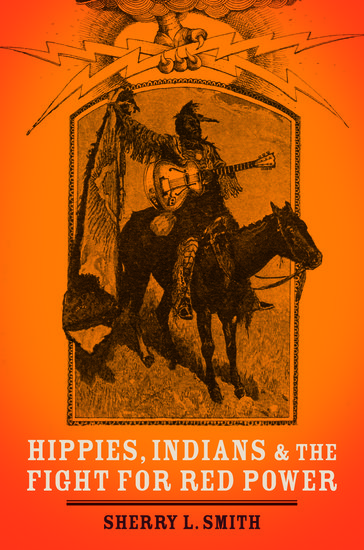
In the 1960s hippies and Indians found common cause. How so? They joined forces to challenge and overturn longstanding federal policies designed to extinguish all remnants of native life and culture. In addition, civil rights advocates, Black Panthers, unions, Mexican-Americans, Quakers and other Christian denominations, and Hollywood celebrities also supported Red Power activists’ fight for Indian rights. In Hippies, Indians, and the Fight for Red Power, Sherry Smith offers the first full account of this remarkable story.

Read More