Oxford University Press's
Academic Insights for the Thinking World

  • History

Book thumbnail image

Intersections of sister fields

By Sarah Milligan
In March 2012, there was a discussion on the public folklorists’ listserv Publore about the evolution of oral history as a defined discipline and folklorists’ contribution to its development. As an observer and participant in both fields, I see overlap today. The leaderships of both national associations — the Oral History Association (OHA) and the American Folklore Society (AFS) — frequently collaborate on large-scale projects, like the current IMLS-funded project looking at oral history in the digital age.

Read More
Book thumbnail image

Reflections on the first presidential debate

By Andrew J. Polsky
As the first presidential debate recedes in the rearview mirror, we may be able to gain clearer perspective on what it means to the 2012 presidential race. For starters, the clear winner was the news media. No one likes a one-sided presidential campaign, and that was the direction of the contest over several weeks prior to the debate.

Read More
Book thumbnail image

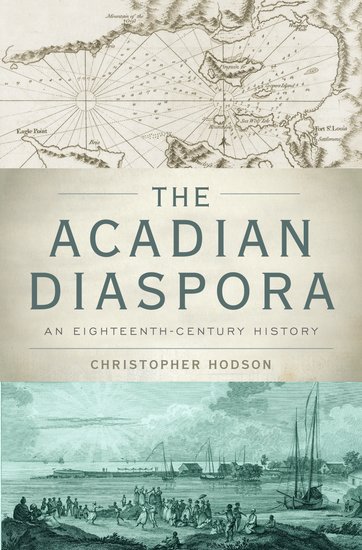
Canadian Thanksgiving

By Christopher Hodson
Americans, think fast: pause those (no doubt) raucous Columbus Day festivities and tilt an ear to the north. Sounds from beyond the 45th parallel should emerge. These may include Molson-fueled merriment and the windswept yawning of those huge CFL end zones. That’s right, it’s Canadian Thanksgiving! Yeah, they have one too.

Read More
Book thumbnail image

John Lilburne, footwear, fame, and radical history

By Ted Vallance
Forrest Gump’s momma famously told him that you could tell a lot about a person from their shoes. Footwear features prominently in two images of the Leveller leader John Lilburne, with both the seventeenth- and the nineteenth-century prints depicting Lilburne wearing striking leather boots [link to article]. The Sunderland museum also holds a pair of boots once said to have belonged to Lilburne, though these appear to be of a rather plainer design than those that were so lovingly rendered in his 1649 trial portrait.

Read More
Book thumbnail image

Tutankhamun and the mummy’s curse

In the winter of 1922-23 archaeologist Howard Carter and his wealthy patron George Herbert, the Fifth Earl of Carnarvon, sensationally opened the tomb of Tutankhamun. Six weeks later Herbert, the sponsor of the expedition, died in Egypt. The popular press went wild with rumours of a curse on those who disturbed the Pharaoh’s rest and for years followed every twist and turn of the fate of the men who had been involved in the historic discovery. Long dismissed by Egyptologists, the mummy’s curse remains a part of popular supernatural belief. We spoke with Roger Luckhurst, author of The Mummy’s Curse: The true history of a dark fantasy, to find out why the myth has captured imagination across the centuries, and how it has impacted on popular culture.

Read More
Book thumbnail image

On taste and morality: from William Hogarth to Grayson Perry

By Helen Berry
The artist Grayson Perry recently completed a cycle of six giant tapestries, The Vanity of Small Differences, inspired by William Hogarth’s The Rake’s Progress. In the Turner Prizewinner’s modern rendition, Tim Rakewell (like his Georgian counterpart Tom Rakewell) undergoes a social transformation from humble origins to landed gentry. In Perry’s version, Tim’s life course is transformed by university education and a self-made fortune in computers – which catapults him socially from his humble origins in a Northern council house, via the bourgeois confines of middle-class dinner tables, to owning his own country estate.

Read More
Book thumbnail image

Anatol Lieven on American nationalism

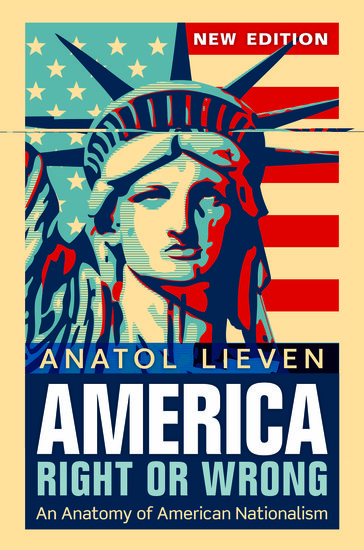
On the one hand, there is the core tradition of American civic nationalism based on the universalist ‘American Creed’ of almost religious reverence for American democratic institutions and the U.S. constitution. On the other, there exists a chauvinist nationalism which holds that these institutions are underpinned by cultural values which belong only to certain Americans, and which is strongly hostile both to foreigners and to minorities in America which are felt not to share those values.

Read More
Book thumbnail image

Truman Capote’s artful lies

By William Todd Schultz, PhD
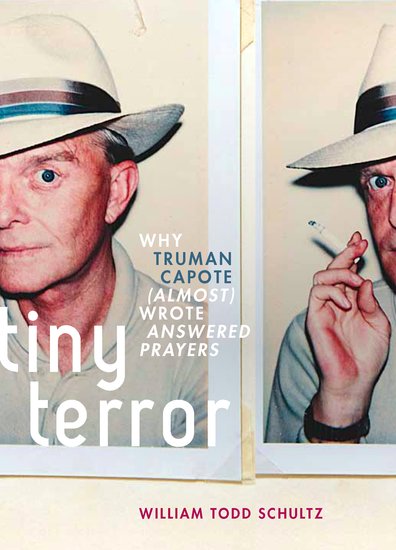
Why did Truman Capote try writing his last unfinished book, Answered Prayers? In a sometimes ruthless sautéing of jet set high society, he oddly and self-destructively scorched many of his closest friends, women like Babe Paley and Gloria Vanderbilt, among unlucky others, whom he liked to call, in a better mood, his “swans.” It turned out to be a sideways suicide. He never recovered from the fallout. His last years were a hurricane of drink, drugs, and artistic fragmentation.

Read More
Book thumbnail image

Here’s to a wet New Orleans

By Christopher Morris
In the aftermath of Hurricane Isaac, Jack Payne of Delacroix, which is a tiny fishing village in the wetlands of the Mississippi delta below New Orleans, explained to Bob Marshall of the Times-Picayune, that “Everything I rebuild will either be on pilings or wheels. It’s gotta be higher than storm surge, or something I can pull outta here. This is our future, man. We know it’s gonna happen again and again — and just get worse.”

Read More
Book thumbnail image

When “Stuff happens.”

By Andrew J. Polsky
The killing of US Ambassador J. Christopher Stevens and three other American diplomats in Benghazi, Libya on 11 September 2012 serves as a vivid reminder that unexpected events often intrude on presidential elections. Sometimes these events have a significant impact on how voters view the parties and the candidates. But often the electorate shrugs off breaking news. As former Secretary of Defense Donald Rumsfeld famously put it, “Stuff happens.”

Read More
Book thumbnail image

Is America an empire?

By Timothy H. Parsons
The intense controversy that this question engenders is remarkable. On the left, critics of assertive American foreign, military, and economic policies depict these policies as aggressively immoral by branding them “imperial.” On the right, advocates for an even more forceful application of American “hard power,” such as Niall Ferguson and the other members of his self-described “neo-imperialist gang,” argue that the United States should use its immense wealth and military might to impose order and stability on an increasingly chaotic world.

Read More
Book thumbnail image

Occupied by Images

By Carol Quirke
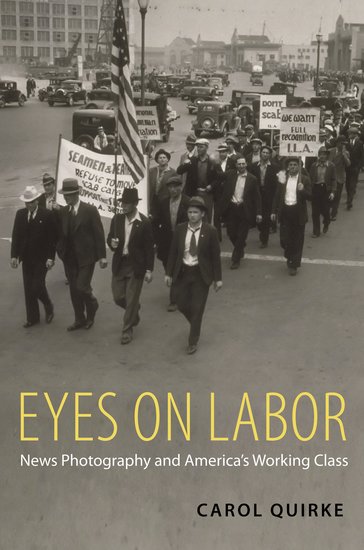
Media buzz about Occupy Wall Street’s first anniversary began by summer’s end. That colorful, disbursed social movement brought economic injustice to the center of public debate, raising questions about free-market assumptions undergirding Wall Street bravado and politicians’ pious incantations. Most watched from the sidelines, but polling had many cheering as citizens marched and camped against the corrosive consequences of an economically stacked deck.

Read More
Book thumbnail image

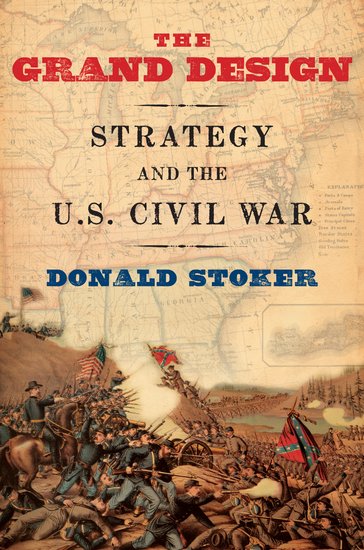
The garbled scholarship of the American Civil War

By Donald Stoker
How can we frame a discussion? What terminologies give us a basis for common understanding? While many deplore arguing semantics, it is often essential to argue the meaning of words. Scholars aren’t immune to speaking to opposite ends when they don’t share common definitions. The American Civil War does not lack for books, but they aren’t all talking on the same terms. For example, what do we mean by “strategy”?

Read More
Book thumbnail image

Theodore Roosevelt, family man as political strategy

By Lewis L. Gould

Theodore Roosevelt was forty-two years old when he became the twenty-sixth president of the United States. He had been a Republican since his boyhood, but his allegiance to the Grand Old Party was not that of a regular partisan. He had little interest in the protective tariff and was not a fan of businessmen or the process by which they made their money. Instead, as a member of the New York aristocracy, he saw his duty as representing the American people in their adjustment to the promises and perils of industrial growth.

Read More
Book thumbnail image

Grandfather Erasmus Darwin: written out of history

By Patricia Fara
Darwin and evolution go together like Newton and gravity or Morse and code. The world, he wrote, resembles ‘one great slaughter-house, one universal scene of rapacity and injustice.’ Competitive natural selection in a nutshell? Yes – but that evocative image was coined not by Charles Darwin (1809-1882), but by his grandfather Erasmus (1731-1802). Although Charles Darwin is celebrated as the founding father of evolution, his neglected ancestor was writing about evolution long before he was even born.

Read More