Oxford University Press's
Academic Insights for the Thinking World

  • Subtopics

From the infancy of etymology

By Anatoly Liberman
Someone who today seeks reliable information on the origin of English words will, naturally, consult some recent dictionary. However, not too rarely this information is insufficient and even wrong (rejected opinions may be presented there as reliable).
Read More
Book thumbnail image

The movies and biblical epics of Cecil B. DeMille

By William D. Romanowski
The 4th of December marks the 90th anniversary of the premiere of Cecil B. DeMille’s The Ten Commandments (1923). A silent film, this was the first in a trilogy by the famed director that established the conventions for Bible-themed movies: religion, sex, violence, and cinematic spectacle (and not necessarily in that order).

Read More
Book thumbnail image

The gold standard and the world economy [infographic]

By Richard S. Grossman
Britain operated under the gold standard for nearly 100 years before World War I forced Britain — and many other countries — to abandon it. During that century, Britain was the world’s military, financial, and industrial superpower.

Read More
Book thumbnail image

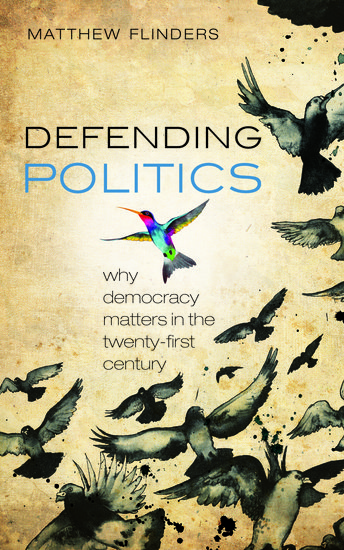
Election 2015: ‘Don’t vote, it just encourages the b**tards’

By Matthew Flinders
Without a whistle or a bang from a starter’s gun, the 2015 general election campaign is now well under way. Labour’s proposed freeze on energy prices marks a first tentative attempt to seize the pre-election agenda, while the Chancellor’s autumn statement next month looks set to respond by including measures aimed at cutting the cost of living.

Read More
Book thumbnail image

Lost writings of Latin literature

By Peter Knox and J.C. McKeown
Once upon a time, the Greek city of Cyrene on the coast of Libya grew prosperous through the export of silphium, a plant much used in cookery and medicine. But then the farmers learned that there was more money to be made through rearing goats.

Read More
Book thumbnail image

Who’s Who in 2014 [infographics]

December sees the annual update of Who’s Who, the essential directory of the noteworthy and influential in all walks of life, in the United Kingdom and worldwide. This year, over 1,000 new lives have been added to the resource. Who’s made it in in 2014? From actors to authors, and presenters to politicians, discover the entries of a vast selection of past and present influential figures, written by the individual themselves.

Read More
Book thumbnail image

A day in Eyeth

By Jeannette D. Jones
There’s a legendary world in Deaf culture lore. It’s like Earth but it’s for people of the eye, so they call it Eyeth (get it? EARth, EYEth). In this world, people listen with their eyes with the comfort of being typical, just the way life is, unlike the existence of a Deaf person on Earth, heavily mediated through hearing devices, pads of paper, interpreters, lip reading, and gestures.

Read More
Book thumbnail image

Q&A with T.V. Paul on the 25th anniversary of Benazir Bhutto’s election

Twenty-five years ago today, Benazir Bhutto became the first female Prime Minister of Pakistan and the first female head of government in a Muslim country. T.V. Paul, author of The Warrior State: Pakistan in the Contemporary World, joins us to discuss her legacy, the role of women in Pakistani politics today, and the changing shape of political parties in Pakistan.

Read More
Book thumbnail image

US Supreme Court weighs in on BG Group v. Argentina

By Frédéric G. Sourgens
On Monday, 2 December 2013, the United States Supreme Court will hear oral arguments in a significant appeal for investor-state arbitration conducted in the United States. Last year, the United States Court of Appeals for the DC Circuit set aside an award rendered by a UNCITRAL tribunal seated in Washington DC and constituted pursuant to the United Kingdom-Argentina BIT in BG Group PLC v Republic of Argentina.

Read More
Book thumbnail image

Enforced disappearance: time to open up the exclusive club?

By Irena Giorgou
For over five decades, enforced disappearance has been the symbol of state terror and the absence of justice. Pursuant to this heinous practice, people are arrested or kidnapped, detained in secret, and subsequently ‘disappear’. All traces of the victims are deliberately wiped out: no record, no information, no body.

Read More
Book thumbnail image

The neural mechanisms underlying aesthetic appreciation

By Zaira Cattaneo and Marcos Nadal
Humans are apparently the only species to aesthetically enjoy the world around them. What is it that allows us to admire the elegance of a ballet dancer, or to enjoy the beauty of the sun’s reflection on the sea as it sets under the horizon?

Read More

Radiology training and education

By Alex Mamouria
The entire structure of the Radiology professional board exam, the last but crucial hurtle after eight years of post-graduate training, changed this year. The old exam, that in place for decades, had two discrete elements. First, a written exam that included imaging physics followed by an oral exam that reviewed only diagnostic imaging that was taken at the end of training.

Read More
Book thumbnail image

Echoing John the Baptist at Advent

By Philip H. Pfatteicher
The Christian Church, at its best, is remarkably honest. That characteristic is especially clear in the season of Advent, which calls Christians to look ahead toward the second coming of Christ the Lord of glory (what the New Testament calls his Appearing). In this expectation, the Church identifies with John the Baptist, who prepared the way for the first coming.

Read More

Echoes of The Iliad through history

The Iliad was largely believed to belong to myth and legend until Heinrich Schliemann set out to prove the true history behind Homer’s epic poem and find the remnants of the Trojan War. The businessman turned archaeologist excavated a number of sites in Greece and Turkey, and caused an international sensation.

Read More