Oxford University Press's
Academic Insights for the Thinking World

  • Subtopics

Book thumbnail image

‘Yesterday I lost a country’

By Kathleen Cavanaugh
Since 2003, Iraq has experienced significant political unrest and the emergence of ethno-religious divisions.  That there is a sectarian complexion to emerging socio-political movements in Iraq (religious, ethno-political) is not in question. The ‘fear of sectarianism’ has undoubtedly shaped and formed how protest movements in Iraq (and indeed regionally) are constituted.
Read More
Book thumbnail image

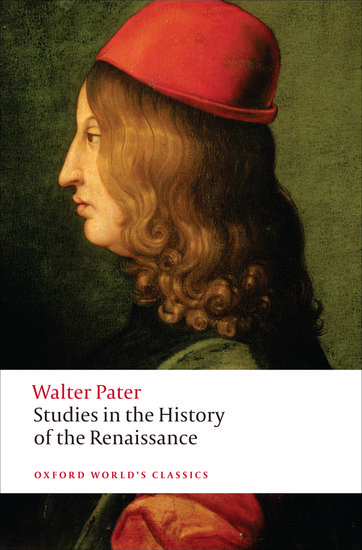
Why we should commemorate Walter Pater

By Matthew Beaumont
Pater’s most celebrated and controversial book, Studies in the History of the Renaissance (1873) is about the distant past, superficially at least, and therefore risked seeming irrelevant even in his own time. It could not however have inspired a generation of undergraduates, including Oscar Wilde, to embrace aestheticism, and a cult of homoeroticism, as his critics claimed, if it had not also been a coded polemic about the present.

Read More
Book thumbnail image

The origins of the Fulbright program

By Sam Lebovic
Since its creation in the summer of 1946, the Fulbright program has become the “flagship international educational exchange program” of the US government. Over the past 67 years, almost 320,000 students, scholars and teachers have traveled internationally as part of the program’s vast effort to improve mutual understanding between nations.

Read More
Book thumbnail image

Where’s Mrs Y? The effects of unnecessary ward moves

By Miles Witham and Marion McMurdo
It’s a Thursday morning in February, and I have just arrived on the ward to start my ward round. Mrs Y, a lady in her 90’s with dementia, was admitted with pneumonia a few days ago. She is on the mend, rehabilitating well, and we planned to get her home tomorrow with some extra home care.

Read More
Book thumbnail image

An ice cream quiz

By Audrey Ingerson and Stephanie Rothaug
We’ve all heard of the classics: vanilla, chocolate, rocky road, mint chocolate chip. But what about the crazier end of the spectrum? Flavors like cherry blossom, chocolate marshmallow, chorizo caramel, sea salt, chai tea, or cinnamon toast.

Read More
Book thumbnail image

The mysteries of Pope Francis

By Peter McDonough
If you’ve visited Rome, you may have noticed that the Jesuit headquarters, right off St. Peter’s Square, overlooks–“looks down on”– the Vatican. Jesuits are fond of reminding visitors, with a smile, of this topographical curiosity and its symbolic freight.

Read More
Book thumbnail image

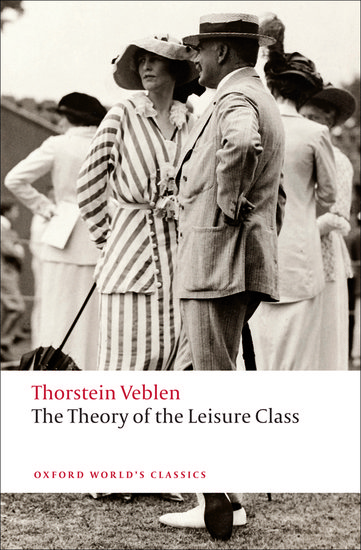
Dress as an expression of the pecuniary culture

By Thorstein Veblen
The dress of women goes even farther than that of men in the way of demonstrating the wearer’s abstinence from productive employment. It needs no argument to enforce the generalisation that the more elegant styles of feminine bonnets go even farther towards making work impossible than does the man’s high hat.

Read More
Book thumbnail image

The Treaty of Box Elder

July 30, 2013 marks the 150th anniversary of the Treaty of Box Elder between the United States and the Northwestern Shoshones. At first glance it’s not much of a treaty, just five short articles. Unlike the treaty that a month before defrauded the Nez Perces of 90 per cent of their land, or the Treaty of Fort Laramie with the Sioux in 1868, which the U.S. broke to steal the Black Hills, the Box Elder treaty gets little attention. Most historians who have written about treaties…

Read More
Book thumbnail image

Anthems of Africa

I would love to visit Africa someday. I think it would settle a lot of curiosity I have about the world. For now, my most informed experience regarding the place is a seminar I took this past semester, called Sacred and Secular African American Musics.

Read More
Book thumbnail image

Korea remembered

It is sixty years since the Korean War came to a messy end at an ill-tempered armistice ceremony in Panmunjom’s new “peace” pagoda. That night, President Dwight Eisenhower made a brief and somber speech to the nation. What the U.S. negotiators had signed, he explained to his compatriots, was merely “an armistice on a single battleground—not peace in the world.”

Read More
Book thumbnail image

Oxford authors and the British Academy Medals 2013

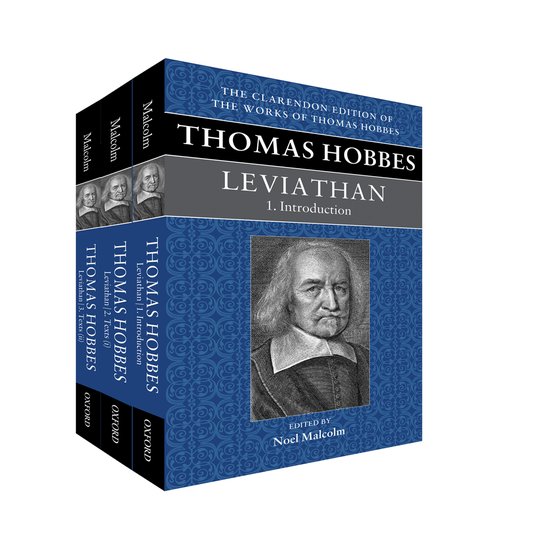
We don’t often discuss book awards on the OUPblog, but this year the inaugural British Academy Medals were awarded to three authors and their titles published by Oxford University Press: Thomas Hobbes: Leviathan, edited by Noel Malcolm; The Organisation of Mind by Tim Shallice and Rick Cooper; and The Great Sea: A Human History of the Mediterranean by David Abulafia (USA only).

Read More
Book thumbnail image

Kammerer, Carr, and an early Beat tragedy

Following last year’s release of On the Road, adapted by director Walter Salles from the legendary Jack Kerouac novel published in 1957, two more Beat Generation movies are on the way. Big Sur, a November release directed by Michael Polish, stars Jean-Marc Barr, Stana Katic, Anthony Edwards, and Radha Mitchell in a story based on Kerouac’s 1962 novel about his efforts to shake off inner demons at an isolated cabin near the California coast.

Read More
Book thumbnail image

Recent advances and new challenges in managing pain

By Lesley Colvin
Pain is one of the most feared symptoms whether it is after surgery, in the context of chronic disease, or related to cancer. Around 18% of people will be affected by moderate to severe chronic pain at some point in their life, with chronic pain having as big a negative impact on quality of life as severe heart disease or a major mental health problem.

Read More
Book thumbnail image

The fall of Mussolini

Seventy years ago today, in the late afternoon of Sunday 25 July 1943, the fascist dictator Benito Mussolini went for what he imagined was a fairly routine audience with the Italian king. The war had been going badly for Italy: two weeks earlier US, Canadian and British forces had landed in Sicily, and met with little resistance. And the previous evening a number of senior fascists had passed a motion calling on the king to assume full military command.

Read More