Oxford University Press's
Academic Insights for the Thinking World

  • Social Sciences

Book thumbnail image

Place of the Year 2012: Behind the longlist

Last week, we launched Place of the Year 2012 (POTY), a celebration of the year in geographical terms. As Harm de Blij writes in Why Geography Matters: More than Ever, “In our globalizing, ever more inter-connected, still-overpopulated, increasingly competitive, and dangerous world, knowledge is power. The more we know about our planet and its fragile natural environments, about other peoples and cultures, political systems and economies, borders and boundaries, attitudes and aspirations, the better prepared we will be for the challenging times ahead.”

Read More
Book thumbnail image

The value of networks

By Michele Catanzaro and Guido Caldarelli
Thanks to a single Facebook post in 2010, an extra 340,000 people went to vote in the 2010 USA Congress elections. This striking discovery, made by political scientist James Fowler and colleagues, reveals the extent to which social networks can influence the basic workings of democracy.

Read More
Book thumbnail image

Slang is good for you

By Michael Adams

Slang is good for you. Some people say that it isn’t. They think it’s vulgar, sloppy, repetitive. They think it’s casual speech out of place in semi-formal discourse, Chuck Taylors with a jacket and tie.

Read More
Book thumbnail image

Chauvinism and idealism in American nationalism

By Anatol Lieven
When the Bush administration launched its campaign to gather US public support for the invasion of Iraq, I was especially struck by the way in which they managed to mobilise on the one hand chauvinist nationalist hostility to the outside world in general and Muslims in particular, and on the other hand a civic nationalist belief in America’s mission to spread democracy and freedom to those same Muslims.

Read More
Book thumbnail image

Announcing the Place of the Year 2012 Longlist: Vote!

As the year winds down, it’s time to take a look back. Alongside the publication of the 19th edition of The Atlas of the World, Oxford University Press will be highlighting the places that have inspired, shaped, and challenged history in 2012. We’re also doing things differently for Place of the Year (POTY) in 2012. In addition to our regular panel of geographers and experts, we’re opening up the choice to the public.

Read More
Book thumbnail image

Paul Ryan’s worldview

By Tom Allen
Paul Ryan is the most puzzling member of Congress, at least to me. I served with him on the House Budget Committee for four of my twelve years in the House. Paul is warm, personable, intelligent, articulate — a true gentleman. Yet what he says about the federal budget and taxes makes little sense. His belief in the miraculous power of tax cuts and the crippling effect of federal “spending” was not supported by the economists who testified at our hearings.

Read More
Book thumbnail image

Air Force Two or a constitutional inconvenience?

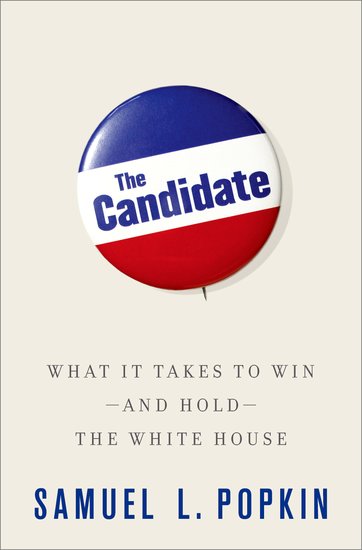
By Sam Popkin
When vice presidents travel the world on White House assignments, be it to a foreign leader’s funeral, an international meeting not quite important enough for the president, or a “fact-finding trip” to give them exposure or soothe a rankled constituency, they are treated as the second most important person in America.

Read More
Book thumbnail image

On Ayn Rand and the 2012 presidential election

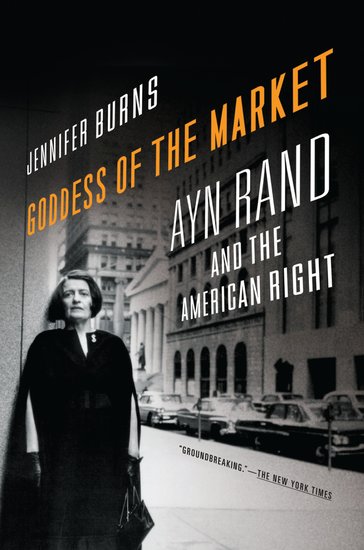
Stanford Professor Jennifer Burns recently spoke with the 92nd Street Y about her new book Goddess of the Market: Ayn Rand and the American Right. Pointing out the correlation between Rand and Vice Presidential candidate Paul Ryan, Burns explains how Rand’s philosophy of the “virtue of selfishness” and “favor of the individual” has become a tenant of American politics today.

Read More
Book thumbnail image

New York’s “Dress Wars”

By Kal Raustiala
In the depths of the Great Depression, TIME magazine offered readers a glimpse at New York’s “Dress Wars.” Knockoffs, TIME wrote, were everywhere in the garment industry, and “dirty tricks” increasingly ubiquitous: “Among such tricks was the universal and highly developed practice of copying original styles. By the early Depression years it had gone so far that no exclusive model was sure to remain exclusive 24 hours; a dress exhibited in the morning at $60 would be duplicated at $25 before sunset and at lower prices later in the week.”

Read More
Book thumbnail image

Achievement, depression, and politicians

‘For two or three years the light faded from the picture. I did my work. I sat in the House of Commons, but black depression settled on me.’
Starter for ten: who said this? (Apologies if you haven’t watched University Challenge). It was Winston Churchill, arguably the greatest British prime minister and certainly one who played a crucial role in guiding his nation through the Second World War.

Read More
Book thumbnail image

Obama out of practice for first debate

By Elvin Lim
President Obama had a bad night. The key to succeeding in a presidential debate is recognizing that it is not a parliamentary debate. The rules, the moderator, and even the immediate audience (since they are not permitted to applaud) do not matter. Instead, candidates should bare their souls to the camera lenses. There, magic is made.

Read More
Book thumbnail image

Reflections on the first presidential debate

By Andrew J. Polsky
As the first presidential debate recedes in the rearview mirror, we may be able to gain clearer perspective on what it means to the 2012 presidential race. For starters, the clear winner was the news media. No one likes a one-sided presidential campaign, and that was the direction of the contest over several weeks prior to the debate.

Read More
Book thumbnail image

The articulate assault

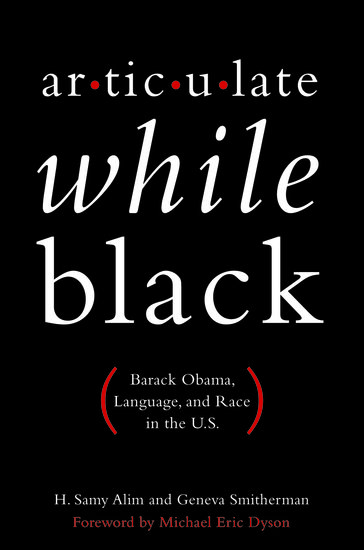
By H. Samy Alim and Geneva Smitherman
We’re at the Tacoma Theatre in Washington, DC. Packed house, predominantly Black crowd. Chris Rock struts across the stage: “You know how I could tell he can’t be President? Whenever he on the news, White people always give him the same compliments, always the same compliments. ‘He speaks so well.’ … Like that’s a compliment… What the fuck did you expect him to sound like?!”

Read More
Book thumbnail image

Obama is surging

By Elvin Lim
The Obama campaign, by fortune or by wit, has peaked at the right moment. Early voting has already started in Virginia, and starts in Iowa and Ohio next week. This means that the polls telling a uniform story of an Obama surge in crucial swing states aren’t just snap-shots; they are predictive of how voters — about 35 percent of total voters — are actually starting to vote as we speak.

Read More
Book thumbnail image

Anatol Lieven on American nationalism

On the one hand, there is the core tradition of American civic nationalism based on the universalist ‘American Creed’ of almost religious reverence for American democratic institutions and the U.S. constitution. On the other, there exists a chauvinist nationalism which holds that these institutions are underpinned by cultural values which belong only to certain Americans, and which is strongly hostile both to foreigners and to minorities in America which are felt not to share those values.

Read More
Book thumbnail image

The Giving Pledge and private foundations

By Edward Zelinsky
The Giving Pledge, founded by Warren Buffett and Bill Gates, has announced that eleven more affluent families have taken the Pledge and have thereby committed to donating at least half of their wealth to charity. Among these new Pledgers is Gordon Moore, a legendary founder of Intel and the father of Moore’s Law which postulates that the number of transistors on integrated circuits doubles roughly every two years.

Read More