Oxford University Press's
Academic Insights for the Thinking World

  • Social Sciences

Book thumbnail image

Did Obamacare’s court victory win over Americans’ hearts and minds too?

By Andrea Campbell and Nathaniel Persily
The Supreme Court’s decision in National Federation of Independent Business v. Sebelius achieved a level of media coverage and public salience reached by very few Supreme Court decisions. It represented a political moment, if not a constitutional one. Although legal scholars might focus on the doctrinal importance of the decision for shaping the contours of congressional power, this unusually high profile case is also fascinating to study as an event that structured public opinion about the Affordable Care Act (ACA) and the Court itself.

Read More
Book thumbnail image

Opposing narratives of success in politics

Stephanie Li
While our presidential candidates are known far in advance of the Democratic and Republican National Conventions, party conventions remain intriguing spectacles for the kind of human detail they offer about the men who aspire to the Oval Office. Every four years pundits and political commentators observe that conventions have become increasingly scripted affairs that lack the spontaneity of times past, but party conventions serve to present individual narratives as much as specific policy positions.

Read More
Book thumbnail image

Permission-giving: from Cromwell to Kate Middleton

Some of my more radical academic colleagues remain inordinately sceptical of the role of individual leaders set against the tectonic plates of economic systems, social classes, genders, political alliances and ethnic groups. To suggest that individual leaders might make a difference is to place an unwarranted responsibility upon mere actors when the real issue is ‘the system’ – whatever the system is.

Read More
Book thumbnail image

Afghanistan 2013: The road narrows

By Andrew J. Polsky
Three recent developments in Afghanistan underscore the difficulty that will confront the next American president, whether he is Barack Obama or Mitt Romney. First, as Secretary of Defense Leon Panetta announced, the last of the 33,000 additional troops sent to Afghanistan by President Obama two years ago to quell the revived Taliban insurgency have now returned home.

Read More
Book thumbnail image

Context clues in the American presidential campaigns

By Sandy Maisel
Presidential campaign watching is a great American game. Did Romney respond correctly when challenged on why he failed to mention our men and women in uniform in his convention speech? Does President Obama really like hanging out in sports bars and receiving giant bear hugs from pizza shop owners? How big was the Obama convention bounce and what does it mean?

Read More
Book thumbnail image

Immigration policy debates in the 2012 election

By Louis Desipio
Popular concern about US immigration policy has increased dramatically over the past two decades. During this period, the resources and technologies for enforcement of immigration law have also increased considerably. The remainder of US immigration policy — particularly questions of how many immigrants the United States should admit, who should be eligible to immigrate, and what should be done about immigrants resident in the United States who reside in the country without legal status — see much less consensus.

Read More
Book thumbnail image

5 things we should know about the Libyan and Egyptian demonstrations

By Tariq Ramadan
1.        We must start first by condemning the violence and killing of diplomats and civilian people. Whatever we may feel, however we may be hurt by the video, it cannot justify in any way the killing of people. Such actions are simply anti-Islamic and against Muslim values. The demonstrations were in fact first organised by a tiny group of Salafi literalists who were attempting to direct popular emotions against the United States and the West in order to gain for themselves a central religious and political role.

Read More
Book thumbnail image

Tariq Ramadan on the Arab Spring

News broke of the killing of Ambassador Christopher Stevens and three other Americans in Libya followed by numerous protests throughout the Arab World while Tariq Ramadan was in the United States to discuss one of the most important developments in the modern history of the Middle East, the so-called Arab Spring. One of the world’s leading Islamic thinkers, Tariq Ramadan, he has won global renown for his reflections on Islam and the contemporary challenges in both the Muslim majority societies and the West.

Read More
Book thumbnail image

The September Surprise

By Elvin Lim
Mitt Romney definitely did not count on foreign policy becoming a major issue two weeks after he chose budget hawk, Paul Ryan, to be his running mate, making his the weakest ticket on foreign policy for decades. What is even more perverse is that Romney himself chose to go off message.

Read More
Book thumbnail image

When “Stuff happens.”

By Andrew J. Polsky
The killing of US Ambassador J. Christopher Stevens and three other American diplomats in Benghazi, Libya on 11 September 2012 serves as a vivid reminder that unexpected events often intrude on presidential elections. Sometimes these events have a significant impact on how voters view the parties and the candidates. But often the electorate shrugs off breaking news. As former Secretary of Defense Donald Rumsfeld famously put it, “Stuff happens.”

Read More
Book thumbnail image

How will US troop withdrawal from Afghanistan affect Central Asia?

Earlier this summer, NATO leaders approved President Obama’s plan to end combat operations in Afghanistan next year, with the intention of withdrawing all US troops by the end of 2014. The war in Afghanistan, which begun in 2001 as a response to the events of September 11, has turned Central Asia into one of the most volatile regions in the world, with the US, Russia, and China all vying for influence among the former Soviet republics.

Read More
Book thumbnail image

The mathematics of democracy: Who should vote?

By Joseph C. McMurray
An interesting, if somewhat uncommon, lens through which to view politics is that of mathematics. One of the strongest arguments ever made in favor of democracy, for example, was in 1785 by the political philosopher-mathematician, Nicolas de Condorcet.

Read More
Book thumbnail image

Why do people hate teachers unions? Because they hate teachers.

By Corey Robin
Like Doug Henwood, I’ve spent the last few days trying to figure out why people—particularly liberals and pseudo-liberals in the chattering classes—hate teachers unions. One could of course take these people at their word—they care about the kids, they worry that strikes hurt the kids, and so on—but since we never hear a peep out of them about the fact that students have to swelter through 98-degree weather in jam-packed classes without air conditioning, I’m not so inclined.

Read More
Book thumbnail image

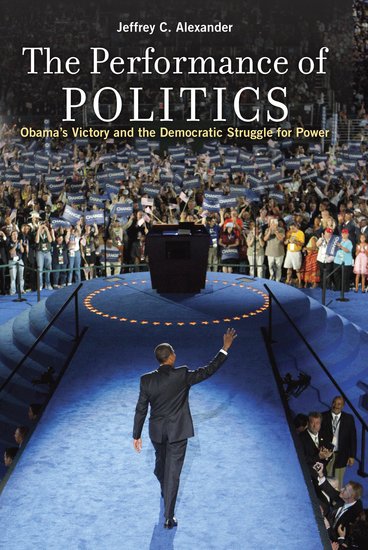
Political dramaturgy and character in 2012

By Jeffrey C. Alexander
In the wake of the party conventions, the shape of the Presidential contest has crystallized. Shocking to pundits and purveyors of conventional wisdom, Barack Obama has stretched his lead, narrowly in the national polls, more decisively in the critical swing states. Campaigns are all about hope and bluff. Though “no one will hear a discouraging word” from the Romney campaign, the writing is on the wall.

Read More
Book thumbnail image

Theodore Roosevelt, family man as political strategy

By Lewis L. Gould

Theodore Roosevelt was forty-two years old when he became the twenty-sixth president of the United States. He had been a Republican since his boyhood, but his allegiance to the Grand Old Party was not that of a regular partisan. He had little interest in the protective tariff and was not a fan of businessmen or the process by which they made their money. Instead, as a member of the New York aristocracy, he saw his duty as representing the American people in their adjustment to the promises and perils of industrial growth.

Read More