Oxford University Press's
Academic Insights for the Thinking World

Book thumbnail image

New books, old story?

By Natalia Nowakowska
As the Catholic Church embarks this month upon its observance of Lent, many congregations will be holding in their hands brand new, bright red liturgical books — copies of the new English translation of the Roman Missal (the service book for Catholic Mass), introduced throughout the English-speaking world at the end of 2011 on the instructions of the Vatican.

Read More
Book thumbnail image

“Music in your blood and poetry in your soul”: the beauty of Welsh English

By Bethan Tovey
To be born Welsh requires the genes of a chameleon. You must be a geographer (how many maps have I drawn to explain to anyone not from our little island the difference between “Britain” and “England”?), a musician (try singing “Bread of Heaven” in a Welsh pub: I give you two bars before you’re accompanied by full four-part harmony), a diplomat (not punching the hundred-and-first person to make a sheep joke takes some restraint), and above all, a linguist. The Welsh have a way with words.

Read More
Book thumbnail image

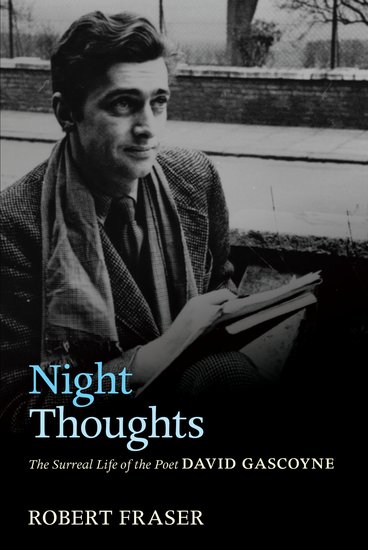
David Gascoyne and the missing portrait

By Robert Fraser
I am often asked to name my favourite poem by the British writer David Gascoyne (1916-2001), my biography of whom appears with OUP this month. Bearing in mind Gascoyne was in his time an interpreter of Surrealism, an existentialist of a religious variety and a proponent of ecology, you might expect me to go for a poem along these lines. Instead, I usually choose a poem of the early 1940s entitled “Odeur de Pensée.”

Read More
Book thumbnail image

Debate: What is the origin of “buckaroo”? OED Editor responds

We (unintentionally) started a debate about the origin of the word “buckaroo” with our quiz Can you speak American? last week. Richard Bailey, author of Speaking American, argues that it comes from the West African language Efik. Here OED editor Katrin Thier argues that the origin isn’t quite so clear.

Read More
Book thumbnail image

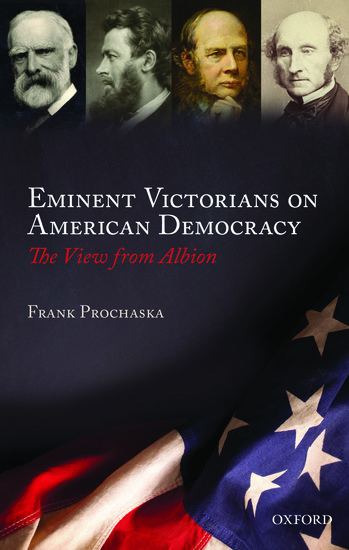
Presidential Pigmies

By Frank Prochaska
What would the Founding Fathers think of the candidates in the Republican primaries? If the remaining presidential hopefuls were to be asked this question in a televised debate, the ignorant and dissembling replies would be a sorry spectacle.

Read More

Oh Dude, you are so welcome

By Anatoly Liberman
I borrowed the title of this post from an ad for an alcoholic beverage whose taste remains unknown to me. The picture shows two sparsely clad very young females sitting in a bar on both sides of a decently dressed but bewildered youngster. I assume their age allows all three characters to drink legally and as much as they want. My concern is not with their thirst but with the word dude. After all, this blog is about the origin of nouns, verbs, and adjectives, rather than the early stages of alcoholism.

Read More
Book thumbnail image

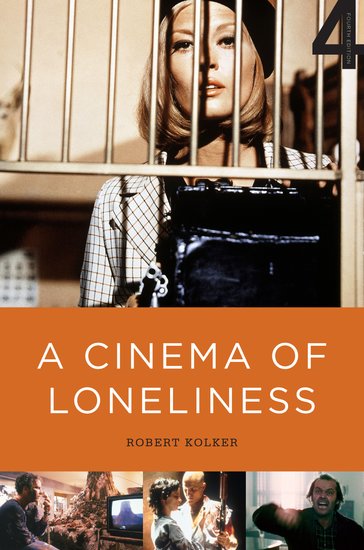
Martin Scorsese, 3D, and Hugo

By Robert Kolker
“That’s that,” quoting Ace Rothstein at the end of Casino. I didn’t end the Martin Scorsese chapter on an optimistic note in the fourth edition of A Cinema of Loneliness. There is more than a hint that the Scorsese’s creative energies might be flagging. With this in mind, I went to see Hugo with a lot of skepticism.

Read More
Book thumbnail image

The Oxford Companion to Downton Abbey

Now that Series One and Two, plus the Christmas Special, of Downton Abbey have aired in the US and Canada, we’ve decided to compile a reading list for those serious-minded viewers who’d like to learn more about Edwardian England, World War I, life in an aristocratic household, and what lies ahead for the Crawleys and their servants. Warning: Spoilers ahead.

Read More
Book thumbnail image

Making space for well-being?

By Mia Gray, Linda Lobao, and Ron Martin
“There is a paradox at the heart of our lives.  As Western societies have got richer, their people have become no happier” (Layard, 2005). Layard has not been alone in questioning the relationship between economic growth and well-being.  Theoretically, empirically, and politically, there is increasing dissatisfaction with growth as the main indicator of well-being.   As such, there is renewed interest in analysing the institutions and conventions through which the economy and society are measured and understood.

Read More
Book thumbnail image

Can you speak American?

A wide-ranging account of American English, Richard Bailey’s Speaking American investigates the history and continuing evolution of our language from the sixteenth century to the present. Now it’s time to ask yourself how well you really know your American English. We’ve composed a quiz for some Friday fun. Can you speak American?

Read More
Book thumbnail image

SciWhys: a cure for Carys?

By Jonathan Crowe
Using science to understand our world can help to improve our lives. In this post and the next, I want to illustrate this point with an example of how progress in science is providing hope for the future for one family, and many others like them.

Read More
Book thumbnail image

An academic librarian without a library

By Michael Levine-Clark
I’m sitting in a dorm room—complete with the uncontrollable blast heat I remember from college — the space that has been my office since June, when the library shut down for a major renovation. Besides having to get used to a somewhat uncomfortable and isolated space, my colleagues and I have had to learn to be librarians without a library building, and our students and faculty have had to learn to use physical collections that are entirely offsite. And the campus community has had to think about the question of what a library is and should be, particularly the question of how to find and use our physical monographs.

Read More
Book thumbnail image

Mitt Romney’s IRA

By Edward Zelinsky
On a personal level, I enjoyed the news reports that Governor Romney holds assets worth tens of millions of dollars in his individual retirement account (IRA). These reports confirm a central thesis of The Origins of the Ownership Society, namely, the extent to which defined contribution accounts, such as IRAs and 401(k) accounts, have become central features of American life.

Read More
Book thumbnail image

Dickens at two hundred

By Jenny Hartley
Dickens loved birthdays and always celebrated his own in style. So, in the face of those who are complaining about being Dickensed-out already, my view is that we can’t party enough.

Read More
Book thumbnail image

Organ donor shortage versus transplant rates

By David Talbot
The article in this week’s Times with the commentary written by Chris Watson illustrates the significant changes that have happened in transplantation over the last two years. In 2008, the Organ Donor Taskforce (ODTF) came up with 14 recommendations to address the problem of donor shortage, and then UK Transplant (which then changed to Blood Transplant) acted upon these.

Read More
Book thumbnail image

Ulysses: 90 years on…

On this day in 1922, James Joyce’s Ulysses was first published in its entirety, although the publication history of the book is nearly as complex as the novel itself. Here, we’ve picked one of our favourite extracts from the Oxford World’s Classics edition.

Read More