Oxford University Press's
Academic Insights for the Thinking World

Book thumbnail image

Gifting the mind

By Jenni Ogden
Neuroscience today is high tech: fantastic imaging machines churn out brain scans of the living, thinking brain, and computers crunch data to highlight patterns that may or may not fit the latest theory about how the mind works. How far we have come from the studies of the great neurologists and psychiatrists of the 19th century who relied on clinical descriptions of individual patients to further our knowledge of the brain and its mind. Or have we?

Read More
Book thumbnail image

Glissandos and glissandon’ts

As a musician, I found this absolutely shocking — here I thought I’d been hearing the glissando (the effect created when, for example, a pianist runs his finger up or down the keyboard), all my life, and suddenly it turned out that the very legitimacy of the word had been dismissed by Blom, a prominent music-writer linguist, more than 30 years before I was even born.

Read More
Book thumbnail image

The consequences of alcohol and pregnancy recommendations

By Sarah CM Roberts and Lyndsay Ammon Avalos
What should be the public health messaging on drinking during pregnancy?  The answer isn’t clear-cut. We do know that there is strong evidence that high levels of alcohol consumption during pregnancy harm the developing fetus. However, we don’t know conclusively what the impact is of lower level alcohol consumption. That is, we don’t know if there is a truly safe level of alcohol use, nor do we know if the line between safe and unsafe alcohol consumption is the same for all pregnant women.

Read More

A global ingle-neuk, or, the size of our vocabulary

By Anatoly Liberman
The size of our passive vocabulary depends on the volume of our reading.  Those who grew up in the seventies of the twentieth century read little in their childhood and youth, and had minimal exposure to classical literature even in their own language. Their children are, naturally, still more ignorant. I have often heard the slogan: “Don’t generalize!” and I am not. I am speaking about a mass phenomenon, not about exceptional cases.

Read More
Book thumbnail image

New York’s “Dress Wars”

By Kal Raustiala
In the depths of the Great Depression, TIME magazine offered readers a glimpse at New York’s “Dress Wars.” Knockoffs, TIME wrote, were everywhere in the garment industry, and “dirty tricks” increasingly ubiquitous: “Among such tricks was the universal and highly developed practice of copying original styles. By the early Depression years it had gone so far that no exclusive model was sure to remain exclusive 24 hours; a dress exhibited in the morning at $60 would be duplicated at $25 before sunset and at lower prices later in the week.”

Read More
Book thumbnail image

Achievement, depression, and politicians

‘For two or three years the light faded from the picture. I did my work. I sat in the House of Commons, but black depression settled on me.’
Starter for ten: who said this? (Apologies if you haven’t watched University Challenge). It was Winston Churchill, arguably the greatest British prime minister and certainly one who played a crucial role in guiding his nation through the Second World War.

Read More
Book thumbnail image

Canadian Thanksgiving

By Christopher Hodson
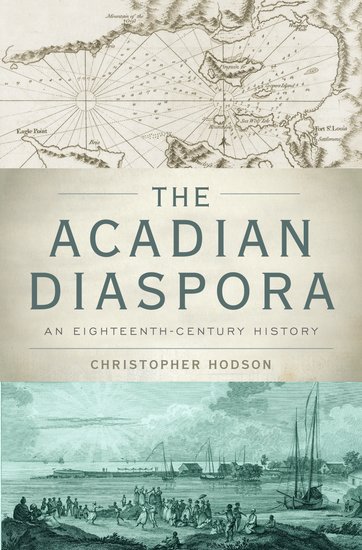
Americans, think fast: pause those (no doubt) raucous Columbus Day festivities and tilt an ear to the north. Sounds from beyond the 45th parallel should emerge. These may include Molson-fueled merriment and the windswept yawning of those huge CFL end zones. That’s right, it’s Canadian Thanksgiving! Yeah, they have one too.

Read More
Book thumbnail image

The OED needs you! Announcing the new OED Appeals

Today the Oxford English Dictionary announces the launch of OED Appeals, a dedicated community space on the OED website where OED editors solicit help in unearthing new information about the history and usage of English. The website will enable the public to post evidence in direct response to editors, fostering a collective effort to record the English language and find the true roots of our vocabulary.

Read More
Book thumbnail image

Tutankhamun and the mummy’s curse

In the winter of 1922-23 archaeologist Howard Carter and his wealthy patron George Herbert, the Fifth Earl of Carnarvon, sensationally opened the tomb of Tutankhamun. Six weeks later Herbert, the sponsor of the expedition, died in Egypt. The popular press went wild with rumours of a curse on those who disturbed the Pharaoh’s rest and for years followed every twist and turn of the fate of the men who had been involved in the historic discovery. Long dismissed by Egyptologists, the mummy’s curse remains a part of popular supernatural belief. We spoke with Roger Luckhurst, author of The Mummy’s Curse: The true history of a dark fantasy, to find out why the myth has captured imagination across the centuries, and how it has impacted on popular culture.

Read More
Book thumbnail image

Traduttore traditore

By Mark Davie
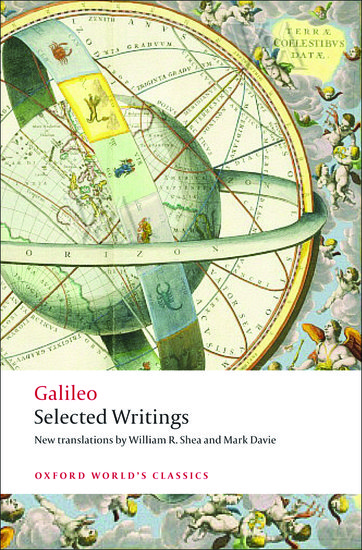
It’s curious that the language I’ve mostly worked with — Italian — has provided the adage which is routinely quoted in any discussion of the challenges of translation, and yet no-one seems to know who first coined the phrase. It appears in the plural form “Traduttori traditori” — “translators traitors” — in a collection of Tuscan proverbs by the 19th-century writer Giuseppe Giusti.

Read More
Book thumbnail image

Opposing narratives of success in politics

Stephanie Li
While our presidential candidates are known far in advance of the Democratic and Republican National Conventions, party conventions remain intriguing spectacles for the kind of human detail they offer about the men who aspire to the Oval Office. Every four years pundits and political commentators observe that conventions have become increasingly scripted affairs that lack the spontaneity of times past, but party conventions serve to present individual narratives as much as specific policy positions.

Read More
Book thumbnail image

Permission-giving: from Cromwell to Kate Middleton

Some of my more radical academic colleagues remain inordinately sceptical of the role of individual leaders set against the tectonic plates of economic systems, social classes, genders, political alliances and ethnic groups. To suggest that individual leaders might make a difference is to place an unwarranted responsibility upon mere actors when the real issue is ‘the system’ – whatever the system is.

Read More
Book thumbnail image

West Side Story, 55 years later

Today marks the 55th anniversary of the Broadway premiere of Leonard Bernstein’s West Side Story. A racially charged retelling of Romeo and Juliet, West Side Story is set in the “blighted” West Side of 1950s Manhattan, the potent themes of star-crossed love and gang rivalry successfully translated from 16th century Italy to 20th century New York by book-writer Arthur Laurents and lyricist Steven Sondheim.

Read More
Book thumbnail image

Remembering Dogen’s death

By Steven Heine
As the founder of Soto Zen, one of the major Buddhist sects in Japan, the birth and death anniversaries of Dogen Zenji (1200-1253) are celebrated every fifty years. It was amply demonstrated at the beginning of the millennium through the outpouring of new publications and media productions, including a kabuki play and TV show as well as manga versions of his biography, that these events help to disseminate the master’s teachings to a worldwide audience yet also turn him into a commercial commodity that is somewhat misrepresented.

Read More
Book thumbnail image

5 things we should know about the Libyan and Egyptian demonstrations

By Tariq Ramadan
1.        We must start first by condemning the violence and killing of diplomats and civilian people. Whatever we may feel, however we may be hurt by the video, it cannot justify in any way the killing of people. Such actions are simply anti-Islamic and against Muslim values. The demonstrations were in fact first organised by a tiny group of Salafi literalists who were attempting to direct popular emotions against the United States and the West in order to gain for themselves a central religious and political role.

Read More
Book thumbnail image

The mathematics of democracy: Who should vote?

By Joseph C. McMurray
An interesting, if somewhat uncommon, lens through which to view politics is that of mathematics. One of the strongest arguments ever made in favor of democracy, for example, was in 1785 by the political philosopher-mathematician, Nicolas de Condorcet.

Read More