Oxford University Press's
Academic Insights for the Thinking World

Book thumbnail image

When law is part of the problem

By John Gardner
The law is often an ass. More often than ever. Modern governments, their hands tied by the robber-barons of global finance, often try to assert their power with their feet: by kicking out at another supposed social problem with another big policy initiative. Usually they come up with an accompanying raft of new laws. Legislative incontinence prevails.
Read More
Book thumbnail image

Work-life balance and why women don’t run

By Kristin Kanthak
You know the national convention is over when the balloons drop and the presidential candidate’s family joins him on stage amid the cheers of the delegates. In fact, candidates’ families are a central part of their run for the presidency and for their bids for earlier elections prior to the presidency. But we’ve never had a female nominee for the presidency, and the relationship between female politicians and their families is much more complicated.

Read More
Book thumbnail image

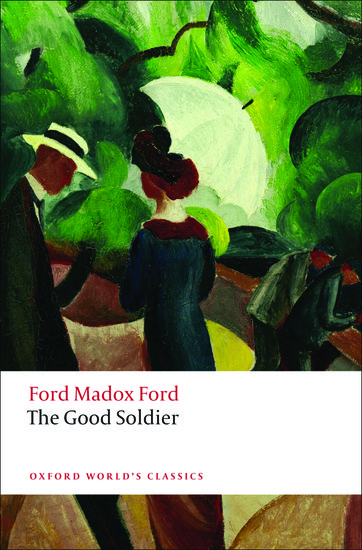
The life of Ford Madox Ford

By Max Saunders
This year’s televisualization of Parade’s End has led to an extraordinary surge of interest in Ford Madox Ford. The ingenious adaptation by Sir Tom Stoppard; the stellar cast, including Benedict Cumberbatch, Rebecca Hall, Alan Howard, Rupert Everett, Miranda Richardson, Roger Allam; the flawlessly intelligent direction by award-winning Susanna White, have not only created a critical success, but reached Ford’s widest audience for perhaps fifty years.

Read More
Book thumbnail image

Understanding Olympic design

By Jilly Traganou
After attending the “Because” event at the Wolff Olins office on July 4, I was once again reminded of the big disconnect that lies between designers and their public. Wolff Olins is the firm that designed the London 2012 brand, a multifaceted design campaign that included much more than the London 2012 logo. Readers may remember the numerous complaints that the logo generated. As my research revealed, this was caused partly due to IOC’s restrictions and the corporate unwillingness to allow for the full application of what might be seen as a “no logo” campaign.

Read More
Book thumbnail image

How and why do myths arise?

It is trite to say that one’s pet subject is interdisciplinary. These days what subject isn’t? The prostate? But myth really is interdisciplinary. For there is no study of myth as myth, the way, by contrast, there is said to be the study of literature as literature or of religion as religion. Myth is studied by other disciplines, above all by sociology, anthropology, psychology, politics, philosophy, literature, and religious studies.

Read More
Book thumbnail image

Unfit for the future: The urgent need for moral enhancement

By Julian Savulescu and Ingmar Persson
For the vast majority of our 150,000 years or so on the planet, we lived in small, close-knit groups, working hard with primitive tools to scratch sufficient food and shelter from the land. Sometimes we competed with other small groups for limited resources. Thanks to evolution, we are supremely well adapted to that world, not only physically, but psychologically, socially and through our moral dispositions. But this is no longer the world in which we live.

Read More
Book thumbnail image

Young Goethe

By David Constantine
Goethe was born almost dead on 28 August 1749. He opened his eyes, he lived, only when the midwife rubbed his heart with wine. Perhaps that uncertain start awoke a determination in him to stay alive as long as possible. There’s a wry saying in German: Alle Menschen müssen sterben — ich auch, vielleicht (All men must die — me too, perhaps). And that’s how Goethe lived, cannily keeping out of the way of death, cramming as much life as he could into the time allowed.

Read More
Book thumbnail image

The Decline and Fall of the American Political Convention

By Geoffrey Kabaservice
Will you be tuning in to watch this year’s Republican and Democratic national conventions in the hope of seeing something of historic significance? The managers of both conventions are working hard to make sure that you don’t get your wish. From their standpoint, the best convention is a precooked and tightly controlled event that passes placidly and without controversy into the annals of national forgetfulness.

Read More
Book thumbnail image

Did we really want a National Health Service?

By Nick Hayes
For most today, it’s difficult to imagine a British hospital system where treatment is not ‘free’ at the point of delivery, paid for out of national taxation, because in our imagination, the alternatives conjure pejorative images of the Americanisation of health. Those today opposed to decentralisation also echo the concerns of earlier health reformers like Dr Stark Murray, who thought the pre-nationalised hospital system simply disparate and chaotic.

Read More
Book thumbnail image

A British ante-invasion: “Telstar,” 17 August 1962

Many describe the 1964 arrival of the Beatles in New York as the beginning of the “British Invasion,” but UK rock and pop had begun culturally infiltrating our consciousness much earlier. Indeed, a London instrumental group topped American charts in the fall of 1962 with a recording that celebrated the first telecommunications satellite. Launched from Cape Canaveral on 10 July,

Read More
Book thumbnail image

Julia Child at 100

One hundred years ago today, a legendary and influential American chef was born: Julia Child. From the introduction of fine cooking into every American home with books and television appearances, her unpretentious and enthusiastic attitude welcomed many to the best food can offer. We’re celebrating Julia Child’s life and work with an extract by Lynne Sampson from The Oxford Companion to American Food and Drink.

Read More
Book thumbnail image

An Olympic roundup of blog posts

It’s been a long, hard road to London 2012 and while the closing ceremony brings an end to the sporting events and spectacle, we all know it’s not truly the end. The Paralympics begin in a few weeks. There will continue to be reports, analysis, and even a few more blog posts from us. Let’s take a look back on Olympic news, analysis, context, and history from the past few months. And we’ll see you in Rio de Janeiro in 2016!

Read More

Facts about the Silk Road

The ‘Silk Road’ was a stretch of shifting, unmarked paths across massive expanses of deserts and mountains – not a real road at any point or time. Archaeologists have found few ancient Silk Road bridges, gates, or paving stones like those along Rome’s Appian Way. They are best seen from the air…

Read More

How exactly did Mendeleev discover his periodic table of 1869?

The usual version of how Mendeleev arrived at his discovery goes something like this. While in the process of writing his textbook, ‘The Principles of Chemistry’, Mendeleev completed the book by dealing with only eight of the then known sixty-three elements. He ended the book with the halogens.

Read More
Book thumbnail image

Vice Presidents at War

By Andrew J. Polsky
Much of the attention to Mitt Romney’s choice of a running mate will focus on whether the selection will influence the outcome of the election in November. (The short answer is probably not, unless he suddenly decides to think outside the proverbial box.) We might do better to spend more time considering how a vice president influences policy. I find that vice presidents have sometimes played a role in policy debates, but it is never decisive.

Read More