Oxford University Press's
Academic Insights for the Thinking World

August 2013

Book thumbnail image

Recovery residences and long-term addiction recovery

By Leonard A. Jason, Amy A. Mericle, Douglas L. Polcin, and William L. White
Drug abuse and addiction are among the costliest of health problems, totaling approximately $428 billion annually. People recovering from substance abuse disorders face many obstacles in our current health care system.

Read More
Book thumbnail image

What is “toxic” about anger?

By Ephrem Fernandez, Ph.D.
What is anger? In essence, anger is a subjective feeling tied to perceived wrongdoing and a tendency to counter or redress that wrongdoing in ways that may range from resistance to retaliation. Like sadness and fear, the feeling of anger can take the form of emotion, mood, or temperament.

Read More
Book thumbnail image

What are you drinking?

By Jonathan Kroberger
Today is International Beer Day and there’s nothing we like to talk about more than a few good brews. Between the Oxford Companion to Beer, America Walks into a Bar, Beer: Tap into the Art and Science of Brewing, The Economics of Beer, and several episodes of The Oxford Comment, OUP employees have managed to imbibe a little expertise in the area.

Read More
Book thumbnail image

The first branch of the Mabinogi

The Mabinogion is the title given to eleven medieval Welsh prose tales preserved mainly in the White Book of Rhydderch (c.1350) and the Red Book of Hergest (c.1400). They were never conceived as a collection—the title was adopted in the nineteenth century when the tales were first translated into English by Lady Charlotte Guest.

Read More
Book thumbnail image

Nine facts about athletics in Ancient Greece

The World Championships in Athletics takes place this month in Moscow. Since 1983 the championship has grown in size and now includes around 200 participating countries and territories, giving rise to the global prominence of athletics. The Ancient Greeks were some of the earliest to begin holding competitions around athletics, with each Greek state competing in a series of sporting events in the city of Olympia once every four years.

Read More
Book thumbnail image

Wonga-bashing won’t save the Church of England

Linda Woodhead
We are living through a very significant historical change: the collapse of the historic churches which have shaped British society and culture. The Church of England, by law established, is no exception. A survey I recently carried out with YouGov for the Westminster Faith Debates (June 2013) shows that in Great Britain as a whole only 11% of young people in their twenties now call themselves CofE or Anglican, compared to nearer half of over-70s. The challenge facing the new Archbishop of Canterbury, Justin Welby, is to address this decline. But the initial indications suggest he may be heading in the wrong direction.

Read More
Book thumbnail image

The origins of the Fulbright program

By Sam Lebovic
Since its creation in the summer of 1946, the Fulbright program has become the “flagship international educational exchange program” of the US government. Over the past 67 years, almost 320,000 students, scholars and teachers have traveled internationally as part of the program’s vast effort to improve mutual understanding between nations.

Read More
Book thumbnail image

The Clooneys and the Kennedys

By Ken Crossland
The story of Rosemary’s Clooney’s rise, fall, and rise again to the summit of American music is a story unparalleled in American showbiz history. From her emergence at the archetypal girl-next-door in the Fifties, through to her late life renaissance as an interpreter par excellence of jazz and popular song, Clooney’s 57-year career scaled all the heights.

Read More
Book thumbnail image

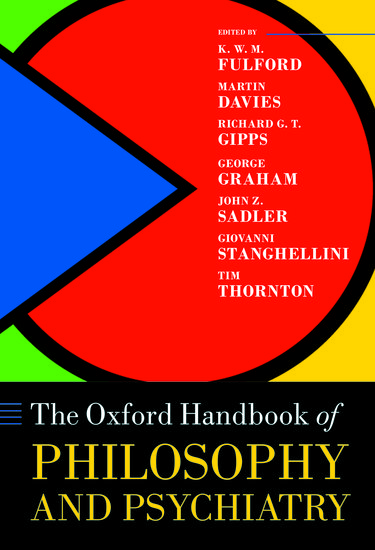
Psychiatry and the brain

By George Graham and Owen Flanagan
Even before the much-heralded DSM-5 was released, Thomas Insel the Director of NIMH criticized it for lacking “scientific validity.” In his blog post entitled “Transforming Diagnosis,” Insel admitted that the symptom-based approach of DSM is as good as we can get at present and that it yields “reliability” by disciplining the use of diagnostic terminology among professionals.

Read More
Book thumbnail image

Where’s Mrs Y? The effects of unnecessary ward moves

By Miles Witham and Marion McMurdo
It’s a Thursday morning in February, and I have just arrived on the ward to start my ward round. Mrs Y, a lady in her 90’s with dementia, was admitted with pneumonia a few days ago. She is on the mend, rehabilitating well, and we planned to get her home tomorrow with some extra home care.

Read More