Oxford University Press's
Academic Insights for the Thinking World

  • Tag: the beatles

In memoriam: Sir George Martin, CBE, 1926-2016

George Martin’s contributions to the way we hear music today are incalculable. Many describe him as the “fifth Beatle,” and his work with those musicians certainly warrants recognition, but his contributions to recorded sound in the twentieth century go far beyond that epithet. In an era when record company marketing lauded hyperbolic praise on stars and some producers presented themselves as supreme geniuses, George Martin maintained a relatively discreet presence.

Read More

Not a Beatle: Andy White

Every major news source last week carried news of Andy White’s death at 85. The Guardian’s “Early Beatles Drummer Andy White Dies at 85” represents a typical article title intended to attract readers albeit with misinformation that suggests that a particular two-minute-and-twenty-second episode from his life should be why we remember him.

Read More

The Beatles, the Watts Riots, and America in transition, August 1965

Fifty years ago during their North American tour, The Beatles played to the largest audience in their career against the backdrop of a nation shattering along economic, ethnic, and political lines. Although on the surface the events of August 1965 would seem unconnected, they nevertheless illustrate how the world was changing and how music reflected that chaotic cultural evolution.

Read More

Composition, performance, and mashups

What does it mean to create an artwork? For centuries, we thought we knew the answer. In literature, an author recorded words on a page. In the visual arts, an artist put paint to canvas. In music, a composer jotted down notes and rhythms on a staff as the raw material for his/her creations.

Read More

The British are coming: the Summer of 1964 (part two)

In the opening months of 1964, The Beatles turned the American popular music world on its head, racking up hits and opening the door for other British musicians. Lennon and McCartney demonstrated that—in the footsteps of Americans like Buddy Holly and Chuck Berry—British performers could be successful songwriters too.

Read More

Composer and cellist Aaron Minsky in twelve questions

Each month we will bring you an interview with one of our OUP composers, providing an insight into their music and personalities. Today, we are speaking with the cellist Aaron Minsky about his proudest moment, the challenges of staying relevant, desert-island playlists, and his debt to J. S. Bach.

Read More
Book thumbnail image

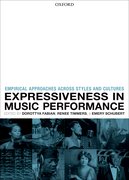
Expressing ourselves about expressiveness in music

Picture the scene. You’re sitting in a box at the Royal Albert Hall, or the Vienna Musikverein. You have purchased tickets to hear Beethoven’s Ninth symphony performed by an internationally renowned orchestra, and they are playing it in a way that sounds wonderful. But what makes this such a powerful performance?

Read More

Lucy in the scientific method

Humans seem to love attempting to understand the meaning of songs. Back in my college days, I spent many hours talking with friends about what this or that song must mean. Nowadays, numerous websites are devoted to providing space for fans to dissect and share their interpretations of their favorite songs (e.g. Song Meanings, Song Facts, and Lyric Interpretations). There is even a webpage with a six-step program for understanding a song’s meaning.

Read More
Book thumbnail image

The Beatles and “She Loves You”: 23 August 1963

By Gordon R. Thompson
As the summer of 1963 drew to a close and students prepared to return to school, the Beatles released what may have been their most successful single. “She Loves You” would top the British charts twice that year, remain near the top for months, and help to launch the band into the American consciousness.

Read More
Book thumbnail image

Beatlemania

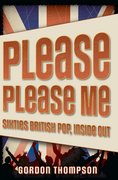
Fifty years ago, in March of 1963, The Beatles released their first album entitled Please Please Me. While the music partly based on British folk and popular forms—including skiffle and music-hall styles—American rock ’n’ roll was by far their dominant resource. The album quickly dominated the British charts and led the group to a path of superstardom that changed the world forever.

Read More
Book thumbnail image

From Me (the Beatles) to You (the Stones): April 1963

By Gordon R. Thompson
After the success of the single “Please Please Me” and the release of the album Please Please Me, British fans and the press eagerly anticipated “From Me to You.” Fans had pre-ordered so many copies of the disk that when Parlophone did release R 5015 on 11 April 1963, the single immediately appeared in pop charts where it would stay for an amazing 21 weeks.

Read More
Book thumbnail image

The Beatles and “Please Please Me,” 11 January 1963

By Gordon R. Thompson
Although “Love Me Do” had been the Beatles’ induction into Britain’s recording industry, “Please Please Me” would bring them prominently into the nation’s consciousness. The songwriters, the band, the producer, and the manager all thought that they had finally found a winning formula. An advertisement in the New Musical Express proclaimed that the disc would be the “record of the year,” even as it raised a chuckle among industry insiders; but the hyperbole would prove prophetic.

Read More
Book thumbnail image

Charting success: The Beatles, December 1962

The Beatles were unlikely successes on London’s record charts in December 1962. Northerners with schoolboy haircuts who wrote and performed their own songs, their first record “Love Me Do” had risen slowly up British charts, despite lack of significant promotion by their publisher and record company, and without an appearance on national television.

Read More
Book thumbnail image

Selling the Beatles, 1962

By Gordon R. Thompson
As a regional businessman and a fledgling band manager, Brian Epstein presumed that the Beatles’ record company (EMI’s Parlophone) and Lennon and McCartney’s publisher (Ardmore and Beechwood) would support the record. This presumption would prove false, however, and Epstein would need to draw on all of the resources he could spare if he were to make the disc a success.

Read More
Book thumbnail image

The Beatles and “Please Please Me,” November 1962

By Gordon Thompson
Fifty years ago, the Beatles recorded their arrangement of “Please Please Me,” a lilting lover’s complaint transformed into a burst of adolescent adrenaline. On 26 November 1962, after repeated attempts to capture just the right balance of frustration and anticipation, George Martin informed them over the studio intercom that they had just recorded their first number-one disc. But the path to the top of the charts would not be easy.

Read More