Oxford University Press's
Academic Insights for the Thinking World

  • Tag: london 2012

Book thumbnail image

Tennyson in 2012

By Gregory Tate
2012 has been a good year for the Victorian novel. The dizzying number of adaptations, exhibitions, and readings which have been organised to celebrate the bicentenary of the birth of Charles Dickens testify to the ongoing popularity of nineteenth-century fiction, and of this most famous of Victorian novelists in particular.

Read More
Book thumbnail image

Understanding Olympic design

By Jilly Traganou
After attending the “Because” event at the Wolff Olins office on July 4, I was once again reminded of the big disconnect that lies between designers and their public. Wolff Olins is the firm that designed the London 2012 brand, a multifaceted design campaign that included much more than the London 2012 logo. Readers may remember the numerous complaints that the logo generated. As my research revealed, this was caused partly due to IOC’s restrictions and the corporate unwillingness to allow for the full application of what might be seen as a “no logo” campaign.

Read More
Book thumbnail image

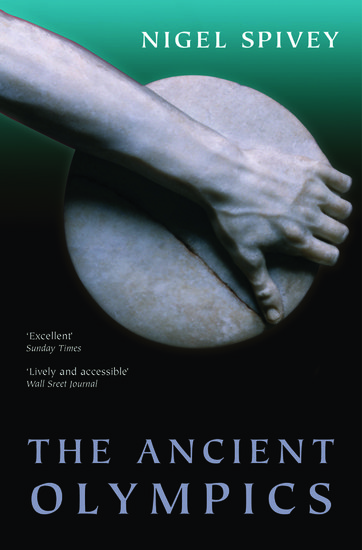
What would the ancient Greeks make of London 2012?

By Nigel Spivey
Overheard somewhere near London’s Green Park tube station, amid a throng of spectators for the 2012 Olympic triathlon: “What would those ancient Greeks make of this?” I had no opportunity there and then to attempt a response, but it still seems worth considering. What indeed? Triathlon, for a start, they should comprehend; an ancient Greek word (meaning ‘triple challenge’), it would seem like some fraction of the ‘Twelve Labours’ (dodekathlon) undertaken by Herakles, and the winner duly heroized.

Read More
Book thumbnail image

The LPO, Minis, and an Olympic afterglow

This is my last blog on the music and TV broadcasts for the 2012 Olympic games — I promise. But I just saw a new video ad that I must share. In my last blog post, I noted the remarkable feat of the London Philharmonic Orchestra (LPO), who, under the baton of Philip Sheppard, recorded the national anthems of all 205 participating nations in the Olympic games in a little under 52 hours of studio time.

Read More
Book thumbnail image

Richard Causton, the EUYO, and the Cultural Olympiad

Composer Richard Causton worked with the European Union Youth Orchestra on Twenty-Seven Heavens, premiering in the UK tonight at Usher Hall in Edinburgh as part of the Edinburgh International Festival. Causton composed the work, which he describes as a Concerto for Orchestra, for the 2012 Cultural Olympiad festivities celebrating the UK, London, and the Olympics.

Read More
Book thumbnail image

A Spice Girl Symphony: The Olympic Closing Ceremony

The 2012 Olympic games concluded on Sunday with choreographer Kim Gavin’s musical extravaganza. As with Danny Boyle’s opening ceremony, Gavin was intent on impressing his vision of British music to the world. To underscore its significance, he titled the closing “A Symphony of British Music.” This title was a peculiar choice considering that classical historical musicology considers the “symphony” as a specific genre of classical music: a serious multi-movement work composed by a renowned composer, and performed by an orchestra.

Read More
Book thumbnail image

An Olympic roundup of blog posts

It’s been a long, hard road to London 2012 and while the closing ceremony brings an end to the sporting events and spectacle, we all know it’s not truly the end. The Paralympics begin in a few weeks. There will continue to be reports, analysis, and even a few more blog posts from us. Let’s take a look back on Olympic news, analysis, context, and history from the past few months. And we’ll see you in Rio de Janeiro in 2016!

Read More
Book thumbnail image

The Oxford Companion to the London 2012 Opening Ceremony

Many questioned how the London 2012 Summer Olympic Games Opening Ceremony was going to make a mark after the spectacular Beijing Olympics only four years earlier. While Beijing presented the Chinese people moving as one body — dancing, marching, and presenting a united front to the world — the British answer was a chaotic and spirited ceremony, shifting from cricket matches to coordinated dance routines, Mr Bean’s comedic dream to a 100-foot Lord Voldemort.

Read More
Book thumbnail image

African Americans at the Olympic Games

By Robert Repino
Though they were conceived for idealistic reasons and designed to celebrate universal human aspirations, the modern Olympic Games have served as a stage for the world’s political and social struggles. Virtually every political controversy — from wars to ideological conflicts to human rights struggles — have managed to find expression every four years in the athletic events and in the media campaigns that go with them. Perhaps no group has influenced the Games more — both as athletes and as human rights pioneers — than African Americans, whose very participation in the modern games has been one of many tiny steps forward in the progress toward a more just world.

Read More
Book thumbnail image

Olympic Greatness

By David Potter
In a year when Michael Phelps became the most decorated Olympian of all time with 22 medals, and Usain Bolt became the first man to win the 200 meters twice, it’s worth asking: What does “great” mean in sports? We might gain perspective by considering how the Ancient Greeks determined greatness in athletes. Then and now, true greatness is as defined not by a single moment, but by the ability to build a record of extraordinary achievement.

Read More
Book thumbnail image

Where are the ‘Isles of Wonder?’

By Anthony Bale
Danny Boyle’s spectacular opening ceremony at the London Olympics on 27 July 2012 was entitled Isles of Wonder. As many will have noticed, it was shot through with references to the medieval and early-modern past. Mike Oldfield’s performance of In Dulce Jubilo, a 1970s reworking of a late-medieval German-Latin carol, provided one of the most exuberant moments. In Stratford, dancing nurses accompanied it. There were many references to and quotations from Shakespeare as well.

Read More
Book thumbnail image

Excelling Under Pressure

By Gerald Klickstein
The Olympics are in full swing, and we’re bound to witness some athletes who triumph and others who choke under the stress of performing. What differentiates those two groups? I’ve been probing that question for decades from the perspective of a musician and educator. Through my research and experience, I’ve come to appreciate that, for athletes and musicians alike, the primary distinction between those who excel under pressure and those who crack lies in how they prepare to perform.

Read More
Book thumbnail image

Funding and Favors at the Olympics

By David Potter
Public funding for sports events was a fact of life for the Greeks and Romans. So was private funding, and both the Greeks and the Romans knew what the benefits and what the pitfalls associated with either might be. Can we be certain that the organizers of the London Olympics are quite so clear about this? The widely advertised donation (amounting to thirty-one million dollars) by pharmaceutical giant GlaxoSmithKline (GSK) of testing facilities for 6,250 blood samples taken from athletes could raise that question.

Read More
Book thumbnail image

Music and the Olympics: A Tale of Two Networks

Television networks use music to connect audience and program through theme music and short video spots called “promos. Themes and promos carry what media musicologist Philip Tagg calls “appellative functions”, which summon viewers to the television screen. With an event as big as the Olympics, television networks need to attract as large an audience as possible to maximize commercial ad revenue.

Read More
Book thumbnail image

Music and the Olympic Opening Ceremony: Pageantry and Pastiche

By Ron Rodman
Film director Danny Boyle’s gargantuan presentation at the opening ceremonies of the 30th Olympiad in London had little to do with the actual games, but had everything to do with his vision of Britain. The show was full of pageantry, drawing upon the 17th century English masque, a sort of loosely structured play with dance, music, costumes, songs and speeches, and festive scenery, with allegorical references to royalty, who would sometimes participate in the show. All elements of the masque were present, including the participation of the Queen herself, who stepped into the narrative briefly.

Read More
Book thumbnail image

James Bond at the London 2012 Opening Ceremony

By Jon Burlingame
When James Bond and Queen Elizabeth parachuted out of the helicopter (or appeared to) during Friday night’s opening ceremonies of the London Olympics, director Danny Boyle could think of only one piece of music to play: the “James Bond Theme.” And of all the dozens of recordings of 007′s signature music that have been made over the years, he chose the unmistakable original: John Barry’s recording of Monty Norman’s “James Bond Theme,” from the very first Bond adventure, Dr. No, which opened in British cinemas 50 years ago, in October 1962.

Read More