Oxford University Press's
Academic Insights for the Thinking World

Book thumbnail image

La Diada de Sant Jordi and celebrating books on April 23rd

By Alice Northover
April 23rd has a touch of madness for those in book publishing. It is cause for not just one celebration, but several. It is World Book Night, an annual exchange to spread the love of reading; World Book and Copyright Day as organized by UNESCO to promote both reading and the preservation of authors’ intellectual property (take note plagiarists and book thieves!); the Death day of both the Bard himself, William Shakespeare, and el manco de Lepanto, Miguel de Cervantes, in 1616; the probable Birthday of William Shakespeare in 1564 (his baptism was the 26th of April and baptisms were traditionally held three days after birth); International Pixel-Stained Technopeasant Day, which celebrates the work of science fiction and fantasy authors and encourages the free availability of their great work online (by their own choice, not against their wishes); and finally La Diada de Sant Jordi.
Read More
Book thumbnail image

Into Maple White Land of the Lost World

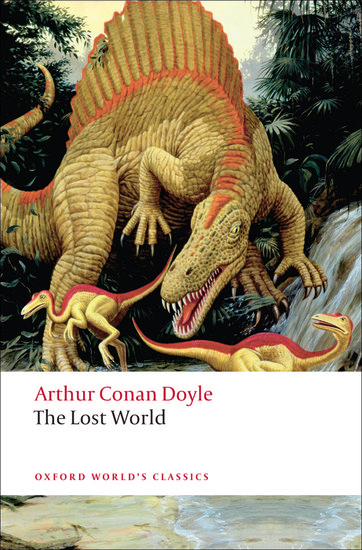
Happy International Pixel-Stained Technopeasant Day! Let’s celebrate the great science fiction and fantasy writers with an excerpt from one of the earliest fantasy novels — and an Oxford World Classic — The Lost World by Arthur Conan Doyle. Professor Challenger’s claims of dinosaurs living in twentieth-century South America may seem outlandish, but even skeptics become believers in The Lost World…

Read More
Book thumbnail image

Shakespeare and Cervantes die

The date 23 April 1616 marked the end of two eras in world literature; for on that day, two giants of Renaissance letters died. Poet and playwright William Shakespeare died in his home at Stratford-upon-Avon. Farther south, Spanish poet, playwright, and novelist Miguel de Cervantes also passed away.

Read More

Do you know Shakespeare’s American career?

Although England had colonies in Virginia and Bermuda before William Shakespeare died in 1616, he never came to America. But no Englishman ever had such a triumphant posthumous migration to America as did Shakespeare: in books (by him and about him), in performances of his dramas on virtually every stage from coast to coast, in school and college curricula from the nineteenth century to the twenty-first, in Broadway musicals, in “blackface” minstrel shows, in summer festivals, in stuffed dolls, trinkets, key rings, and tea cups. Shakespeare in America is multifaceted and ubiquitous.

Read More
Book thumbnail image

Girls and the Jump to Judge

By Jason Mittell
I’d decided not to write about the pilot of Girls, the new HBO show that has either been hailed as the channel’s great comedy hope, or a crime against humanity (or maybe some middleground somewhere too). But after reading a lot of the criticism and commentary, and getting into at least four lengthy conversations on Twitter about it, I figured I’d assemble some thoughts to join in the fray beyond 140 characters.

Read More
Book thumbnail image

Ahmed Ben Bella

Ahmed Ben Bella was born in Marnia, near the Algerian-Moroccan border, although some doubt remains about whether the year of his birth was 1916 or 1918. One of five brothers of a farmer, in sociological terms Ben Bella’s family was part of the countryside elite that had been impoverished by French colonialism. From these rural roots Ben Bella rose to become the first post-Independence President of Algeria in 1963 and, until his overthrow in June 1965, one of the most famous leaders of the third world revolutionary movement that took off across Africa, Asia and Latin America.

Read More
Book thumbnail image

Cool, clear water? On cleaning up US rivers

By Wallace Scot McFarlane
Many rivers in the United States carry the burden of having been severely polluted. Indeed all the rivers on which I have lived were once no healthier than an open sewer: the Trinity River (Dallas’s untreated sewage), the Concord River (military-industrial complex Superfund sites), the Androscoggin River (paper mills), the Charles River (“love that muddy water!”), and the Willamette River (paper mills). Although none of these rivers live up to the clean water promised by the Clean Water Act, they are nonetheless much cleaner and offer plenty of recreational opportunities, often neglected by the many people who call these watersheds home.

Read More
Book thumbnail image

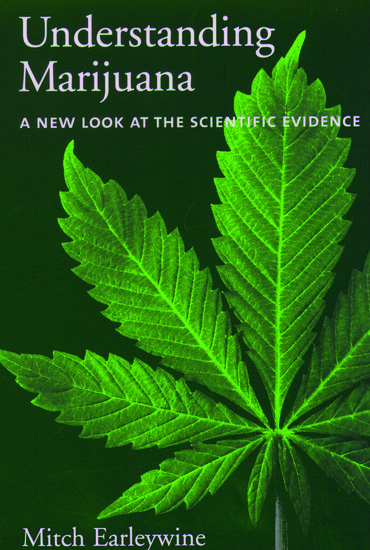
420, cannabis, illegality, and the cost of prohibition

By Mitch Earleywine
Cannabis became essentially illegal in the United States in 1937. Perhaps this 75 year experiment has provided enough data for some informed decisions. We’re up to over 800,000 arrests each year, with government spending billions annually on marijuana control. Yet more people have tried the plant than ever before. Several authors suggest that alternatives to prohibition might prove cheaper, send fewer people through our courts, and maintain respect for the law. It seems oddly un-American that a citizen can go to jail for owning a plant, especially here in the land of the free. But change is scary, and fear runs politics in frightening ways.

Read More
Book thumbnail image

100 years ago today: the death of Bram Stoker

By Roger Luckhurst
Bram Stoker was always a man in the shadows, the back-room boy who for thirty-years had organised the life and finances of the greatest actor of his age, Sir Henry Irving. Stoker’s death one hundred years ago today, on the 20th April 1912, conformed to type: it was utterly eclipsed by a much larger catastrophe. He died quietly at home only five days after the R. M. S. Titanic hit an iceberg and sank with the loss of 1500 lives.

Read More

Images from American Bandstand

As we look back at the life and work of Dick Clark, we put together a slideshow of images from American Bandstand: Dick Clark and the Making of a Rock ‘n’ Roll Empire by John Jackson. We’ll miss you Dick Clark!

Read More
Book thumbnail image

Remembering Dick Clark

We were saddened to hear that Dick Clark died yesterday at the age of 82. A television presenter and American icon, Dick Clark is fondly remembered for his years hosting American Bandstand and the New Years Eve Ball Drop in Times Square. We’ve excerpted the preface of American Bandstand: Dick Clark and the Making of a Rock ‘n’ Roll Empire by John Jackson to showcase some of the impact he had on American music.

Read More
Book thumbnail image

Egypt: The Omar Theories

By Steven A Cook
It is fair to say that Omar Suleiman’s bid to be Egypt’s next president is one of the most unexpected developments in post-Mubarak Egypt. The last time anyone had seen or heard from Suleiman, he appeared on Egyptian television and declared

Read More
Book thumbnail image

Captain Cook sights Australia

This Day in World History
“What we have as yet seen of this land appears rather low, and not very hilly, the face of the Country green and Woody, but the Sea shore is all a white Sand.” Thus James Cook concluded his log entry for April 19, 1770 — the day Europeans first sighted the continent of Australia.

Read More
Book thumbnail image

Propofol and the Death of Michael Jackson

One of the hallmarks of an expert is to make what they are doing look effortless. Whether it is tossing pizza, throwing a clay pot on a wheel, or executing the perfect forehand smash, the experts make it look easy. The part that we don’t see is the hundreds of hours of practice, and the hundreds of times it has gone wrong; the shreds of dough stuck to the light bulb.

Read More

A scrumptious shrimp with a riddle

By Anatoly Liberman
My romance with shrimp began when, years ago, I looked up the etymology of scrumptious in some modern dictionary. Naturally, it turned out that the word’s origin is unknown (this happens every time I try to satisfy my curiosity in the area of my specialization). The usually sensible Century Dictionary suggests that scrumptious is an alternation of scrimptious, from scrimption, a funny noun going back to scrimp. The OED thinks so too.

Read More
Book thumbnail image

Earthquake and fire destroy much of San Francisco

This Day in World History
Shortly after 5:12 A.M. on April 18, 1906, and for as long as a minute, the earth shook violently along nearly 300 miles of the San Andreas Fault in California. The violent earthquake, estimated around 8 on the Richter scale, caused severe damage from Salinas, south of San Francisco, to Santa Rosa, north of the city. People as far away as southern Oregon, Los Angeles, and central Nevada felt its tremors.

Read More