Oxford University Press's
Academic Insights for the Thinking World

Book thumbnail image

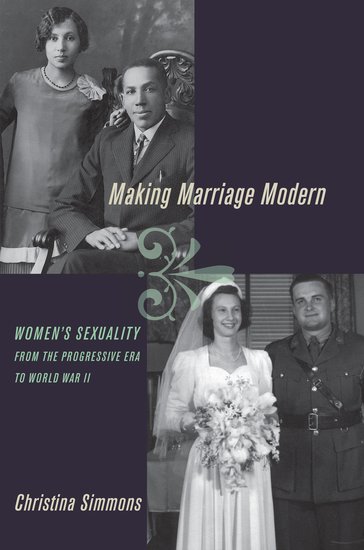
Birth control, marriage, and women’s sexuality

By Christina Simmons
Ninety-six years ago, on 16 October 1916, Margaret Sanger opened her first — illegal — birth control clinic in the Brownsville section of Brooklyn. Human efforts to control fertility are at least as old as written history; ancient Greeks and Egyptians used spermicidal and barrier methods. But Sanger’s action began a new phase. In less than two weeks police shut the clinic down, but the incident heightened the visibility of the fledgling birth control movement.

Read More
Book thumbnail image

Howard Skempton on composing

Composer Howard Skempton is one of the mainstays of British contemporary classical music. He is an experimental composer who writes in a style completely his own, un-deflected by trends in composition or performance. Having developed, under the tutelage of Cornelius Cardew, a musical style characterised by its elegance and simplicity, Skempton’s catalogue of compositions is now extensive and diverse.

Read More
Book thumbnail image

Place of the Year: A look back at past winners

Earlier this month, we launched Oxford University Press’ annual Place of the Year competition. For many, geography is just the next vacation, but understanding geography gives much more than fodder for travel fantasies. Geography provides insight into the forces driving people, events, societies, and technology — both past and present. With help from The Atlas of the World, 19th edition, here’s a look at past winning hotspots driving human history.

Read More
Book thumbnail image

Journalistic narratives of Gerald Ford

By James L. Baughman
It has been more than 25 years since Gerald Ford narrowly lost the 1976 election to Jimmy Carter. Ford’s presidency has become a dim memory. “The more I think about the Ford administration,” John Updike wrote in 1992, “the more it seems I remember nothing.” Taking office after Richard Nixon resigned in August 1974, Ford struggled to restore the public’s faith in the presidency, badly shaken by the numerous illegalities associated with the Nixon White House.

Read More
Book thumbnail image

Stone Age dentistry discovery

By Claudio Tuniz
Advanced analytical methods, based on radioactivity and radiation, have recently revealed that therapeutic dental filling was in use during the Stone Age. As part of the team that performed the study, I worked with experts in radiocarbon dating, synchrotron radiation imaging, dentistry, palaeo-anthropology and archaeology. Our discovery was based on the identification of an extraneous substance on the surface of a canine from a Neolithic human mandible.

Read More
Book thumbnail image

When a language dies

By Nancy C. Dorian
When he died recently, Bobby Hogg took the Cromarty fisherfolk dialect out of existence with him, at least as a fluently spoken mother tongue, and the media took notice. The BBC reported on his death, celebrating the unique nature of his native dialect. In an Associated Press report originating in London, his dialect was spoken of as “a little fragment of the English linguistic mosaic.” A knowledgeable University of Aberdeen linguist spoke of this as “the first time that an actual Scots dialect has so dramatically died with the passing of the last native speaker.”

Read More
Book thumbnail image

Pasqua Rosee and the coffee shop

Coffee shops are in the news, but where did it all begin? Perhaps with this man, Pasqua Rosee (fl 1651-6), who opened London’s first coffee-house at St Michael Cornhill. Rosee’s coffee-house was a shed in St Michael’s churchyard. Here served “two or three dishes” of coffee “at a time twice or thrice a day.” Rosee’s coffee-house was a shed in St Michael’s churchyard.

Read More
Book thumbnail image

An Oxford Companion to James Bond

By Daniel ‘Pussy Galore’ Parker and Gabby ‘Odd Job’ Fletcher
‘Ah’, he says stroking a white fluffy cat, ‘we’ve been expecting you’. Leave Ms Moneypenny with a peck on the cheek, stash your Walther PPK in your back pocket and jump into our Aston Martin so you can join us as we speed through an A to Z of Bond fun, fact, and fiction. We have stories about Roger Moore’s penchant for love-making, tales of fictional islands, and even anecdotes about crocodile jumping. We’ve devoured OUP’s online reference works to bring you a delicious helping of double 0 heaven. Welcome to the world of Bond, James Bond

Read More
Book thumbnail image

Friday procrastination: energy pod edition

Many moons ago OUPblog had a “Friday Procrastination” series collecting some interesting (and non-Oxford!) reading from around the web. I’m hoping to kick start it again with what I’ve been reading this week. Any further recommendations are welcome.

Read More
Book thumbnail image

The challenges of discoverability

By Robert Faber
In the world of digital scholarship, discovery really matters. There are many new ways of reading content on the web or mobile devices, but making our publications easy to find in the vast ocean of digital information is a growing challenge. When we decided to take this on and set up a “discoverability” program across all OUP’s global academic publishing, it sounded simple enough: we just have to improve the ways people find and use our content, right?

Read More
Book thumbnail image

The “Choice” Bazaar

Daniel Callahan
Some years ago I wrote a book on abortion that espoused women’s legal right to choose abortion, which was later cited in Roe v. Wade. It should have made me popular with feminists, but it did not and for one reason: I also argued that abortion is an ethical choice, and that not all abortions would necessarily be good choices. Trained as a philosopher, I pointed out that a traditional part of morality is deciding how to make good choices in the shaping of one’s life.

Read More
Book thumbnail image

Presidential campaigns: replicating Reagan

Although he last ran for office nearly 30 years ago, and died 8 years ago, Ronald Reagan remains a surprisingly strong presence on today’s campaign trail. It is not just the multiple times Republican candidates’ invoked his name during the primary debates. It is not just that Americans are still debating Reagan’s cry to shrink the federal government.

Read More
Book thumbnail image

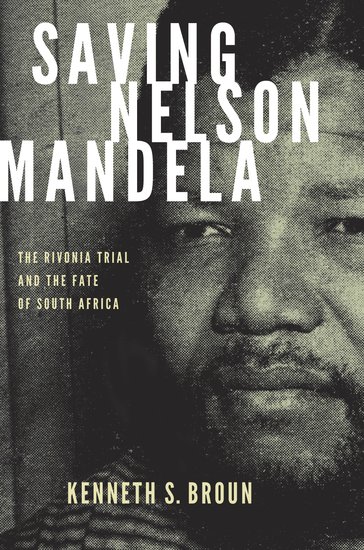
The 50th anniversary of Nelson Mandela’s imprisonment

By Kenneth S. Broun
This October 25th marks the fiftieth Anniversary of the beginning of Nelson Mandela’s twenty-seven years in South African prisons. He was initially sentenced in October, 1962 to five years imprisonment for inciting African workers to strike and for leaving the country without valid travel documents. Immediately after sentencing, he was sent to the Robben Island prison, lying off Cape Town harbor, where he was held in solitary confinement.

Read More
Book thumbnail image

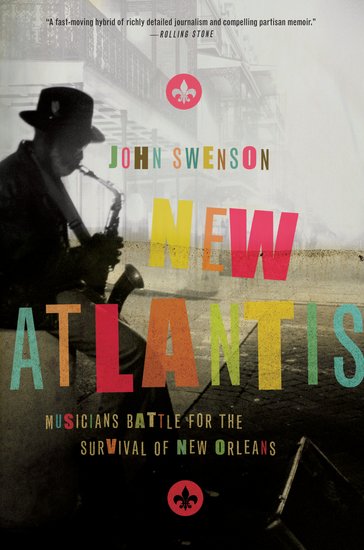
Music events to see in New Orleans 1-4 November

By John Swenson
Greetings to all of you in New Orleans for the AMS/SEM/SMT conference. I’ve been writing about the music of New Orleans dating back to the mid-1970s and am still making discoveries to this day. The city is a seemingly bottomless well of creative musicians, with more arriving every day from around the world seeking the muse that inspires this magic, spiritual sound. Here are a few suggestions about where you might want to go over the next few days to hear this aural cornucopia in person. These recommendations are really just the tip of the iceberg, but they reflect what I am likely to be hearing myself.

Read More
Book thumbnail image

Solo or duet? Married couples in the American National Biography

By Susan Ware
What are the chances, I wondered, of having separate entries for a married couple in the American National Biography Online (ANB)? I’m still new to my job as the general editor of the ANB, but it struck me as intriguing that the very first update released on my watch will contain one such couple: country music singers Johnny Cash and June Carter Cash. Joined together in marriage and music, they both led fascinating lives that earned them inclusion – separately — in the ANB.

Read More

An etymologist among the gods

By Anatoly Liberman
Etymology, a subject rarely studied on our campuses, enjoys the respect of many people, even though they persist in calling it entomology. Human beings always want to know the origin of things, but sometimes etymology is made to carry double, like the horse in O. Henry’s story “The Roads We Take.” For instance, it is sometimes said that etymology helps us to use words correctly. Alas, it very seldom does so. If someone asks us about the meaning of the adjective debonair and is not only informed that a debonair man is genial, suave, and so forth but also that the adjective goes back to the French phrase de bon aire “of good disposition (nature),” this may help.

Read More