Oxford University Press's
Academic Insights for the Thinking World

Book thumbnail image

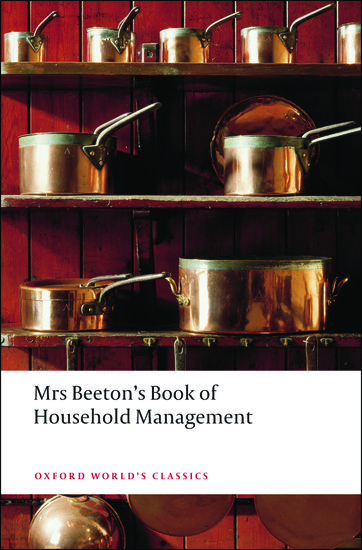
Roast Goose, the Mrs Beeton way

With Christmas approaching, we are looking towards the food we’ll share on the day itself. If you’re looking for ideas, who better to consult that Mrs Isabella Beeton herself, who authored the seminal Household Management at just 22 years old. Below is her sage advice on that classic Christmas meat, roast goose.

Read More
Book thumbnail image

Killing journalists in wartime: a legal analysis

By Sandesh Sivakumaran
The last couple of years have been bad for journalists. I’m not referring to phone-hacking, payments to police, and the like, which have occupied much attention in the United Kingdom these last months. Rather, I’m referring to the number of journalists who have been killed in wartime. These last two years alone have seen eminent journalists such as Marie Colvin and Tim Hetherington killed while reporting on armed conflicts.

Read More
Book thumbnail image

The ageing brain

By
As our bodies start to show the signs of ageing, our brain is naturally ageing too. But some older people can become forgetful and have trouble remembering common words or organising daily activities more than others. There are few proven interventions to prevent this kind of cognitive decline in older adults, although treating modifiable risk factors for vascular disease and stroke, such as cholesterol and body mass index, has been suggested as a promising approach to preventing or delaying cognitive impairment for a growing UK population of older adults. So is there a link between high blood pressure and forgetfulness?

Read More
Book thumbnail image

Don’t bank on it

By Beverley Hunt
With just over a week to go until Christmas, many of us are no doubt looking forward to the holidays and a few days off work. For those working on the first edition of the Oxford English Dictionary, however, writing the history of the language sometimes took precedence over a Christmas break.

Read More
Book thumbnail image

The life of J.R.R. Tolkien

Published in 1937 The Hobbit was Tolkien’s first published work of fiction, though he had been writing on legends since at least 1915. His creation — a mythological race of ‘hobbits’, in which Bilbo Baggins takes the lead — had originally been intended for children. But from the outset Tolkien’s saga also proved popular with adults, perhaps appreciative of the hobbits’ curiously English blend of resourcefulness and respectability.

Read More
Book thumbnail image

Oral history in disaster zones

By Caitlin Tyler-Richards
When Superstorm Sandy hit the United States’ east coast in late October, I was struck by the way in which oral historians and other like-minded academics responded to the ensuing chaos. This was not the first time I had seen oral history interact with natural disaster; one of the first articles I prepped for our Twitter feed was KUT News’ “Forged in Flames: An Oral History of the Labor Day Wildfires,” a multi-media documentation of the wildfires that overtook Texas in September 2011.

Read More
Book thumbnail image

Hanukkah and Christmas: a spiritual interpretation

By Roger S. Gottlieb
Ahhh…the joys of the holiday season in America! A frightening degree of crass commercialism, public rages about the ‘war on Christmas,’ emotionally draining family events or a soul-graying loneliness when you have no place to go. Food in abundance, but often consumed with a sense that it’s way off of one’s (more healthy) diet; or perhaps a nagging guilt that we in the middle/upper classes have so much more than the approximately 1 billion people who lack access to clean water, adequate food, and health services.

Read More
Book thumbnail image

Making and mistaking martyrs

By Jolyon Mitchell
It was agonizing, just a few weeks before publication of Martyrdom: A Very Short Introduction, to discover that there was a minor mistake in one of the captions. Especially frustrating, as it was too late to make the necessary correction to the first print run, though it will be repaired when the book is reprinted. New research had revealed the original mistake. The inaccuracy we had been given had circulated the web and had been published by numerous press agencies and journalists too. What precisely was wrong?

Read More
Book thumbnail image

Beethoven’s creativity in the 21st century

By William Kinderman
Our fascination with creativity is a timeless and universal phenomenon. Since Greek antiquity, its most telling embodiment has been Prometheus: that heroic benefactor of humanity who stole the fire whose vital sparks sustain science and the arts. In more modern times, it is the fire of the imagination that is understood to illuminate and guide the creative mind, transforming the conventions of culture.

Read More
Book thumbnail image

Samuel Johnson and human flight

By Thomas Keymer
One doesn’t associate Samuel Johnson, whose death 228 years ago today ended his lengthy domination of the literary world, with the history of aviation. But ballooning was a national obsession in Johnson’s last year, and he was caught up in the craze despite himself.

Read More
Book thumbnail image

How Nazi Germany lost the nuclear plot

By Gordon Fraser
When the Nazis came to power in Germany in 1933, neither the Atomic Bomb nor the Holocaust were on anybody’s agenda. Instead, the Nazi’s top aim was to rid German culture of perceived pollution. A priority was science, where paradoxically Germany already led the world. To safeguard this position, loud Nazi voices, such as Nobel laureate Philipp Lenard,  complained about a ‘massive infiltration of the Jews into universities’.

Read More

Drinking vessels: ‘bumper’

By Anatoly Liberman
Some time ago, I devoted three posts to alcoholic beverages: ale, beer, and mead. It has occurred to me that, since I have served drinks, I should also take care of wine glasses. Bumper is an ideal choice for the beginning of this series because of its reference to a large glass full to overflowing. It is a late word, as words go: no citation in the OED predates 1677. If I am not mistaken, the first lexicographer to include it in his dictionary was Samuel Johnson (1755). For a long time bumper may have been little or not at all known in polite society.

Read More
Book thumbnail image

A holiday maze

By Georgia Mierswa
Ah, the holidays. A time of leisure to eat, drink, be merry, and read up on the meaning of mistletoe in Scandinavian mythology… Taken from the Oxford Index’s quick reference overview pages, the descriptions of the wintry-themed words above are not nearly as simplistic as you might think — and even more intriguing are the related subjects you stumble upon through the OI’s recommended links. I’ll never look at a Christmas tree the same way again.

Read More
Book thumbnail image

Robert Browning in 2012

By Gregory Tate
This year marked the bicentenary of the birth of the Victorian poet Robert Browning in 1812, although this news might come as something of a surprise…

Read More
Book thumbnail image

The art of science

By Leonard A. Jason
Are art and science so different? At the deepest levels, the overlap is stunning. The artist wakes us from the slumber of ordinary existence by uncovering a childlike wonder and awe of the natural environment. The same magical processes occur when a scientist grasps the mysteries of nature, and by doing so, ultimately shows a graceful interconnectedness.

Read More
Book thumbnail image

Life in a brewery

What kind of crazy things happen at a brewery bar? What is some of the interesting stuff you can do with beer? What’s proper beer etiquette? If you don’t like beer, what beer should you try? How do you become a brewer? How do you break into the brewing industry? Interviews with the Eric Peck, Brooklyn Brewery Tour Guide and Bartender, and Tom Price, Brooklyn Brewery Brewer and Lab Manager, reveal life inside a brewery.

Read More