Oxford University Press's
Academic Insights for the Thinking World

Book thumbnail image

Politics, narratives, and piñatas in health care

By Andrew Koppelman
Obamacare has been like the title character in Samuel Beckett’s Waiting for Godot: everyone talks about it but it never arrives. It is finally about to make its entrance. On 1 October 2013, all 50 states and the District of Columbia will open health insurance marketplaces (sometimes called “exchanges”) for people who aren’t covered by their employer or a government program.

Read More
Book thumbnail image

The Gold Corner

By Charles Geisst
One of the more audacious trading operations in Wall Street history occurred in September 1869. The “Gold Corner” as it quickly became known, involved nothing less than an attempt to force up the price of gold using the resources of the United States government in the process.

Read More
Book thumbnail image

What is atonal? A dialogue

Viennese composer Alban Berg played a major role in the transformation of serious music as it entered the modern period. He was also a skilled, analytic writer, whose essays, lectures, and polemics provide a unique perspective on classical music in transition. A new English edition of his Pro Mundo – Pro Domo. edited by Bryan R. Simms, contains 47 essays, many of which are little known and have not been previously available in English. Below is a brief extract from one of his dialogues with critic Julius Bistron.

Read More
Book thumbnail image

Fine-tuning treatment to the individual cancer patient

By Martine Piccart
Personalized medicine is one of the objectives of the European Union’s “Horizon 2020” funding program and a high priority on the ESMO board’s strategic agenda: indeed, in oncology, many therapies share a narrow therapeutic index and high cost, implying that prescribing the wrong treatment to the wrong patient at the wrong time can have very negative consequences for both patients and public health systems.

Read More
Book thumbnail image

What does health reform do for Americans?

By Theda Skocpol and Lawrence R. Jacobs
The Affordable Care and Patient Protection Act that was passed by Congress and signed into law in March 2010 sets in motion reforms in U.S. health insurance coming into full effect in 2014. Most Americans are confused about what the law promises — and no wonder.

Read More
Book thumbnail image

The final judgement in the trial of Charles Taylor

By Simon Meisenberg
The trial of former Liberian President Charles Taylor moved the Special Court for Sierra Leone (SCSL) into the limelight of international criminal justice for the last half decade. Without any doubt, the presence of a former Head of State in the dock drew international attention to the smallest of the ad hoc international criminal courts.

Read More
Book thumbnail image

Middle East food security after the Arab Spring

By Eckart Woertz
Syria and Egypt paradigmatically highlight the perils of food security in the Middle East. Oil exports of Egypt, the largest wheat importer of the world, ceased at the end of the 2000’s. Generating enough foreign exchange for food procurement became more difficult and plans for more self-sufficiency have failed in the face of limited water and land resources.

Read More
Book thumbnail image

The whale that inspired Greenpeace

By Frank Zelko
On 15 September 2013, Greenpeace celebrated its 42nd anniversary. The organization, which was born in Vancouver in 1971, began life as a one-off campaign against US nuclear testing in the far North Pacific.

Read More
Book thumbnail image

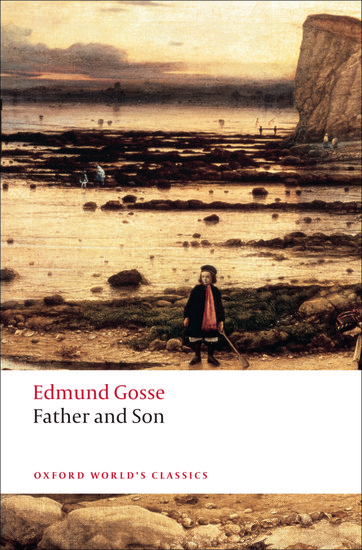
Edmund Gosse: nonconformist?

By Michael Newton
“The trouble with you,” an old friend recently declared to me, “is that you have always been a conformist.” He meant that I had never undertaken that necessary radical break with my parents and their ideals and interests. Without such a generational rupture, it seemed to him, nobody could claim to be a fully independent, realised person. While he had been dropping acid and dropping (temporarily) out of college, I’d been reclining under a tree with John Keats. And surely there was nothing rebellious in that.

Read More
Book thumbnail image

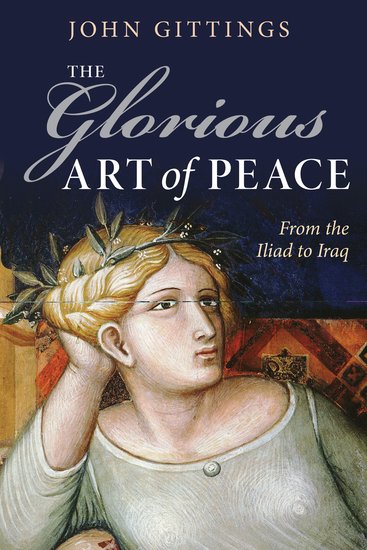
Give peace a chance in Syria

By John Gittings
When Ban Ki-moon, speaking in The Hague, called recently on member countries to “give peace a chance” in Syria, and condemned the supply of weapons to both sides, he was taking part in a ceremony at the Peace Palace to mark the centennial of its foundation (a result of the Hague Peace Conference in 1899) which otherwise was ignored by the media.

Read More
Book thumbnail image

Carnival Cruise and the contracting of everything

By Nancy S. Kim
By now, you’ve heard the stories of passengers urinating in bags, slipping on sewage, and eating stale cereal aboard the Carnival Cruise ship that was stranded in the Gulf of Mexico — not exactly the fun-filled cruise for which the passengers had signed up and paid. Several lawsuits have been filed which Carnival is seeking to dismiss, claiming its contract prohibits them.

Read More

King Richard’s worms

By Philip Mackowiak
It has been said that the only persons who refer to themselves as “we” are royalty, college professors, and those with worms. In the 4 September 2013 issue of the Lancet, Piers Mitchell and colleagues present evidence that Richard III, one of England’s best known medieval kings and the deformed villain of Shakespeare’s Richard III, had two reasons for referring to himself in the first person plural.

Read More
Book thumbnail image

When are bridges public art?

By David Blockley
The costly controversy over the abandonment of the ambitious Wear Bridge scheme and current plans by Sunderland City Council to ‘reduce down to a simpler design’ is a manifestation of what can happen when thinking about various forms of art is confounded.

Read More
Book thumbnail image

A fresh musical start for fall

By Jill Timmons
Leaves are changing, temperatures are cooling, and students are returning to the rigors of school. For those of us in the music industry, fall can also be a time of personal renewal. As autumn commences, we have the opportunity to turn the page from summer pursuits and ignite fresh and innovative initiatives.

Read More
Book thumbnail image

The demographic landscape, part II: The bad news

By Jonathan Minton
Our demography has been scarred by the two World Wars. In our maps these appear as two thin clusters of ovals, like onions that have been flattened then cut open. Topographically, these oval clusters show mortality risk jutting shard-like out of the lowlands of early adulthood like the kite-shaped plates of a stegosaurus.

Read More