Oxford University Press's
Academic Insights for the Thinking World

  • Arts & Humanities

Book thumbnail image

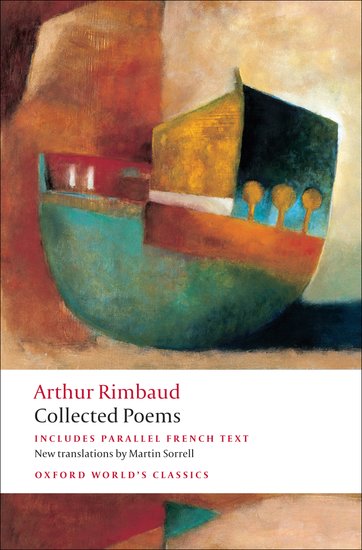
The unshackled cultivation of Rimbaud

By Martin Sorrell
Among the enfants terribles of literature, Rimbaud holds a pre-eminent place. But he’s been made famous against his will. If he had his way, everything he wrote — save perhaps his factual letters from Africa and elsewhere about trade and the dodgy deals he was trying to clinch – would have been destroyed. All the astonishing poetry that has made him an icon burnt on a bonfire of vanities, but fortunately it was saved.

Read More
Book thumbnail image

To fix a broken planet

By Louis René Beres
Whatever our faith-based differences concerning immortality, death has an unassailable biological purpose — to make species survival possible. Nonetheless, we humans need not always hasten the indispensable process with utterly enthusiastic explosions of crime, war, terrorism, and genocide.

Read More
Book thumbnail image

The birth of disco

By Denny Hilton
On this day in 1959, a nightclub opened its doors in the quiet city of Aachen, West Germany, and a small revolution in music took place. The Scotch-Club was similar to many restaurant-cum-dancehalls of the time, with one exception: rather than hire a live band to provide the entertainment, its owner decided instead to install a record player…

Read More

The top ten dramatizations of Moby-Dick

By George Cotkin
Moby-Dick draws readers into it. And many of its more creative readers have sought to capture its grandeur on film and stage. From the first film in 1926 to the present, these attempts have taken liberties with the novel, sometimes for good, sometimes for ill. But that is the challenge that Moby-Dick offers its readers, a text that is deep and wide, an ocean of issues and concerns that we must all, in some fashion, navigate

Read More
Book thumbnail image

Lofty musing: Has it only been 467 years?

Imagine yourself in a lofty cathedral, silver voices echoing off of vaulted stone, with a slight chill in the close air. Are you there? Ok, now you’re ready for the music of English composer John Taverner. Touted as the most influential composer of his time, Taverner (c.1490-1545) was and continues to be admired for his skill in the creation of polyphonic (‘many-voiced’) music — that is, independent musical lines that layer on top of each other in a way that sounds harmonious; the lines fit together without losing any of their individuality.

Read More
Book thumbnail image

The rise of the academic novel

By Jeffrey J. Williams
The academic novel is usually considered a quaint genre, depicting the insular world of academe and directed toward a coterie audience. But it has become a major genre in contemporary American fiction and glimpses an important dimension of American life. In the past twenty years, many prominent American novelists have contributed their entries, including Paul Auster, Ann Beattie, T. C. Boyle, Michael Chabon, and Percival Everett.

Read More
Book thumbnail image

American football on TV and the music of the night

Monday Night Football has been a staple of American television for over forty years. The first Monday night broadcast aired on the ABC network on 21 September 1970, with a game between the New York Jets and the Cleveland Browns. Ever since, Monday Night Football (MNF) broadcasts have rarely been topped in the Nielsen ratings. After a storied run on ABC, MNF moved to the popular sports cable network, ESPN, in 2006.

Read More
Book thumbnail image

The Day Parliament Burned Down in real-time on Twitter

To mark the anniversary of a now little-remembered national catastrophe – the nineteenth-century fire which obliterated the UK Houses of Parliament – Oxford University Press and author Caroline Shenton will reconstruct the events of that fateful day and night in a real-time Twitter campaign on 16 October 2012.

Read More
Book thumbnail image

Tennyson in 2012

By Gregory Tate
2012 has been a good year for the Victorian novel. The dizzying number of adaptations, exhibitions, and readings which have been organised to celebrate the bicentenary of the birth of Charles Dickens testify to the ongoing popularity of nineteenth-century fiction, and of this most famous of Victorian novelists in particular.

Read More
Book thumbnail image

Joyce Carol Oates at OUP NYC

OUP has just published the second and revised edition of The Oxford Book of American Short Stories, and we were happy to welcome Joyce Carol Oates into our Madison Ave offices recently to sign stock, and to meet staff. Here are some photos of her with OUP employees.

Read More
Book thumbnail image

Glissandos and glissandon’ts

As a musician, I found this absolutely shocking — here I thought I’d been hearing the glissando (the effect created when, for example, a pianist runs his finger up or down the keyboard), all my life, and suddenly it turned out that the very legitimacy of the word had been dismissed by Blom, a prominent music-writer linguist, more than 30 years before I was even born.

Read More
Book thumbnail image

Coming out for marriage equality

Polls and election results show Americans are sharply divided on same-sex marriage, and the controversy is unlikely to subside, especially with a presidential election almost upon us. As a result, Debating Same-Sex Marriage co-author John Corvino, chose to speak to some of the questions revolving around the same-sex marriage dilemma and why the rights and responsibilities of marriage are still important.

Read More
Book thumbnail image

The triple-negative diet to fight breast cancer

In honor of Breast Cancer Awareness Month, we’ve pulled the following excerpt from Surviving Triple-Negative Breast Cancer: Hope, Treatment, and Recovery by Patricia Prijatel. She provides a quick guide on how to eat healthy in order to better fight the disease.

Read More
Book thumbnail image

The point of no return

If a theater noob polled a group of theater fans on what classic musicals she must see to jumpstart her theater education, you would be hard pressed to find a fan without The Phantom of the Opera on their list. The show, which opened at Her Majesty’s Theatre in London on 9 October 1986, has left an undeniable impact on London’s West End, Broadway, and theater in general.

Read More
Book thumbnail image

Don’t you like the castle?

A remote village covered almost permanently in snow and dominated by a castle and its staff of dictatorial, sexually predatory bureaucrats — this is the setting for Kafka’s story about a man seeking both acceptance in the village and access to the castle. In The Castle, Kafka explores the relationship between the individual and power, as the protagonist K. asks why the villagers so readily submit to an authority which may exist only in their collective imagination. In the following excerpt from the new Oxford World’s Classics edition, K. first encounters the castle and the strange power it holds over the village.

Read More