Oxford University Press's
Academic Insights for the Thinking World

  • History

Book thumbnail image

Mothering Sunday and Mother’s Day

This Sunday, if you give (or receive) cards, flowers, and gifts for Mothering Sunday, spare a thought forConstance Adelaide Smith. In 1913 Constance read an article in a local newspaper which described plans to introduce to Britain an American ‘Mother’s Day’ celebration. The aim, as devised by the Philadelphian Anna Jarvis, was to establish a celebration to be held annually on the second Sunday in May

Read More
Book thumbnail image

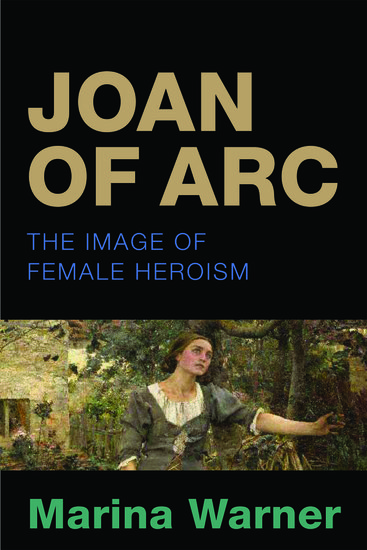
Mary and Joan on International Women’s Day

International Women’s Day has grown since the 1900s to become a global occasion to inspire women and celebrate achievements. Perhaps two of the most inspirational female figures from history are the Virgin Mary and Joan of Arc. We spoke with Marina Warner, author of the seminal titles, Joan of Arc: The Image of Female Heroism and Alone of All Her Sex: The Myth and the Cult of the Virgin Mary, about these women and their historical and personal impact.

Read More
Book thumbnail image

Descartes’ dogs

By Robert V. McNamee and Daniel Parker
It is well known in the history of psychology that Descartes was an early thinker on what we would now call classical conditioning or Pavlovian conditioning, which he referred to as “reflex”. However, an early epistolary reference seems generally to be missed: his letter to his friend Marin Mersenne, 18 March 1630.

Read More
Book thumbnail image

Why I like Ike – sometimes

By Andrew J. Polsky
We are in the midst of a great Dwight Eisenhower revival. Our 34th president, whose tenure once appeared to be little more than a sleepy interlude between the New Deal era and the tumultuous 1960s, is very much in vogue again. The past year has seen the publication of three major new biographies. On 7-8 March, Ike’s presidential legacy and its implications for our own time will be the focus of a conference at Hunter College in New York City.

Read More
Book thumbnail image

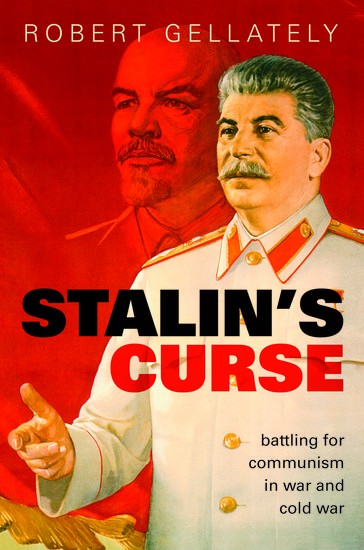
Stalin’s curse

By Robert Gellately
My interest in the Cold War has developed over many years. In fact, as I look back, I would say that it began around the time of the Cuban Missile Crisis in the early 1960s when I was still in high school. Over the years, as a college student and then as a university professor, I began to look more closely at the vast literature that developed on the topic and to examine the bitter controversies that had raged since 1945.

Read More
Book thumbnail image

An Oxford guide to women’s history: quiz

In the Oxford Dictionary of National Biography you’ll currently find biographies of 6340 women who’ve shaped British history and culture between the 1st and 21st century — making it one of the most extensive accounts of women’s contribution to national life. Who are these women?

Read More
Book thumbnail image

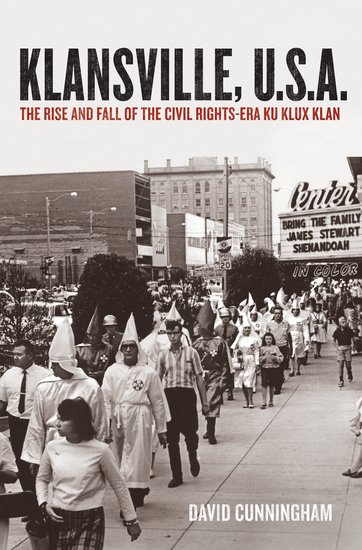
The KKK in North Carolina

How can mainstream institutions and ideals subsume organized racism and political extremism? Why did the United Klans of America (UKA) once flourish in the Tar Heel state? From lax policing to a lack of mainstream outlets for segregationist resistance, a variety of factors led to the creation of one of the strongest and most complex Ku Klux Klan (KKK) groups in America — and a dramatic conservative shift in North Carolina.

Read More
Book thumbnail image

Michael Gillette on Lady Bird Johnson and oral history

This episode of the OHR on OUPblog, I take the opportunity to interview Michael Gillette, author of Lady Bird Johnson: An Oral History. In this podcast, Gillette discusses the book, the research behind and process of interviewing “Mrs. Johnson,” and his current role as executive director of Humanities Texas. Our host, Oxford University Press, published Lady Bird Johnson at the end of last year.

Read More
Book thumbnail image

An Oxford Companion to the 2013 Papal Elections

By Kimberly Hernandez
Yesterday Pope Benedict XVI retired from his papal duties with the intention to lead a life of prayer in seclusion. His sudden abdication has left many of the faithful wondering who will step in as his successor. While there are rumors that the next Pope may be from Latin America or Africa, the exact process of how a Pope is chosen is still shrouded in mystery.

Read More

Music during World War II

When politicians attempt to capture a unifying moment, they often choose the music of Aaron Copland. Why? Classical music in 1940s America had a ubiquitous cultural presence at time when national identity consolidated.

Read More
Book thumbnail image

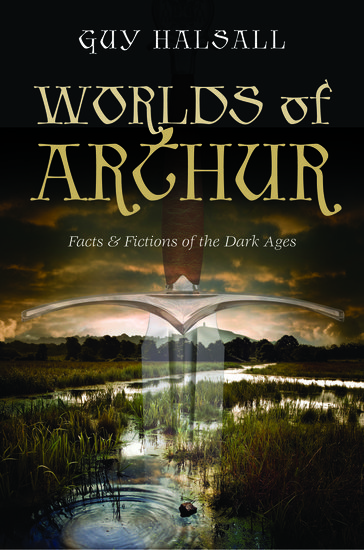
Ten ways to rethink ‘Arthur’s Britain’

Guy Halsall, author of Worlds of Arthur: Facts and Fictions of the Dark Ages, illuminates the reality behind the façade of myths and legends concerning King Arthur. He outlines here ten ways which will challenge what you thought you knew about the legendary King Arthur and the world in which he was supposed to have lived.

Read More
Book thumbnail image

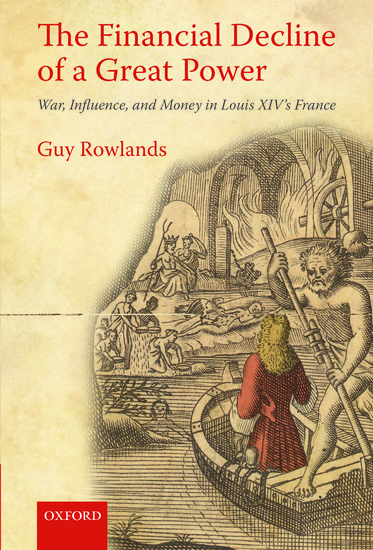
The financial decline of great powers

By Guy Rowlands
When great powers decline it is often the case that financial troubles are a key component of the slide. The vertiginous decline of a state’s financial system under extreme pressure, year after year, not only saps the strength and volume of financial activity, it also proves extremely difficult to reverse, and the great risk is that a disastrous situation is worsened by misguided and ultimately catastrophic attempts on the part of a government to dig itself out of its hole.

Read More

Images of Ancient Nubia

For most of the modern world, ancient Nubia seems an unknown and enigmatic land. Only a handful of archaeologists have studied its history or unearthed the Nubian cities, temples, and cemeteries that once dotted the landscape of southern Egypt and northern Sudan. Nubia’s remote setting in the midst of an inhospitable desert, with access by river blocked by impassable rapids, has lent it not only an air of mystery, but also isolated it from exploration.

Read More
Book thumbnail image

Five things you might not know about Bobby Moore

By Daniel Parker
From the iconic image of Bobby Moore holding the World Cup trophy aloft to the famous embrace between him and Pele during the 1970 World Cup, from his loyalty to West Ham United Football Club to his brave struggle against bowel cancer in his later years, Bobby Moore represents a significant chapter in the history of world football. But what about the man behind the bronze? Here are five things you might not have known about the man known as Mooro:

Read More
Book thumbnail image

African American lives

February marks a month of remembrance for Black History in the United States. It is a time to reflect on the events that have enabled freedom and equality for African Americans, and a time to celebrate the achievements and contributions they have made to the nation.

Read More
Book thumbnail image

Thomas Gray and Horace Walpole on Grand Tour, spread news of a papal election, 1739/1740

By Dr. Robert V. McNamee
On Sunday, 29 March 1739, two young men, aspiring authors and student friends from Eton College and Cambridge, departed Dover for the Continent. The twenty-two year old Horace Walpole, 4th earl of Orford (1717–1797), was setting out on his turn at the Grand Tour. Accompanying him on the journey, which would take them through France to Italy, was Thomas Gray (1716–1771), future author of the “Elegy Written in a Country Churchyard”.

Read More