Oxford University Press's
Academic Insights for the Thinking World

  • Social Sciences

Book thumbnail image

Nations and liberalism?

By Steven Grosby
Nationalism and nations have understandably been associated with the most illiberal treatment of human beings. History is replete with well-known examples of the murder of innocents in the cause of some nation. It continues today, for example, in Syria, Kurdistan, the Kashmir, and other places.

Read More
Book thumbnail image

The relationship between poverty and everyday violence

How do we see poverty? Most people envision global poverty as dirty shacks, hungry children, a lack of schools, and rampant disease. But as Gary A. Haugen, founder and president of International Justice Mission, explains there is another phenomenon hidden beneath the surface. Rather than catastrophic forms of violence in civil war, unrest, or even genocide, insidious forms of violence in everyday life make the poor even more vulnerable.

Read More
Book thumbnail image

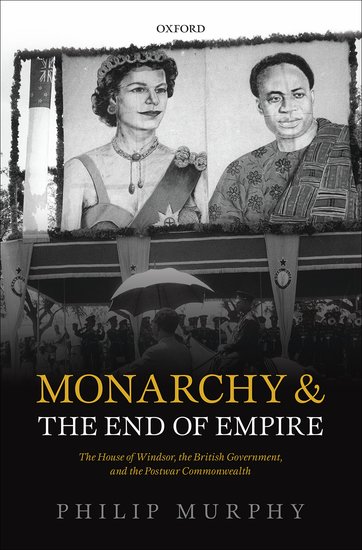
Monarchy and the end of the Commonwealth

By Philip Murphy
In November 2013, the Commonwealth was preparing for a highly controversial Heads of Government Meeting (CHOGM) in Sri Lanka, which the Canadian prime minister had already threatened to boycott on the grounds of the abysmal human rights record of the host state. In an article I published at the time, I touched on the contrast between the pre-eminent position the Queen had obtained within the Commonwealth since the 1990s, and the organization’s own lackluster performance over that period:

Read More
Book thumbnail image

Five myths about the gold standard

By Richard S. Grossman
Although the dollar has had no legal connection to gold since 1973, the gold standard continues to hold an almost mystical appeal for many politicians and commentators. The 2012 Republican Platform called for the creation of a commission to study the possible restoration of the link between the dollar and gold. When asked about the gold standard this summer, Sen. Rand Paul (R-KY), a potential 2016 Republican presidential nominee, replied: “We need to think about our currency that once upon a time had a link to a commodity, and I think we should study it.”

Read More
Book thumbnail image

Mad politics

By Matthew Flinders
If you are reading this blog then you’ve obviously survived ‘Blue Monday’. That is, the day in the third week of January when suicide levels tend to peak and demands for counseling rocket as a result of post-Christmas debt, dashed New Year resolutions, and the inevitable sense that this year is actually unlikely to be much different to the last.

Read More
Book thumbnail image

Locating in a ‘Silicon Valley’ does not guarantee success for tech firms

By Harald Bathelt and Peng-Fei Li
In China and Canada, Shenzhen and Waterloo share the same nickname. Both are frequently viewed as their country’s “Silicon Valley”. Despite this shared name, there are fundamental differences between the two, which can be illustrated by the development of their leading firms. Let’s use the local weather of the two cities as a metaphor to describe the current situation.

Read More
Book thumbnail image

A world in fear [infographic]

For billions around the world, poverty translates not only into a struggle for food, shelter, health, and education. No, poverty exposes them to a vast spectrum of human rights abuses on a daily basis. Safety and freedom from fear do not exist for those living in underdeveloped areas. Ill-equipped judicial systems, under-trained and corrupt law enforcement agencies, and despotic housing complexes are just a few of the challenges the impoverished face.

Read More
Book thumbnail image

Robert Burns, digital whistle-blowing, and Scottish independence

By Robert Crawford
For the first time since 1707 (more than half a century before Burns was born), the population of Scotland is being given the chance to vote in a referendum that asks the question, ‘Should Scotland be an independent country?’ The referendum won’t be held until 18 September, but already people are arguing about which side Robert Burns would have been on.

Read More
Book thumbnail image

It’s time to rethink unemployment policy

By Gertrude Schaffner Goldberg
Lifeline benefits for millions of jobless workers still hang in the balance. The current debate over whether to maintain benefits for long-term unemployment underscores limitations in unemployment insurance that have plagued this program throughout its history.

Read More
Book thumbnail image

A crossroads for antisemitism?

By Steven Beller
In the conclusion to Antisemitism VSI (2007) I saw antisemitism as an almost completely spent force. Events since then give one pause for thought. Israel appears no more accepted as a “good citizen” by much of the international community, and Jews continue to be attacked for their supposed support of the “Jewish state”.

Read More
Book thumbnail image

Be Book Smart on National Reading Day

By Anne Cunningham and Jamie Zibulsky
If you want to help a child get ahead in school and in life, there is no better value you can impart to him or her than a love of reading. The skills that early and avid reading builds are the skills that older readers need in order to make sense of sophisticated and complex texts.

Read More
Book thumbnail image

Bernstein’s disturbing vision

By Jeremy Begbie
On my office wall I keep two photos together in a single frame. They show two teachers who inspired me more than any others—my first theology teacher, James Torrance (1923–2003), and next to him the American conductor, composer and pianist, Leonard Bernstein (1918–1990).

Read More
Book thumbnail image

Five important facts about the Italian economy

Though the Eurozone crisis left many European countries struggling in its wake, Italy suffered one of the most crippling hits to its economy. As Gianni Toniolo notes in his edited volume, The Oxford Handbook of the Italian Economy Since Unification, between 2007-2009, there was a “loss of more than 5 percentage points in GDP per person, a decline comparable with that of the Italian Great depression of the early 1930s.”

Read More
Book thumbnail image

What the ovaries of dinosaurs can tell us

By Dr. Jingmai O’Connor
Understanding the internal organs of extinct animals over 100 million years old used to belong in the realm of impossibility. However, during recent decades exceptional discoveries from all over the world have revealed elusive details such as fossilized feathers, skin, and muscle.

Read More