Oxford University Press's
Academic Insights for the Thinking World

Book thumbnail image

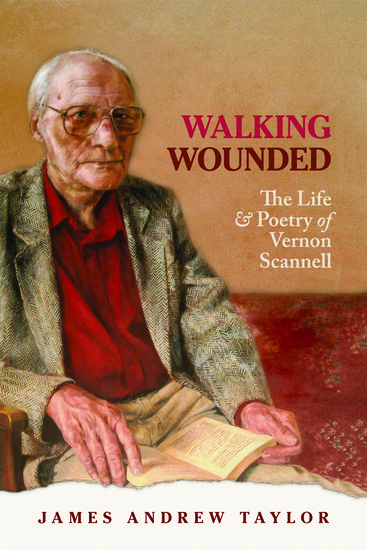
Vernon Scannell: War poetry and PTSD

By James Andrew Taylor
the more I read about his life after the war – the monumental drinking binges, the black-outs, the terrifying, sweating nightmares, and most of all the raging, unreasonable jealousies and the sickening violence that he meted out to his wife and, later, his lovers – the more I began to wonder whether this was not also the story of a man seriously damaged by his wartime experiences.
Read More
Book thumbnail image

Bloody but unbowed

By Sonia Tsuruoka
Not much remains to be said about the politics of the written word: scores of historical biographers have examined the literary appetites of revolutionaries, and how what they read determined how they interpreted the world. Mohandas Gandhi read Henry David Thoreau’s Civil Disobedience during his two-month incarceration in South Africa.

Read More
Book thumbnail image

Jonathan Swift, Irish writer

By Claude Rawson
Jonathan Swift, whom T. S. Eliot called “colossal,” “the greatest writer of English prose, and the greatest man who has ever written great English prose,” died on 19 October 1745.

Read More
Book thumbnail image

Romeo & Juliet: the film adaptations

By Jill L. Levensen
In its fall preview issue for 2013 (dated 2-9 September), New York magazine lists Romeo and Juliet with other films opening on 11 October 2013, and it comments: “Julian Fellowes (the beloved creator of Downton Abbey) tries to de-Luhrmann-ize this classic.” The statement makes two notable points.

Read More
Book thumbnail image

Ivor Gurney and the poetry of the First World War

By Tim Kendall
One of the anthologist’s greatest pleasures comes from discovering previously unknown pieces to jostle with the familiar classics. Editing The Poetry of the First World War, I knew that I should need to accommodate ‘Dulce et Decorum Est’, ‘The Soldier’, and ‘For the Fallen’. Whatever their qualities, these have become so inextricably part of our understanding that to omit them would be perverse.

Read More
Book thumbnail image

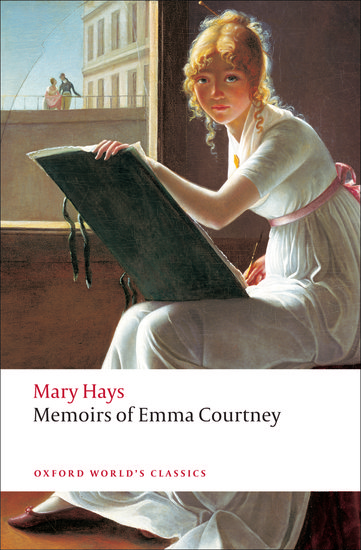
Mary Hays and the “triumph of affection”

By Eleanor Ty
In the early 1790s, Mary Hays was a rising writer who had published an Oriental tale, an essay on the usefulness of public worship, and, with her sister, produced a collection of essays on miscellaneous topics: romances, friendships, and improvements to female education. She admired and had befriended radicals Mary Wollstonecraft and William Godwin, and was introduced to the circle of London intellectuals in the 1790s.

Read More
Book thumbnail image

The first ray gun

By Stephen R. Wilk
When reporting on the origin of that science fiction cliché, the ray gun or death ray, most histories cite H.G. Wells’ classic story The War of the Worlds, which first appeared in Pearson’s Magazine between April and December of 1897. Wells was undoubtedly one of the founders of science fiction, striving to create original situations and ideas.

Read More
Book thumbnail image

Émile Zola and the integrity of representation

By Brian Nelson
Émile Zola’s main achievement was his twenty-volume novel cycle, Les Rougon-Macquart (1871–1893). The fortunes of a family, the Rougon-Macquart, are followed over several decades. The various family members spread throughout all levels of society, and through their lives Zola examines methodically the social, sexual, and moral landscape of the late nineteenth century.

Read More
Book thumbnail image

Breaking Bad’s Faustian Cast

In a Reddit AMA session a few months ago, Bryan Cranston was asked when he thought his character on Breaking Bad broke bad. His response: “My feeling is that Walt broke bad in the very first episode. It was very subtle but he did because that’s when he decided to become someone that he’s not in order to gain financially. He made the Faustian deal at that point and everything else was a slippery slope.”

Read More
Book thumbnail image

Edmund Gosse: nonconformist?

By Michael Newton
“The trouble with you,” an old friend recently declared to me, “is that you have always been a conformist.” He meant that I had never undertaken that necessary radical break with my parents and their ideals and interests. Without such a generational rupture, it seemed to him, nobody could claim to be a fully independent, realised person. While he had been dropping acid and dropping (temporarily) out of college, I’d been reclining under a tree with John Keats. And surely there was nothing rebellious in that.

Read More
Book thumbnail image

Heaney, the Wordsworths, and wonders of the everyday

By Lucy Newlyn
Here is one of the poems Dorothy wrote from her sick room. Dated by her as 1836 (and copied out for the Wordsworths’ friend and neighbour Isabella Fenwick in 1839), it gives us some insight into her state of mind as she looked back on a crisis in 1832-3 when her life was in danger.

Read More
Book thumbnail image

James Fenimore Cooper: thoughts on a life

By John McWilliams
Cooper’s daunting, lifelong energies led him to venture down still other fictional paths, nominally imaginary but rendered realistic through trenchant social commentary. He experimented with unreliable first person narrative, with the biography of an inanimate object, with urban satire, with the beast fable (The Monikins), and with dystopian fiction (The Crater).

Read More