Oxford University Press's
Academic Insights for the Thinking World

  • History

Book thumbnail image

Looking for clues about OUP Canada in an early photograph

By Thorin Tritter
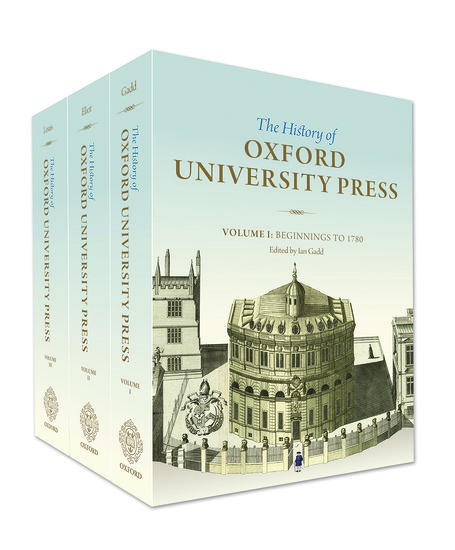
I had the pleasure of writing the chapter about Oxford University Press’s early operations in Canada, Australia and New Zealand for volume three of the new History of Oxford University Press. A photo editor added an early photograph of the first home to the Canadian branch as the cover image for my chapter. It is a photograph I have seen before, but to be honest, I had previously not looked at it very closely.

Read More
Book thumbnail image

Bill Bratton on both coasts

Inspired by a chapter on policing by leading criminologists Jeffrey Fagan (Columbia University) and John McDonald (University of Pennsylvania), the editors of the recently published volume New York and Los Angeles: The Uncertain Future, David Halle and Andrew A. Beveridge, along with Sydney Beveridge, take a closer look at the consequences of the recent New York mayoral race.

Read More
Book thumbnail image

Earth’s forgotten places

By Eun Yeom
Since we have spent the last several months examining the places which have made the biggest impact in recent years, we decided to take a look at some of the locations on Earth which humans have left behind.

Read More
Book thumbnail image

AHA 2014: You’ve been to Washington before, but…

The American Historical Association’s 128th Annual Meeting is being held in Washington, D.C., 2-5 January 2014. For those of you attending, we’ve gathered advice about what to see and do in the Capital from author and DC resident Don Ritchie as well as members of Oxford University Press staff. And be sure to stop by Oxford’s booth #901-907.

Read More
Book thumbnail image

A Nelson Mandela reading list

Here we celebrate the life and legacy of Nelson Mandela. From his early days as an activist, to his trial and imprisonment, to his presidency, this reading list covers all aspects of his life, and looks beyond the work he did to see how he influenced South Africa and the world.

Read More

Q&A with Claire Payton on Haiti, spirituality, and oral history

About a month ago, when we celebrated the release of the Oral History Review Volume 40.2, we mentioned that one of the goals in putting together the issue was to expand the journal’s geographical scope. Towards that end, we were excited to publish Claire Payton’s “Vodou and Protestantism, Faith and Survival: The Contest over Spiritual Meaning of the 2010 Earthquake in Haiti.” The following, is an interview with the author.

Read More
Book thumbnail image

The Thirteenth Amendment

By Richard Striner
On 18 December 1865, the Thirteenth Amendment to the Constitution was ratified, thus ending the epochal struggle to kill American slavery. But the long struggle to achieve full equality regardless of race was just beginning. When Abraham Lincoln issued his Emancipation Proclamation, he knew very well that it might eventually be overturned in court as unconstitutional.

Read More
Book thumbnail image

Ten things to understand about the Molly Maguires

By Kevin Kenny
On this day 135 years ago, John Kehoe was hanged. Convicted in 1877 of murdering a Pennsylvania mine boss 15 years earlier, he was almost certainly innocent of that crime. But Kehoe also stood accused of being the mastermind in a nefarious secret society called the Molly Maguires.

Read More
Book thumbnail image

Orwell in America

By Robert Colls
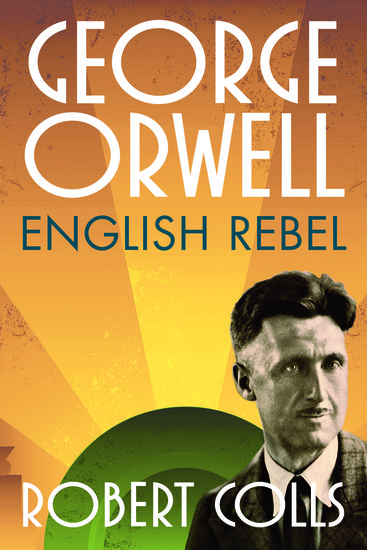
The man wants to admit his rebellious thoughts and reveal the deception but knows that by doing so he is going to make the rest of his life difficult, not to say short, and there will be no going back. He does it all the same. He has no accomplices, except his girlfriend. The world has yet to decide what will happen to him. I am of course talking about Edward Snowden.

Read More
Book thumbnail image

Who started the Reichstag Fire?

In February 1933, upon the ashes of the Reichstag, Adolf Hitler swiftly consolidated the political power of the Nazi Party. He wielded the suspect, 23-year-old Marinus van der Lubbe, a Dutch Communist stonemason, as irrefutable evidence for an impending subversive uprising. By appearing to legitimize the sociopolitical paranoia of the Nazi party, the Reichstag fire fueled […]

Read More
Book thumbnail image

Sounds of justice: black female entertainers of the Civil Rights era

They spoke to listeners across generations from the early 1940s through the 1980s. They were influential women who faced tremendous risks both personally and professionally. They sang and performed for gender equality and racial liberation. They had names such as Lena Horne, Nina Simone, and Gladys Knight. They were the most powerful black female entertainers of the Civil Rights era.

Read More
Book thumbnail image

‘Paul Pry’ at midnight

By Simon Eliot
Until the 1840s time in Oxford, and therefore at the University Press, was five minutes behind that of London. With no uniform national time until the coming of the railways and the telegraph, the sealed clocks carried by mail coaches would have to be adjusted to Oxford or London time as they were shuttled between the two cities.

Read More
Book thumbnail image

Kenya’s government 50 years after independence

By Justin Willis
Like many large and diverse countries, Kenya has long debated the value of introducing a form of devolved government. That debate seems to have come full circle. The majimbo, ‘regional’, constitution of 1963 was intended to devolve authority away from the centre. It lasted less than a year.

Read More
Book thumbnail image

Nelson Mandela’s leadership: born or made?

By Julian Barling
Retrospectively understanding the leadership of anyone who has achieved iconic status is made difficult because we ascribe to them our own needs, dreams and fears. When we try and understand the leadership of Nelson Mandela, it’s natural to think that leadership must be something you are born to do. As but one example, organizational scholar Rosabeth Moss Kanter observed that “There are very few people in the world who could have done what he did.

Read More