Oxford University Press's
Academic Insights for the Thinking World

  • History

Book thumbnail image

The EU and ‘anti anti-fascism’

By Dan Stone
On 1 January 2014 Latvia joined the Eurozone and Romanians and Bulgarians became free to travel and settle in most of the European Union. Twenty years ago these statements would have sounded like fantasy; the EU has reshaped Europe so that the divisions of the Cold War now seem like a bad dream. Yet the sense of wonder that such facts engender is tempered by the realisation that most people in Latvia do not want to join the euro and that most Europeans – at least, if their political leaders and tabloid press are to be believed – do not support the free movement of peoples. What has happened to make the aspirations of the EEC’s founding fathers like Monnet, Schuman and Spinelli seem so unattractive to today’s Europeans?

Read More
Book thumbnail image

Escape Plans: Solomon Northup and Twelve Years a Slave

By Daniel Donaghy
During the movie awards season, Steve McQueen’s new film 12 Years a Slave will inspire discussions about its realistic depiction of slavery’s atrocities (Henry Louis Gates Jr. has already called it, “most certainly one of the most vivid and authentic portrayals of slavery ever captured in a feature film.”) and the points at which the film most clearly reflects and departs from Solomon Northup’s original narrative.

Read More
Book thumbnail image

The current crisis in American legal education

By G. Edward White
There has been a good deal of recent commentary about a perceived “crisis” in American legal education. A combination of rising tuition rates for law schools and a decline in the number of entry-level jobs in the legal profession has resulted in reduced numbers of applicants to law schools, and a corresponding reduction in entering law school class sizes.

Read More
Book thumbnail image

Are we there yet?

By Elizabeth Knowles
Dictionary projects can famously, and sometimes fatally, overrun. In the nineteenth century especially, dictionaries for the more recondite foreign languages of past and present (from Coptic to Sanskrit) were compiled by independent scholars, enthusiasts who were ready to dedicate their lives to a particular project.

Read More
Book thumbnail image

The legacy of the War on Poverty, 50 years later

By Michael B. Katz
On January 8, 1964, President Lyndon B. Johnson launched the federal government’s War on Poverty during his State of the Union address. Seven months later, Congress passed the Economic Opportunity Act. Time has not been kind to its reputation.

Read More
Book thumbnail image

Launching a war on poverty

By Michael L. Gillette
Fifty years ago on the eighth of January, President Lyndon Johnson declared unconditional war on poverty. In his first State of the Union Address, LBJ outlined his offensive, a sweeping domestic agenda that would become known as the Great Society: Medicare, federal aid to education, an expanded food stamp program, extended minimum wage coverage…

Read More
Book thumbnail image

Down and out in Bloemfontein

By Matthew Flinders
My New Year message is simple: we can change the world in 2014 but only if we recognise that we have an economy based upon exclusion and inequality. Some people are ‘down and out’ in Bloemfontein or Rio de Janeiro, or even London, because they were born into a system that entrenched certain inequalities that would shape their life chances. They are not animals in a zoo to be gawped at or mimicked.

Read More

AHA 2014 in review

By Elyse Turr
Oxford had a great time at American Historical Association Annual Meeting this past weekend — even the storm couldn’t slow us down! We had an especially wonderful time meeting so many of our authors. Take a look at our slideshow to see who stopped by the booth.

Read More
Book thumbnail image

What can we learn from economic policy disasters?

Is it morbid or therapeutic to analyze the economic catastrophes of the past? What critical strategies can be imported from the realms of medicine and military history to the study of the current state of the economy? Richard Grossman, author of Wrong: Nine Economic Policy Disasters and What We Can Learn From Them, skillfully dissects the cadavers of economic policies.

Read More
Book thumbnail image

The many meanings of the Haitian declaration of independence

By Philippe R. Girard
Two hundred and ten years ago, on 1 January 1804, Haiti formally declared its independence from France at the end of a bitter war against forces sent by Napoléon Bonaparte. This was only the second time, after the United States in 1776, that an American colony had declared independence, so the event called for pomp and circumstance.

Read More
Book thumbnail image

What was inside the first Canadian branch building?

By Thorin Tritter
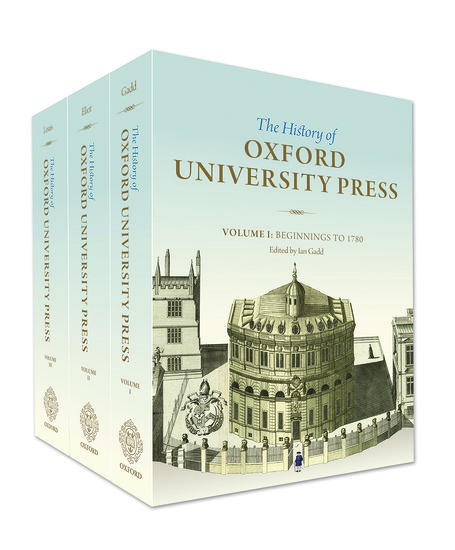
I wrote before about the picture that serves as the cover for the chapter on Canada, Australia, and New Zealand in Volume 3 of the newly published History of Oxford University Press. I personally enjoy looking at this type of picture and trying to imagine what went on inside.

Read More
Book thumbnail image

I spy, you spy

By Kenneth R. Johnson
Jonathan Freedland wonders, “Why Surveillance Doesn’t Faze Britain”? Comparing his fellow British subjects to Americans, he finds them “curiously complacent” about their civil liberties when it comes to the massive invasions of privacy implied by Edward Snowden’s revelations of the U.S. National Security Agency’s “big data” scoops of information from digital communication sources.

Read More
Book thumbnail image

Benazir Bhutto’s mixed legacy

By T.V. Paul
Benazir Bhutto, the daughter of Zulfikar Ali Bhutto, had been prime minister of Pakistan twice: first in December 1988, and a second time in October 1993 after the Pakistan People’s Party (PPP) managed to win two elections under her leadership. Both times the presidents (heads of state) dismissed Bhutto before she completed her full term.

Read More
Book thumbnail image

The Erie Canal: a tour

By Kate Pais
Before Bill and Hilary, DeWitt Clinton was one of the most famous Clintons that New York could lay claim to. His legacy, mocked at the time as “DeWitt’s ditch”, is the famous Erie Canal. Connecting New York City to the Great Lakes through Lake Erie, this notable trade route cost seven million dollars and cut the expense of shipping to the Midwest significantly.

Read More
Book thumbnail image

Exploring the seven principles of Kwanzaa: a playlist

Beginning the 26th of December, a globe-spanning group of millions of people of African descent will celebrate Kwanzaa, the seven-day festival of communitarian values created by scholar Maulana Karenga in 1966. The name of the festival is adapted from a Swahili phrase that refers to “the first fruits,” and is meant to recall ancient African harvest celebrations.

Read More