Oxford University Press's
Academic Insights for the Thinking World

  • History

Book thumbnail image

An interview with Mohsin Hamid

Mohsin Hamid is the author of the novels Moth Smoke, The Reluctant Fundamentalist, and How to Get Filthy Rich in Rising Asia. His award-winning fiction has been featured on bestseller lists, adapted for the cinema, shortlisted for the Man Booker Prize, and translated into over 30 languages.
Read More
Book thumbnail image

A Scottish reading list from Oxford World’s Classics

This month’s Oxford World’s Classics reading list celebrates St Andrew’s Day by highlighting some of the great Scottish classics we have in the series. From the gothic tale of Jekyll and Hyde to Burns, and the philosophy of David Hume, there is hopefully something for everyone here. But have we missed out your favourite?

Read More
Book thumbnail image

The Richardsons: the worst of times at Oxford University Press?

By John Feather
From 1715 to 1758, Stephen and Zaccheus Richardson were successively the ‘Warehouse Keepers’ for Oxford University Press. The seemingly innocuous title conceals more than it reveals and yet is telling. In William Laud’s original vision of a university press at Oxford in the 1630s at the heart of the enterprise was to be an individual known as the ‘Architypographus’.

Read More
Book thumbnail image

Thanksgiving? The deprivations and atrocities that followed

By Stephen L. Pevar
Every schoolchild is taught that the holiday of Thanksgiving commemorates the feast the Pilgrims arranged to thank the Indians for their friendship, for sharing their land, and for showing them how to grow, harvest, and store food. Accounts say that the generosity of the Indians saved the colonists from starvation during the harsh New England winter of 1620.

Read More
Book thumbnail image

A journey through 500 years of African American history

By Leslie Asako Gladsjo
This fall, my colleagues and I completed work on Henry Louis Gates, Jr.’s documentary series The African Americans: Many Rivers to Cross, which began airing on national PBS in October. In six one-hour episodes, the series traces the history of the African American people, from the 16th century to today.

Read More

Raising the Thanksgiving turkey

By Neil Prendergast
A century ago, the turkey was in truly poor shape. Its numbers had dropped considerably during the late nineteenth century, largely due to overhunting, habitat loss, and disease. In 1920, there were about 3.5 million turkeys in the United States, down from an estimated 10 million when Europeans first arrived in North America.

Read More
Book thumbnail image

The bin of plenty

By Travis McDade
In a desk donated to the Vermont thrift store at which he worked, Tim Bernaby was pleasantly surprised to find several letters and cards written by Robert Frost. He took these missives and sold them for $25,000. When asked about it, he said he found the items not in the desk, but in the trash.

Read More
Book thumbnail image

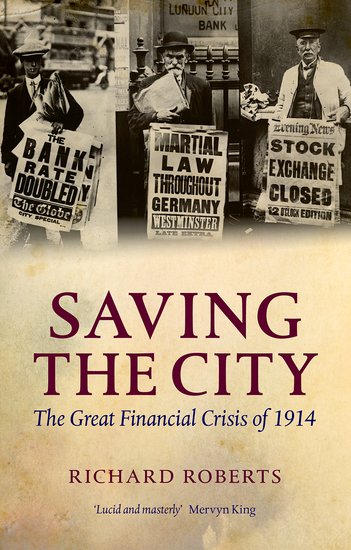
The unknown financial crisis of 1914

By Richard Roberts
The mounting diplomatic crisis in the last week of July 1914 triggered a major financial crisis in London, the world’s foremost international centre, and around the world. In fact, it was the City’s gravest-ever financial crisis featuring a comprehensive breakdown of its financial markets. But it is virtually unknown.

Read More
Book thumbnail image

Five things you didn’t know about Franklin Pierce

By Michael Gerhardt
There are few presidents more forgotten – and perhaps worth forgetting than – Franklin Pierce. To the extent he is remembered at all, historians and others dismiss him as a weak president who allowed strong-willed senators sympathetic to slavery interests to force him to take actions, which helped to provoke a near civil war in Kansas and bring the nation itself closer to the Civil War that formally broke out in 1861.

Read More
Book thumbnail image

Doctor Who at fifty

Doctor Who was first broadcast by BBC Television at 5.16pm on Saturday 23 November 1963. This weekend the BBC marks the fiftieth anniversary with several commemorative programmes on television, radio, and online—as well as a ‘global simulcast’ of the anniversary adventure, which places the two actors who’ve most recently played ‘the Doctor’…

Read More
Book thumbnail image

Oral history goes transnational

By Caitlin Tyler-Richards
Barring something unforeseen circumstances — looking at you, USPS — all subscribers should have received their copy of the Oral History Review Volume 40, Issue 2. We’re quite proud of this round of articles, which in the words of our editor-in-chief Kathy Nasstrom, “extends our editorial mission in two key areas — the internationalization of the journal and our multimedia initiative.”

Read More
Book thumbnail image

Benjamin Britten’s centenary

The 22nd of November is the feast day of St Cecilia, patron saint of musicians and church music, and the 22nd of November 1913 was the birthdate, in Lowestoft, Suffolk, of Benjamin Britten (1913-1976). The young Britten displayed an extraordinary musical talent and his mother had high hopes for her son: young Benjamin, it was said, was to be the fourth ‘B’ after Bach, Beethoven, and Brahms.

Read More
Book thumbnail image

Thoughts on the 50th anniversary of JFK’s assassination

As we recall the “crime of the century” in Dallas a half century ago, it seems appropriate to ponder some thoughts perhaps relevant to that terrible event. I make no claims to having inside information on President John F. Kennedy’s assassination, but I am aware of several theories that range from the lone gunman to any number of conspiracies involving any number of conspirators.

Read More
Book thumbnail image

Detective’s Casebook: Unearthing the Piltdown Man

By Ellie Gregory
It is regarded as one of the most baffling scientific hoaxes of the past few hundred years. The mystery of the Piltdown Man, a skull believed to be an ancient ‘missing link’ in human evolution, blindsided the expert eyes of some of the greatest scientists of the 20th century.

Read More
Book thumbnail image

Benjamin Britten, revisited

By Heather Wiebe
When I was charged with the task of updating the article on Benjamin Britten in Grove Music Online, I thought it would be a relatively simple matter. As Britten’s centenary year approached, it seemed an opportune moment, and the article was one I admired.

Read More
Book thumbnail image

The vanished printing houses

By Martyn Ould
Someone on even the most cursory visit to Oxford must surely see two fine buildings that once housed the University Press: the Sheldonian Theatre and the Clarendon Building, close to each other on today’s Broad Street. If they venture further afield, perhaps heading for the restaurants and bars along Walton Street, they also can’t fail to notice the neo-classical building that has been the Press’s current home since 1832. What they’ll never see however is the Press’s second home.

Read More