Oxford University Press's
Academic Insights for the Thinking World

  • History

Book thumbnail image

250 years since the contract that changed American history

Just over 250 years have passed since the signing of the Treaty of Paris on 10 February 1763. To look back at this influential contract and a turning point in the history of the United States, we present an excerpt from one of Oxford’s Pivotal Moments in American History series — Colin G. Calloway’s The Scratch of the Pen: 1763 and the Transformation of North America.

Read More

An Oxford Companion to Valentine’s Day

It’s big, it’s red, and it’s here. Valentine’s Day strikes fear into the hearts of men and women around the Western world like nothing else can. But you needn’t run scared of the Hallmark branded teddy bears. Oh no. Follow the sprinkling of rose petals, the sweet aroma of scented candles, and the dulcet tones of Phil Collins up the stairs to the luxury boudoir that is Oxford University Press.

Read More
Book thumbnail image

Nations and liberalism?

By Steven Grosby
Nationalism and nations have understandably been associated with the most illiberal treatment of human beings. History is replete with well-known examples of the murder of innocents in the cause of some nation. It continues today, for example, in Syria, Kurdistan, the Kashmir, and other places.

Read More
Book thumbnail image

Ronald Reagan Day

By Gil Troy
When running for president in 2008, Barack Obama infuriated both Bill and Hillary Clinton by saying he dreamed of being a transformational leader like Ronald Reagan – and unlike Bill Clinton. Insulted by this challenge to their legacy, the Clintons accused their opponent of endorsing Reagan’s policies, when Obama was assessing impact not ideology.

Read More
Book thumbnail image

Reflections on war, past and present

By Michael D. Matthews
I am posting this article on February 6th. My father was born on this date in 1914, just months before the outbreak of World War I. In many ways the state of the world 100 years ago was not so different from today. Political instability plagued Europe, social change driven by advances in technology was sweeping the world, and yet most people felt a sense of security that the world as they knew it was stable.

Read More
Book thumbnail image

Letters, telegrams, steam, and speed

By Simon Eliot
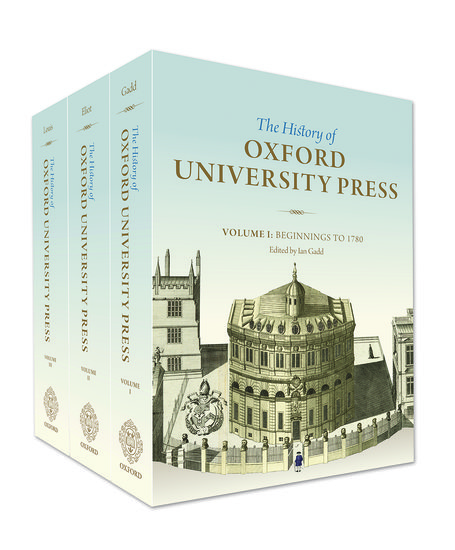
Oxford was finally linked to the rail network in June 1844. Within a decade or so the railway had become part of the way in which Oxford University Press at all levels conducted its business and its pleasure. One such pleasure was a wayzgoose.

Read More
Book thumbnail image

Monarchy and the end of the Commonwealth

By Philip Murphy
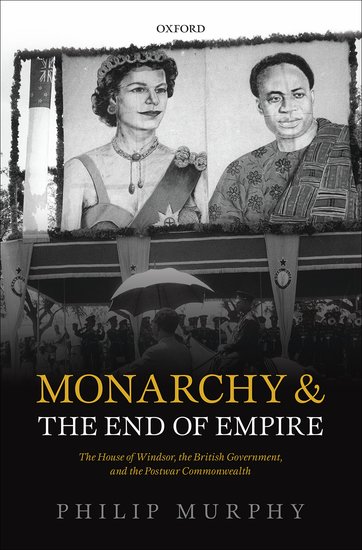
In November 2013, the Commonwealth was preparing for a highly controversial Heads of Government Meeting (CHOGM) in Sri Lanka, which the Canadian prime minister had already threatened to boycott on the grounds of the abysmal human rights record of the host state. In an article I published at the time, I touched on the contrast between the pre-eminent position the Queen had obtained within the Commonwealth since the 1990s, and the organization’s own lackluster performance over that period:

Read More
Book thumbnail image

“Before he lived it, he wrote it”? Fleming Episode 1

By Nicholas Rankin
The first thing you see on the screen in the new TV mini-series Fleming is Ian Fleming’s own claim that his James Bond novels were based on reality: “Everything I write has a precedent in truth.” Just before the credits we get the drama’s own slightly different claim: “Based on a true story. Some names, places and incidents are fictitious and have been changed for dramatic effect.”

Read More
Book thumbnail image

Facebook turns ten: teenager or (grand)parent?

By José van Dijck
Last November, technology reporter Jenna Wortham of the New York Times observed: “Just a few years ago, most of my online social activity revolved around Facebook … But lately, my formerly hyperactive Facebook life has slowed to a crawl. … I rarely add photographs or post updates about what I’ve been doing… Is it just me, or is Facebook fading?”

Read More

Was Alexander the Great poisoned?

By Philip A. Mackowiak
In the January issue of the journal Clinical Toxicology, investigators at the University of Otago in Dunedin, New Zealand and the University of Birmingham, United Kingdom offer yet another theory as to the cause of the untimely death of Alexander the Great just prior to his 33rd birthday.

Read More
Book thumbnail image

Oral History Review’s Short Form Initiative

By Caitlin Tyler-Richards
On behalf of the Oral History Review editorial staff, I am excited to publicly announce the journal’s latest project: the short form initiative. What is this? (I imagine everyone wondering aloud with feigned nonchalance.) Well, while the typical OHR article tends to fall between 8,000 to 12,000 words, we are now actively seeking substantially shorter submissions — approximately 3,000-4,000 words in length.

Read More
Book thumbnail image

A short history of Polish Jewish tavernkeeping

By Glenn Dynner
By the middle of the nineteenth century, Polish Jewish tavernkeeping was banned. However, newly discovered archival sources demonstrate that Jewish tavernkeepers often evaded fees, bans, and expulsions by installing Christians as “fronts” for their taverns and carrying on business as usual, all with the knowledge and complicity of nobles and other local Christians.

Read More
Book thumbnail image

A goddess’s long life

By Amanda Podany
As an undergraduate, long before I chose to become an ancient historian, I took a course on ancient art history. I remember sitting in the darkened auditorium in the first weeks of the term, looking at images of prehistoric art and scribbling down notes as the professor paced the stage and pointed out features of each slide. Then came an image that took my breath away: a white marble face of a woman, almost life-size (though blown up to about six feet tall on the screen).

Read More
Book thumbnail image

Half the cost of a book

Simon Eliot
For most of the history of the printed book, from Gutenberg in 1455 onwards, the most expensive part of the material book was paper. Until the mid-nineteenth century, by which time paper was being made by steam-driven machines using esparto grass and wood pulp rather than traditional linen rag as raw material, paper commonly represented at least half the cost of a book’s production.

Read More
Book thumbnail image

“Before he wrote it, he lived it”?

By Nicholas Rankin
The James Bond brand has awesome power. When Agent 007 helped Queen Elizabeth II to parachute into the opening of the 2012 London Olympics, the world gasped (and then laughed) at the witty conjunction of two instantly recognizable icons of Britishness.

Read More