Oxford University Press's
Academic Insights for the Thinking World

  • History

Book thumbnail image

The Black Book: Phillis Wheatley and the information revolution

By Richard Newman
The noble ideal of Black History Month is that by extracting and examining key people and moments in the African American grain, we learn much about black achievement. But it is equally powerful to set black history in the grand swirl of events to see the many ways that African-Americans have impacted the nation’s political and cultural development.
Read More
Book thumbnail image

The world’s revolutions [infographic]

How many revolutions have there been in the world’s history? Are they all violent? As revolutions around the world continue to make front page news, we asked Jack Goldstone, author of Revolutions: A Very Short Introduction, to help us pull together a timeline of the revolutions that have shaped the world.

Read More
Book thumbnail image

What price books?

By Simon Eliot
For most readers at most times, books were not essential. They were to be bought, if they were to be bought at all, out of disposable income. For most families in the nineteenth century, if they were lucky enough to have any disposable income, it would be a matter of two (10p) or three shillings (15p) a week at best.

Read More
Book thumbnail image

‘Before he lived it, he wrote it’? Final thoughts on Fleming

By Nicholas Rankin
The real Ian Fleming died on 12 August 1964, just two weeks before the release of the second Bond film, From Russia With Love. Ian’s thrillers, and the films based on them, were already rising towards their phenomenal world-wide success, although they were still sniffed at by the snootier members of his wife Ann’s circle.

Read More
Book thumbnail image

Who shapes the history of the British Isles?

From politicians to psychiatrists, novelists to biologists, and actors to entrepreneurs, the January 2014 update of the Oxford Dictionary of National Biography adds a further 219 biographies of men and women who’ve made their mark on British history.

Read More
Book thumbnail image

Osagie K. Obasogie speaks with Skip Gates about colorblindness and race

Osagie K. Obasogie, J.D., Ph.D., is Professor of Law at the University of California, Hastings with a joint appointment at the University of California, San Francisco (UCSF) Department of Social and Behavioral Sciences. His first book, Blinded By Sight: Seeing Race Through the Eyes of the Blind, was recently published by Stanford University Press and his second book on the past, present, and future of bioethics is under contract with the University of California Press.

Read More
Book thumbnail image

Pete Seeger: the power of singing to promote social justice

By Barry S. Levy and Victor W. Sidel
“That song really sticks with you!” The speaker was the Rev. Martin Luther King, Jr., in 1957, on his way to a speaking engagement in Kentucky. The song was “We Shall Overcome.” He had heard it the day before from Pete Seeger at the Highlander Center in Tennessee. There Seeger had, a decade before, learned the song – most likely derived from an old gospel song that became a labor-union song by the early 1900s.

Read More

How the Humanities changed the world

Have insights from the humanities ever led to breakthroughs, or is any interpretation of a text, painting, musical piece, or historical event as good as any other? I have long been fascinated with this question. To be sure, insights from the humanities have had an impact on society.

Read More

Portraying scientists: Galileo and perceptual portraiture

By Nicholas Wade
Perceptual portraits represent people in an unconventional style. The portraits themselves are not always easy to discern – the viewer needs to apply the power of perception in order to extract the facial features from the design which carries them. The aim is both artistic and historical.

Read More

Soldiers’ experiences of World War I in photographs

The confident grin of an ace fighter pilot, the thousand yard stare of a young soldier taking a smoke break in a subterranean shelter, a howitzer glowing in an open field, sailors framed in moonlight off the deck of a submarine pointed towards an empty horizon — The Great War: A Combat History of the First World War by Peter Hart resurrects in language and photographs the soldiers’ experiences of World War I.

Read More
Book thumbnail image

Contradictions in Cold War-era higher education

By Caitlin Tyler-Richards
This week, managing editor Troy Reeves wears his Badgers pride proudly in an interview with historian Matthew Levin. Levin, who received his PhD in History from the University of Wisconsin-Madison, is the author of Cold War University: Madison and the New Left in the Sixties (UW Press, 2013).

Read More
Book thumbnail image

Oxford University Press faces up to the Nazis

By Simon Eliot
Ever since the end of the First World War Oxford University Press had been keen to re-establish some sort of presence in the German book trade. Germany had been a significant market for its academic books in the nineteenth century, and a number of German scholars had edited Greek and Roman texts for the Press. Nevertheless the depressed state of the German economy and the uncertainty of its currency had made this impossible in the first few years after 1918.

Read More
Book thumbnail image

Fishing with Izaak Walton

By Marjorie Swann
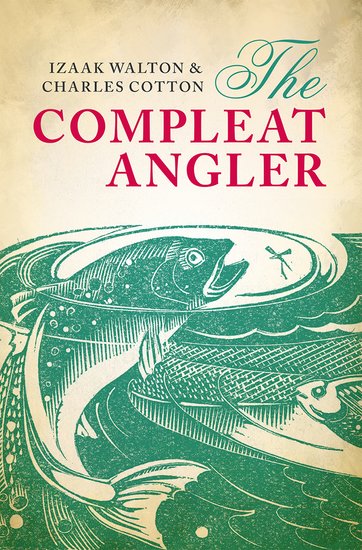
The Compleat Angler opens with a man seeking companionship on a journey. “You are well overtaken, Gentlemen,” Izaak Walton’s alter-ego Piscator (Fisherman) exclaims as he catches up with Venator (Hunter) and Auceps (Falconer) north of London. “I have stretched my legs up Tottenham-hill to overtake you, hoping your business may occasion you towards Ware whither I am going this fine, fresh May morning.”

Read More
Book thumbnail image

Founding the NAACP

By Susan D. Carle
The story of the NAACP’s founding 105 years ago has traditionally focused on the gathering of a small group of whites outraged by the Springfield, Illinois, race riots of the summer of 1908. In January 1909, they gathered in a small New York City apartment to discuss founding a new biracial organization.

Read More
Book thumbnail image

“Before he lived it, he wrote it”? Fleming Episodes 2, 3

By Nick Rankin
As a production, Fleming is still looking great but sounding terrible, with a plonking script mired in Second World War clichés (‘This is WAR, Fleming!’). The second episode begins in 1940. Commander Ian Fleming (Dominic Cooper) is away in neutral Lisbon, where he squanders Naval Intelligence petty cash gambling at cards against uniformed Germans in the casino.

Read More

A virtual journey in the footsteps of Zebulon Pike

By Jared Orsi
Somewhere in the middle of the Great Plains in November 1806, the explorer Zebulon Pike worried that the lateness of the season jeopardized the completion of his expedition. A contemporary of Lewis and Clark, Pike commanded a US military party that was exploring the southwestern reaches of the Louisiana Purchase.

Read More