Keeping movies alive
Film is considered by some to be the most dominant art form of the twentieth century. It is many things, but it has become above all a means of telling stories through images and sounds.
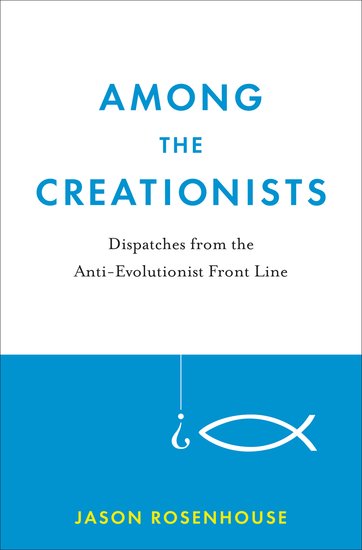
By Jason Rosenhouse
In more than a decade of socializing with creationists and other religious fundamentalists, I frequently encountered blinkered arguments about mathematics. This attack on set theory, however, was new to me. I cannot even imagine why anyone would think set theory is relevant to discussions of whether it is man or God who creates math. Perhaps the problem is that set theorists often speak a bit casually about infinity, which some people think is tantamount to discussing God. Alas, this line of criticism is too blinkered to take seriously.
By Alyssa Bender
In its three centuries of existence, the piano has become one of the most widely spread instruments in the world. In a quick poll of our music social media team here at Oxford University Press, nine out of eleven of us have had piano training. (Of course, we are the music social media team, so our results may be a bit skewed from other departments!)
By Patricia Fara
Darwin and evolution go together like Newton and gravity or Morse and code. The world, he wrote, resembles ‘one great slaughter-house, one universal scene of rapacity and injustice.’ Competitive natural selection in a nutshell? Yes – but that evocative image was coined not by Charles Darwin (1809-1882), but by his grandfather Erasmus (1731-1802). Although Charles Darwin is celebrated as the founding father of evolution, his neglected ancestor was writing about evolution long before he was even born.
By Paul G. Bahn
Of all decorated Ice Age caves, by far the most famous is that of Lascaux, which was discovered 72 years ago today by four boys (the hole was found by a dog on 8 September 1940, but the boys entered the cave on 12 September). It houses the most spectacular collection of Paleolithic wall-art yet found. It is best known for its 600 magnificent paintings of aurochs (wild cattle), horses, deer, and “signs,” but it also contains almost 1,500 engravings dominated by horses.
By John Hale
John Milton wrote his systematic theology, De Doctrina Christiana, his “dearest possession,” in Latin — a usual choice for a theological work, but with many unusual aspects. Language was a choice, not a foregone conclusion. Continental theologians could be rendered into English (for instance, the work by Johannes Wolleb).
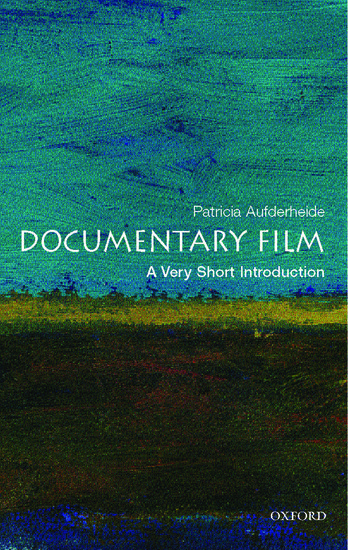
By Patricia Aufderheide
Documentary film both creates and depends on memory, and our memories are often composed of other people’s. How do we remember public events? How do you remember 9/11? On this anniversary of 9/11, along with your own memories, you can delve into a treasure trove of international television covering the event.
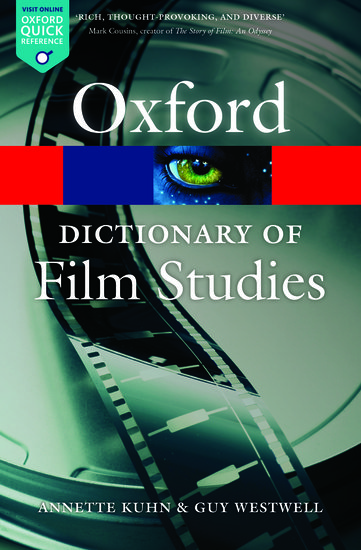
What is the greatest film ever made? In an attempt to answer this question the editors of the British Film Institute’s journal Sight and Sound conducts a poll of leading film critics, scholars and directors. The first poll took place in 1952, when Vittorio De Sica’s Italian Neorealist classic Bicycle Thieves (1948) was declared the winner. Sixty years later, and with nearly 850 critics, scholars and programmers contributing, the results of the 2012 poll have just been published.
By Gordon R. Thompson
Fifty years ago, the Beatles entered EMI’s recording studios on Abbey Road for their first official recording session. Their June visit had gained them a recording contract, but had cost Pete Best his position when artist-and-repertoire manager George Martin winced at the drummer’s timing. With little ceremony, Lennon, McCartney, and especially Harrison recruited the best drummer in Liverpool — a mate who sometimes subbed for Best — and left the firing of Best to manager Brian Epstein. Thus, Ringo Starr ascended to the drummer’s throne.
Many of you may have seen the cdza video “An Abridged History of Western Music in 16 Genres | cdza Opus No. 7″ (below) that went viral this summer. (cdza, founded by Joe Sabia, Michael Thurber, and Matt McCorkle, create musical video experiments.) To complement this lively celebration of the history of western music, from ragtime to reggae and baroque to bluegrass, we thought about how we can put this music into words. Here’s a quick list of definitions, drawn from the latest edition of The Oxford Dictionary of Music, to help lead you through each genre.
By Douglas Jacobsen and Rhonda Hustedt Jacobsen
This fall about ten million undergraduate students will be heading back to America’s 2500 four-year colleges and universities, and they will be attending schools that are significantly more attuned to religion than they were ten or twenty or thirty years ago. Today’s students encounter religion in a wide variety of forms and settings, both on campus and off.
The New York office’s 13th floor conference room — a quiet, large space with no outside light — functions surprisingly well as miniature studio. Within a few hours of the film crew arriving, the office chairs and table have been removed, a green screen unfurled, camera, lights, and mic all assembled, and the Publisher of Scholarly and Online Reference is sitting in the spotlight, prepped for his interview.
By John L. Heilbron
Galileo is not a fresh subject for a biography. Why then another? The character of the man, his discovery of new worlds, his fight with the Roman Catholic Church, and his scientific legacy have inspired many good books, thousands of articles, plays, pictures, exhibits, statues, a colossal tomb, and an entire museum. In all this, however, there was a chink.
Today sees the launch of a major new publishing initiative from Oxford University Press – Oxford Scholarly Editions Online (OSEO). OSEO will provide trustworthy and reliable critical online editions of original works by some of the most important writers in the humanities, such as William Shakespeare and Ben Jonson, as well as works from lesser-known writers such as Shackerley Marmion.
By Max Saunders
This year’s televisualization of Parade’s End has led to an extraordinary surge of interest in Ford Madox Ford. The ingenious adaptation by Sir Tom Stoppard; the stellar cast, including Benedict Cumberbatch, Rebecca Hall, Alan Howard, Rupert Everett, Miranda Richardson, Roger Allam; the flawlessly intelligent direction by award-winning Susanna White, have not only created a critical success, but reached Ford’s widest audience for perhaps fifty years.
By Liz Wollman
Colony Records, which will close on Saturday, September 15th after 64 years of business, is no mere record store. A cavernous, crowded, and never particularly tidy place, Colony has kept one foot firmly in its Tin Pan Alley past, and the other in its media-saturated present. The largest and easily most famous provider of sheet music in New York City, Colony also houses cassettes, CDs, DVDs, karaoke recordings, an absolutely enormous collection of records, and all kinds of memorabilia