Oxford University Press's
Academic Insights for the Thinking World

  • Tag: henry james

Literary fates (according to Google)

Where would old literature professors be without energetic postgraduates? A recent human acquisition, working on the literary sociology of pulp science fiction, has introduced me to the intellectual equivalent of catnip: Google Ngrams. Anyone reading this blog must be tech-savvy by definition; you probably contrive Ngrams over your muesli. But for a woefully challenged person like myself they are the easiest way to waste an entire morning since God invented snooker.

Read More

Anthony Trollope: not as safe as we thought he was?

Anthony Trollope. Safe, stodgy, hyper-Victorian Anthony Trollope, the comfort reading of the middle classes. As his rival and admirer Henry James said after his death ‘With Trollope we were always safe’. But was he really the most respectable of Victorian novelists?

Read More
Book thumbnail image

Henry James, or, on the business of being a thing

By Jeff Sherwood
It is virtually impossible for an English-language lexicographer to ignore the long shadow cast by Henry James, that late nineteenth-century writer of fiction, criticism, and travelogues. We can attribute this in the first place to the sheer cosmopolitanism of his prose.

Read More
Book thumbnail image

An Oxford World’s Classics American literature reading list

There’s something about the frenzied vigor of snowflakes, shopping outings, and journeys back home, that make us want to take a break and curl up with a good book. The classics are always a perfect pick for a good read during the holiday season. We compiled some of the best books from American literature to read when you’re looking to escape into a story. Which is your favorite?

Read More
Book thumbnail image

The uncanny Stephen Crane

By Fiona Robertson and Anthony Mellors
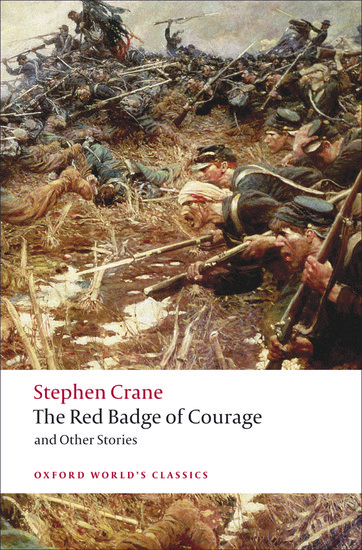
Closely associated with a group of writers dedicated to refashioning American fictional style, and with his roots in journalism and popular entertainment, Crane produced in his Civil-War tale The Red Badge of Courage an uncompromisingly spare modern account of the first-hand experience of battle.

Read More
Book thumbnail image

Remembering Frank Norris

By Jerome Loving
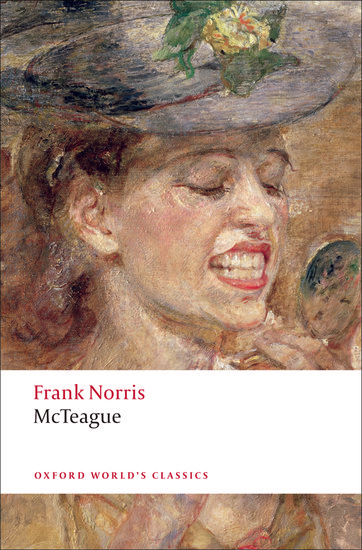
More than a century ago, on October 25, 1902, we lost a major novelist by the name of Frank Norris, author of McTeague: A Story of San Francisco (1899). Like Stephen Crane, he died in his prime, but not before writing at least one of the great American novels in the naturalist tradition of Thomas Hardy and Theodore Dreiser.

Read More
Book thumbnail image

10 questions for Domenica Ruta

Each summer, Oxford University Press USA and Bryant Park in New York City partner for their summer reading series Word for Word Book Club. The Bryant Park Reading Room offers free copies of book club selections while supply lasts, compliments of Oxford University Press, and guest speakers lead the group in discussion. On Tuesday 18 June, author Domenica Ruta leads a discussion on The Turn of the Screw by Henry James.

Read More
Book thumbnail image

Our Henry James

By John Carlos Rowe
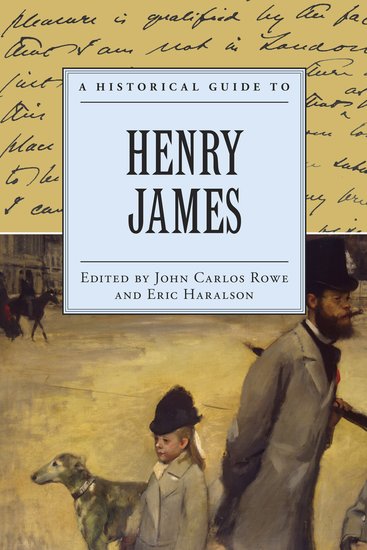
As we anticipate the public release this year of Scot McGehee’s and David Siegel’s film, What Maisie Knew, which premiered at the Toronto Film Festival on 7 September 2012, I wonder once again what drives popular fascination with Henry James’s fiction in our postmodern condition? Of course, I love Henry James and have spent much of my scholarly career reading, teaching, and writing about his works.

Read More
Book thumbnail image

Ford Madox Ford and unfilmable Modernism

One definition of a classic book is a work which inspires repeated metamorphoses. Romeo and Juliet, Gulliver’s Travels, Frankenstein, Dracula, The Great Gatsby don’t just wait in their original forms to be watched or read, but continually migrate from one medium to another: painting, opera, melodrama, dramatization, film, comic-strip. New technologies inspire further reincarnations

Read More
Book thumbnail image

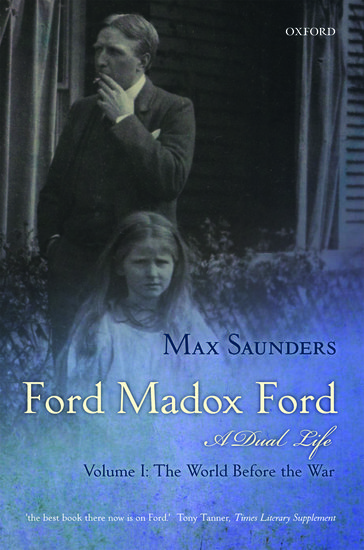
The life of Ford Madox Ford

By Max Saunders
This year’s televisualization of Parade’s End has led to an extraordinary surge of interest in Ford Madox Ford. The ingenious adaptation by Sir Tom Stoppard; the stellar cast, including Benedict Cumberbatch, Rebecca Hall, Alan Howard, Rupert Everett, Miranda Richardson, Roger Allam; the flawlessly intelligent direction by award-winning Susanna White, have not only created a critical success, but reached Ford’s widest audience for perhaps fifty years.

Read More
Book thumbnail image

The Mysteries of Summer

By Rosemary Herbert

Henry James was a man of many words. But when it came to selecting just a pair that he would define as “the two most beautiful words in the English language,” he chose the words, “summer afternoon.” If you are an avid reader setting out for a weekend — or better yet, an extended vacation — with a stack of books or a well-loaded electronic reader in hand, you may speculate that James saw summer afternoons as beautiful because they are especially congenial times to spend reading. Voracious readers know that the prospect of extended leisure time to spend with their books is one of the great joys of summer.

Read More