Oxford University Press's
Academic Insights for the Thinking World

Book thumbnail image

OUP NYC Poetry Reading Series with Paty, Schoonebeek, Dimitrov, & Landau

On February 23rd, Oxford University Press in New York will host four poets reading together on one night. Their poems span a broad range of forms and aesthetics, from collaborative short poems and plainspoken lyrics to a sequence of post-apocalyptic epistles. A wine reception will begin the evening at 6 p.m., with readings from the poets afterward. Oxford University Press associate editor Kristin Maffei will host the event and read a selection from her own poems. If you are a poetry fan/lover please join us. To wet your appetite for the event, we have a few selections of poetry below.
Read More
Book thumbnail image

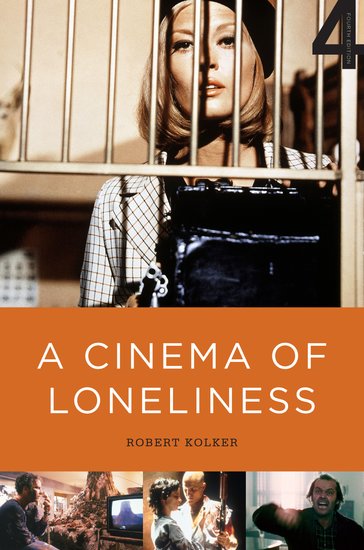
Martin Scorsese, 3D, and Hugo

By Robert Kolker
“That’s that,” quoting Ace Rothstein at the end of Casino. I didn’t end the Martin Scorsese chapter on an optimistic note in the fourth edition of A Cinema of Loneliness. There is more than a hint that the Scorsese’s creative energies might be flagging. With this in mind, I went to see Hugo with a lot of skepticism.

Read More
Book thumbnail image

Cherokee Phoenix begins publication

This Day in World History
On February 21, 1828, the first Native American newspaper, the Cherokee Phoenix, began publication. Editor Elias Boudinot explained the paper’s purpose—to promote anything that will be to “the benefit of the Cherokees” and to prevent the tribe from “dwindl[ing] into oblivion.” Boudinot concluded his opening editorial by declaring his hope “for that happy period, when all the Indian tribes of America shall arise, Phoenix like, from their ashes.”

Read More
Book thumbnail image

The Oxford Companion to Downton Abbey

Now that Series One and Two, plus the Christmas Special, of Downton Abbey have aired in the US and Canada, we’ve decided to compile a reading list for those serious-minded viewers who’d like to learn more about Edwardian England, World War I, life in an aristocratic household, and what lies ahead for the Crawleys and their servants. Warning: Spoilers ahead.

Read More
Book thumbnail image

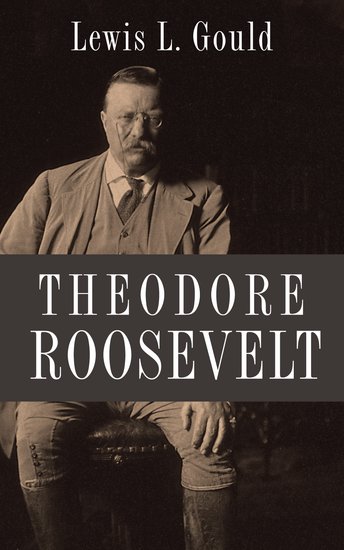
Teddy, Teddy, enough already

By Lewis L. Gould
When President Obama invoked the name of “Teddy” Roosevelt in his speech at Osawatomie, Kansas, in December, he seemed on safe ground in referring to his predecessor by that familiar nickname. In the world of the talking head and the political pro, everyone knows that Theodore Roosevelt was called “Teddy” by one and all. What better way to establish credentials as a keeper of the presidential heritage than to refer to “Teddy”?

Read More
Book thumbnail image

Making space for well-being?

By Mia Gray, Linda Lobao, and Ron Martin
“There is a paradox at the heart of our lives.  As Western societies have got richer, their people have become no happier” (Layard, 2005). Layard has not been alone in questioning the relationship between economic growth and well-being.  Theoretically, empirically, and politically, there is increasing dissatisfaction with growth as the main indicator of well-being.   As such, there is renewed interest in analysing the institutions and conventions through which the economy and society are measured and understood.

Read More
Book thumbnail image

Can you speak American?

A wide-ranging account of American English, Richard Bailey’s Speaking American investigates the history and continuing evolution of our language from the sixteenth century to the present. Now it’s time to ask yourself how well you really know your American English. We’ve composed a quiz for some Friday fun. Can you speak American?

Read More
Book thumbnail image

Antiquity and newfangleness

By Andrew Zurcher
The “Februarie” eclogue of Edmund Spenser’s pastoral collection, The Shepheardes Calender, was first published in 1579. It presents a conversation between two shepherds, a brash “Heardmans boye” called Cuddie and an old stick-in-the-mud named Thenot.

Read More
Book thumbnail image

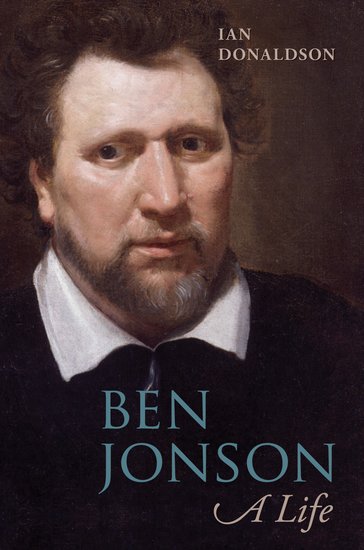
Ben Jonson, Governor

By Ian Donaldson
During his early forties Ben Jonson was invited to act as tutor or “governor” to a couple of notoriously difficult young men. He may have won these commissions on account of his sheer physical strength as much as his equally formidable intellectual qualities.

Read More
Book thumbnail image

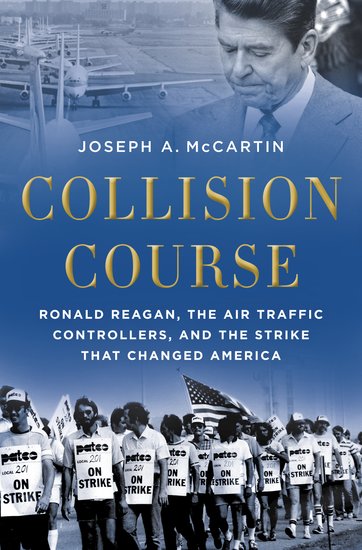
Public unions: What’s the big deal?

By Joseph A. McCartin
Over the course of the last 30 years, bipartisan support for public sector bargaining has eroded. And it was Reagan’s breaking of the 1981 strike by PATCO, the union of air traffic controllers, that contributed to this shift. More recently, Gov. Scott Walker in 2011 cited that action as an inspiration for his effort to strip government workers of bargaining rights in Wisconsin.

Read More
Book thumbnail image

Fidel Castro becomes Prime Minister of Cuba

This Day in World History
Dressed in army fatigues and surrounded by supporters and reporters, 32-year old Fidel Castro took the oath of office as Cuba’s prime minister on February 16, 1959. He would remain in power for nearly fifty years.

Read More
Book thumbnail image

SciWhys: a cure for Carys?

By Jonathan Crowe
Using science to understand our world can help to improve our lives. In this post and the next, I want to illustrate this point with an example of how progress in science is providing hope for the future for one family, and many others like them.

Read More

Balderdash: A no-nonsense word

By Anatoly Liberman
Unlike hogwash or, for example, flapdoodle, the noun balderdash is a word of “uncertain” (some authorities even say of “unknown”) origin. However, what is “known” about it is probably sufficient for questioning the disparaging epithets.

Read More
Book thumbnail image

An academic librarian without a library

By Michael Levine-Clark
I’m sitting in a dorm room—complete with the uncontrollable blast heat I remember from college — the space that has been my office since June, when the library shut down for a major renovation. Besides having to get used to a somewhat uncomfortable and isolated space, my colleagues and I have had to learn to be librarians without a library building, and our students and faculty have had to learn to use physical collections that are entirely offsite. And the campus community has had to think about the question of what a library is and should be, particularly the question of how to find and use our physical monographs.

Read More
Book thumbnail image

The real lessons of the Cuban Cold War crisis

By John Gittings
This year we shall recall, with a very nervous shudder, the 50th anniversary of the greatest crisis in the Cold  War – and with the knowledge that but for good fortune none of us would be here to recall it at all.

Read More