Oxford University Press's
Academic Insights for the Thinking World

Book thumbnail image

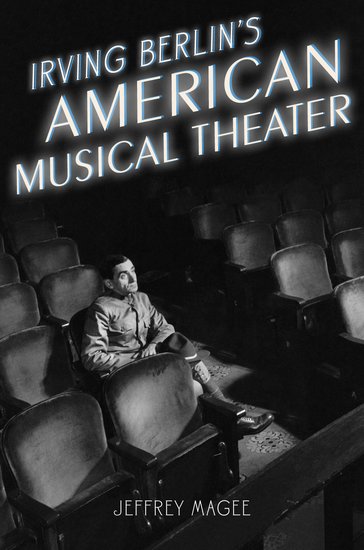
There’s no business like Irving Berlin’s business

By Jeffrey Magee and Benjamin Sears
On 11 May 1888, somewhere outside Mogilyov in Belarus, Irving Berlin was born. The son of a poor Jewish family who fled the pogroms to New York City, Berlin went on to pen some of the most memorable American classics from the patriotic “God Bless America” to wistful “White Christmas.” Without any formal training in music composition or even the ability to notate melodies on a musical staff, he took a knack for music and turned it into the most successful songwriting career in American history. Jeffrey Magee, author of Irving Berlin’s American Musical Theater, and Benjamin Sears, editor of The Irving Berlin Reader, composed this quiz to celebrate the composer’s life and work.
Read More
Book thumbnail image

A Child of the Jago, Freud, and youth crime today

By Peter Miles
As every schoolchild knows, never give more than one explanation: rather than uncertainty, it suggests a conscious or unconscious smokescreen. In The Interpretation of Dreams (1899), Sigmund Freud demonstrated as much by reference to a “defence offered by a man who was accused by his neighbour of having returned a kettle in a damaged condition. In the first place, he said, he had returned the kettle undamaged; in the second place it already had holes in it when he borrowed it; and in the third place, he had never borrowed it at all.”

Read More
Book thumbnail image

It’s just a joke!

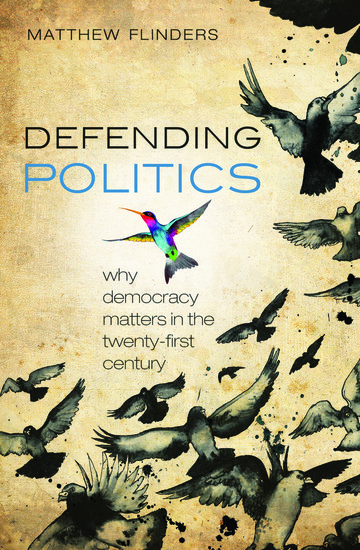
By Matthew Flinders
Satire is dangerous because some people just don’t get it. They don’t get it in the sense that they seem unable to grasp the fact that the role of a comedian or talk-show host is to get laughs by launching a barrage of cheap shots at politicians. Some politicians undoubtedly deserve it and to some extent standing for political office comes with a side-order of politically barbed jokes and insults and the link between politics and satire goes back centuries — Aristophanes, Aristotle, and even Machiavelli understood the advantages of incorporating humour into political commentary — but my concern is that not only has the nature of the audience changed but so has the nature of political comedy and satire itself.

Read More
Book thumbnail image

Unqualified but Required

By Dr. Allan Barsky
As social workers, the NASW Code of Ethics suggests that social workers not only have ethical duties to their clients, but also to their colleagues and employers (e.g., Standards 1.01, 4.01, 2.02, 2.10, and 3.09). So what happens when these obligations collide? How do we determine our primary responsibility, and how do we choose the most ethical course of action when there is no ideal choice?

Read More
Book thumbnail image

SciWhys: How do cells age?

By Jonathan Crowe
We’ve all been there: the car that finally became too expensive to keep on the road as more and more parts needed to be replaced, or the computer that started to run so slowly you gave up even bothering to open your web browser. These and other everyday experiences show how there’s an increased risk of things breaking as they get older. And our own bodies aren’t immune: the hair at my temples (and on other parts of my head, I fear) is on a resolute march towards greyness, and my eyesight isn’t as sharp as it once was. In short, our cells are just as susceptible to breaking down as they age as anything else.

Read More
Book thumbnail image

Can’t we all get along?

By Scott Zesch
Today is the twentieth anniversary of the most recent Los Angeles race riot. On April 29, 1992, a jury acquitted four police officers charged with severely beating an African-American man named Rodney King. Within hours, protests in south central Los Angeles turned deadly. Outraged residents blocked traffic, attacked motorists, looted shops, and set buildings afire. The riot went on for three days. More than fifty people were killed in the nation’s most destructive episode of civil unrest during the twentieth century.

Read More
Book thumbnail image

Remembering the Los Angeles Riots

By Adam Rosen
Sunday, April 29 marks the twentieth anniversary of one of the grimmest episodes in modern American history. For nearly five days, parts of Los Angeles transformed into a free-for-all where looting, gun battles, and arson proceeded without challenge by the city’s authorities. Only after U.S. President George H.W. Bush commanded 3,000 soldiers to occupy the city was order restored. By that time, 53 people had been killed, an estimated $ 1 billion worth of property had been destroyed, and the tenuous thread that held American race relations together had been all but severed.

Read More

She danced like a lilac flame: the other Astaire

By Kathleen Riley
I am writing this on Shakespeare’s birthday, 23rd April, and it strikes me how apposite are Beatrice’s words in Much Ado to the birth, on 10th September 1896, of Adele Marie Austerlitz, later Adele Astaire, a personality and a performer of infinite, inextinguishable and irresistible mirth. In London in the 1920s, she was depicted as a misplaced Shakespearean sprite who ‘should be dancing by glow-worm light under entranced trees on a midsummer eve with a rout of elves, after drinking rose-dew.’

Read More
Book thumbnail image

Atheist solidarity: Jason Rosenhouse rallys for reason

Jason Rosenhouse is Associate Professor of Mathematics at James Madison University. His most recent book is Among The Creationists: Dispatches from the Anti-Evolutionist Front Lines. After years of emersion in creationist culture, Rosenhouse shares his feelings on what it was like to finally stand amongst his fellow non-believers at the Reason Rally.

Read More
Book thumbnail image

Four myths about Zen Buddhism’s “Mu Koan”

By Steven Heine
The Mu Koan (or Wu Gongan in Chinese pronunciation), in which master Joshu says “Mu” (literally “No,” but implying Nothingness) to an anonymous monk’s question of whether a dog has the Buddha-nature, is surely the single most famous expression in Zen Buddhist literature and practice. By virtue of its simplicity and indirection, this expression becomes emblematic of East Asian spirituality and culture more generally. Entire books have been published on the topic on both sides of the Pacific.

Read More
Book thumbnail image

Mighty health threats from little acorns grow

By Richard S. Ostfeld, Ph.D
2012 could be a terrible year for Lyme disease. To understand why, we need to go back in time to the autumn of 2010. Over vast parts of the northeastern USA the oak trees that dominate many forests let loose with a bumper crop of acorns. Oaks are notorious for producing highly variable seed crops, from a trickle of one or two acorns per square meter in some years to several dozen per square meter in others. When protein- and lipid-rich acorns are superabundant, white-footed mice are able to cache large numbers and feast all winter, surviving well and breeding early and often. Consequently, their populations can reach peaks of up to 200 individuals per hectare the summer following a good acorn year. Legions of mice scampering around on the forest floor spell good news for blacklegged ticks, the vector responsible for transmitting Lyme disease and other tick-borne infections.

Read More
Book thumbnail image

Know your slang, poindexters?

Never mind if you’ve got the heebee-jeebies, how did we get that word? Winner of the Dartmouth Medal for RUSA/ALA Outstanding Reference Source and 2011 Booklist Editors’ Choice, Green’s Dictionary of Slang is a remarkable collection of this often reviled but endlessly fascinating area of the English language. From the past five centuries right up to the present day, and from all the different English-speaking countries and regions, it demonstrate the sheer scope of a lifetime of research by Jonathon Green, the leading slang lexicographer of our time. We dug through a few of the 10.3 million words and over 53,000 entries — definitions of 100,000 words with over 413,000 citations — to come up with a little quiz to celebrate.

Read More
Book thumbnail image

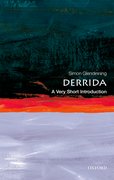
Derrida and Europe beyond Eurocentrism and Anti-Eurocentrism

By Simon Glendinning
Two months before his death in October 2004, Jacques Derrida gave an interview to the French newspaper Le Monde which turned out to be his last. Although he refused to treat it as an occasion in which to give what he called “a health bulletin,” he acknowledged that he was seriously ill, and the discussion is overshadowed by that fact: there is a strong sense of someone taking stock, someone taking the chance to give a final word.

Read More
Book thumbnail image

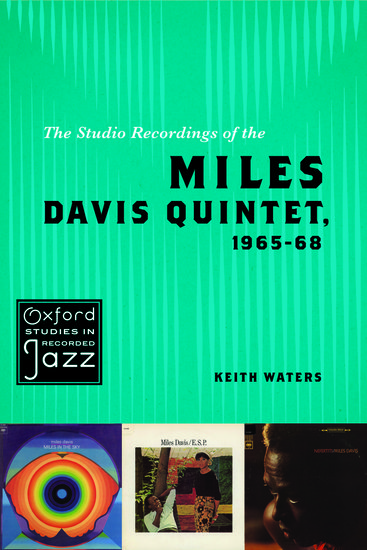
Miles Davis’s second classic quintet

By Keith Waters
The Miles Davis Quintet of the mid-1960s — Davis’s “second classic quintet” — was groundbreaking and influential. Their approach to live performance allowed attractive new possibilities for group interaction, the use of harmonic and metric superimposition, and developing pathways for extended improvisation. Their studio recordings offered a host of fresh jazz compositions, innovative in their harmonic progressions, formal designs, and melodic structures.

Read More
Book thumbnail image

South Africa holds first multiracial election

This Day in World History
April 26, 1994 marked the beginning of the end of a period of monumental change in South Africa. On that day, for the first time in the nation’s history, more than 17 million black South Africans began casting their votes for government officials. When the election ended four days later, the vote made Nelson Mandela South Africa’s first black president.

Read More
Book thumbnail image

Ladies: are you taking advantage of cervical screening?

By Ji Young Bang, MBBS MPH
Cervical cancer is globally the second most frequently occurring malignancy in women, with 400,000 new cases and 250,000 deaths each year. Cervical screening, which aims to detect pre-malignant cervical lesions known as cervical intraepithelial neoplasia (CIN), involves sampling cervical epithelial cells via the Papanicolaou smear test or liquid-based cytology. In England, the National Health Service Cervical Screening Programme (NHSCSP) was set up in 1988 and currently all women between the ages of 25 and 64 years are eligible to undergo screening. Despite the widespread availability, are all women taking advantage of cervical screening? If not, what separates these women from those that do choose to participate in screening?

Read More