Oxford University Press's
Academic Insights for the Thinking World

Book thumbnail image

Friday procrastination: winter cold edition

What do you read when struck down with a winter cold? Run back to the classics of Fitzgerald and Spielberg; learn from the ancients and panic about technology; and try not to look at things that make your eyes fall out.

Read More
Book thumbnail image

Atlas of the World Quiz

School might be out for the holidays, but there’s still lots to learn. Since education never ends, we’ve prepared this geography quiz drawn from facts from the Oxford Atlas of the World, 19th edition. The only atlas to be updated annually, Oxford’s Atlas of the World combines gorgeous satellite images with the most up-to-date geographic and census information. Have fun geographers!

Read More

Gerard Wolfe at the Tenement Museum

Thirty years after the first edition was published, Synagogues of New York’s Lower East Side: A Retrospective and Contemporary View, Second Edition (Fordham University Press) was released earlier this year. The author Gerard Wolfe shows how the Jewish community took root on the Lower East Side of Manhattan in the late 19th and early 20th century by focusing on these beautiful buildings and houses of worship.

Read More
Book thumbnail image

Romanticism: a legacy

By Michael Ferber
The Very Short Introductions are indeed very short, so I had to cut a chapter out of my volume that would have discussed the aftermath or legacy of Romanticism today, two hundred years after Romanticism’s days of glory. In that chapter I would have pointed out the obvious fact that those who still love poetry look at the Romantic era as poetry’s high point in every European country. Think of Wordsworth, Keats, Shelley, Pushkin, Mickiewicz, Leopardi, Lamartine, Hugo, and Nerval. Those who still love “classical” music fill the concert halls to listen to Beethoven, Schumann, Chopin, Berlioz, and Wagner; and those who still love traditional painting flock to look at Constable, Turner, Friedrich, and Delacroix. These poets and artists are still “alive”: their works are central to the culture from which millions of people still draw nourishment. I can scarcely imagine how miserable I would feel if I knew I could never again listen to Beethoven or read a poem by Keats.

Read More
Book thumbnail image

Oxford Music in 2012

2012 has been an eventful year for the OUP music teams. We’re in reflective mood as the year draws to a close, so we thought we’d share our highlights of 2012.

Read More
Book thumbnail image

New year’s resolution: don’t sabotage yourself

By Susan David
We humans are funny. Often we create beliefs or engage in behaviors that seem to help us in the short term, only to discover they get in the way of the lives we really want to live, or the people we want to become. Allow me to share the story of my friend, Erin.

Read More
Book thumbnail image

Charting success: The Beatles, December 1962

The Beatles were unlikely successes on London’s record charts in December 1962. Northerners with schoolboy haircuts who wrote and performed their own songs, their first record “Love Me Do” had risen slowly up British charts, despite lack of significant promotion by their publisher and record company, and without an appearance on national television.

Read More

Monthly etymology gleanings for December 2012

By Anatoly Liberman
A Happy New Year to our readers and correspondents! Questions, comments, and friendly corrections have been a source of inspiration to this blog throughout 2012, as they have been since its inception. Quite a few posts appeared in response to the questions I received through OUP and privately (by email). As before, the most exciting themes have been smut and spelling.

Read More
Book thumbnail image

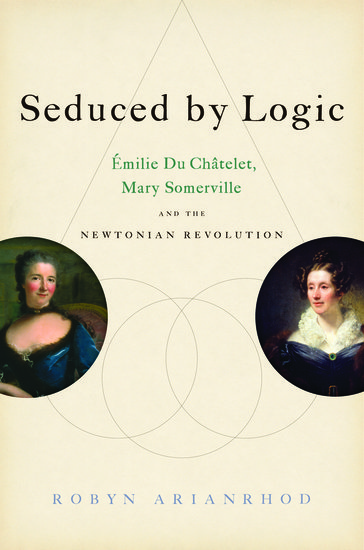
Celebrating Newton, 325 years after Principia

By Robyn Arianrhod
This year, 2012, marks the 325th anniversary of the first publication of the legendary Principia (Mathematical Principles of Natural Philosophy), the 500-page book in which Sir Isaac Newton presented the world with his theory of gravity. It was the first comprehensive scientific theory in history, and it’s withstood the test of time over the past three centuries.

Read More
Book thumbnail image

Selling the Beatles, 1962

By Gordon R. Thompson
As a regional businessman and a fledgling band manager, Brian Epstein presumed that the Beatles’ record company (EMI’s Parlophone) and Lennon and McCartney’s publisher (Ardmore and Beechwood) would support the record. This presumption would prove false, however, and Epstein would need to draw on all of the resources he could spare if he were to make the disc a success.

Read More
Book thumbnail image

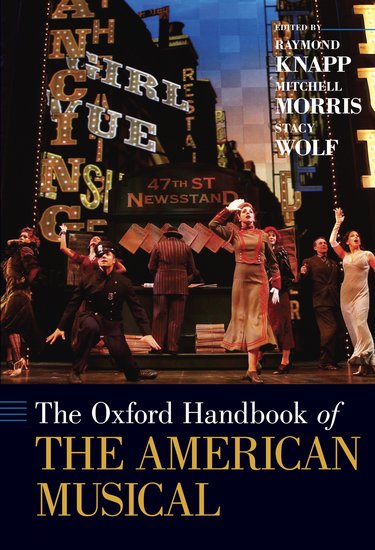
The women of Les Miz

On Christmas Day, the eagerly-awaited movie musical Les Misérables — “A Musical Phenomenon” the advertisement promises — will open across the United States. If it makes half the splash that its Broadway source did in 1987, we’re in for a long ride. The musical ran for 6680 performances, and won Tony awards for Best Musical, Best Book, and Best Score. It closed and then re-opened for another 463-performance run in 2006. It continues to tour the US.

Read More
Book thumbnail image

Football, festivity, and music

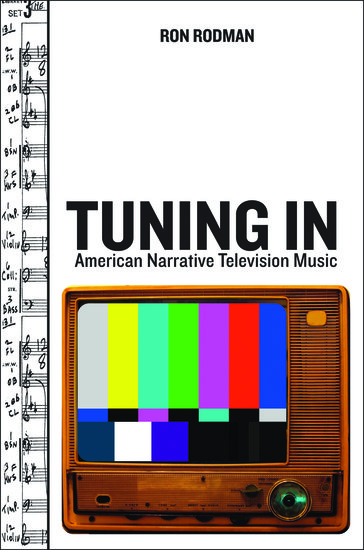
Sports fans eagerly anticipate television broadcasts of their favorite sports, whether it is baseball, basketball, soccer, hockey, boxing, golf, auto racing, or any of the other events aired on the tube. In the USA, the biggest television sports event is undoubtedly (American) professional football: the National Football League. In 2011, NBC’s “Sunday Night Football” was the highest-rated program on American TV.

Read More
Book thumbnail image

Words like lumps of coal

It’s the night before Christmas and all through the house not a creature was stirring, except the writer throwing her manuscript across the room. What words will Santa give her? Gifts of ‘stillicide’ or ‘ectoplasm’ for her National Book Award — or lumps of coal for failing NaNoWriMo. We’d like to share a few reflections on terrible words from writers such as David Foster Wallace, Zadie Smith, and Michael Dirda in the Oxford American Writer’s Thesaurus below.

Read More
Book thumbnail image

German Christmas traditions

By Neil Armstrong
In recent years German Christmas markets have been promoted to the English as the epitome of a traditional and authentic Christmas. As germany-christmas-market.org.uk suggests, “if you’re tired of commercialism taking over this holiday period and would like to get right away for a real traditional and romantic Christmas market you might want to consider heading to Germany.”

Read More