Oxford University Press's
Academic Insights for the Thinking World

Book thumbnail image

Occupational epidemiology: a truly global discipline

By Katherine M. Venables
Occupational epidemiology is one of those fascinating areas which spans important areas of human life: health, disease, work, law, public policy, the economy. Work is fundamental to any society and the importance society attaches to the health of its workers varies over time and between countries.

Read More
Book thumbnail image

The vote for women bishops

By Linda Woodhead
There are two kinds of churches. The ‘church type’, as the great sociologist Ernst Troeltsch called it, has fuzzy boundaries and embraces the whole of society. The ‘sect type’ has hard boundaries and tries to keep its distance. Until recently, the Church of England has been the former – a church ‘by law established’ for the whole nation. Since the 1980s, however, the Church has veered towards sectarianism. It’s within this context that we have to understand the significance of the recent vote for women bishops.

Read More
Book thumbnail image

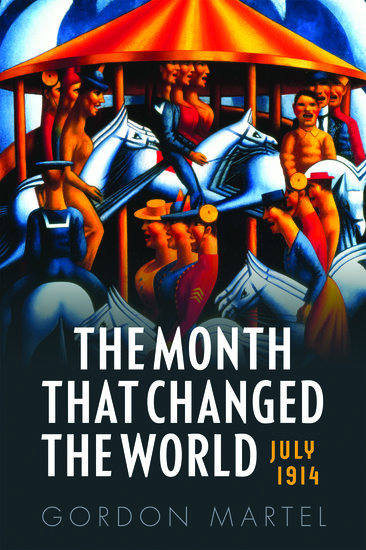
The month that changed the world: Friday, 24 July 1914

By Gordon Martel
By mid-day Friday heads of state, heads of government, foreign ministers and ambassadors learned the terms of the Austrian ultimatum. A preamble to the demands asserted that a ‘subversive movement’ to ‘disjoin’ parts of Austria-Hungary had grown ‘under the eyes’ of the Serbian government.

Read More
Book thumbnail image

Polygamous wives who helped settle the west

By Paula Kelly Harline
Happy Pioneer Day! The morning of 24 July in downtown Salt Lake City, thousands of Westerners watch the “Days of ’47” parade celebrating the 1847 arrival of Mormon pioneers; in the afternoon, they attend a rodeo or take picnics to the canyons; at night they launch as many fireworks as they did for Fourth of July.

Read More
Book thumbnail image

Echoes of Billie Holiday in Fancy Free

When Leonard Bernstein first arrived in New York, he was unknown, much like the artists he worked with at the time, who would also gain international recognition. Bernstein Meets Broadway: Collaborative Art in a Time of War looks at the early days of Bernstein’s career during World War II, and is centered around the debut in 1944 of the Broadway musical On the Town and the ballet Fancy Free.

Read More

If you’re so smart, why aren’t you happy?

‘I know these will kill me, I’m just not convinced that this particular one will kill me.’
–Jonathan Miller to Dick Cavett on his lit cigarette, backstage at the 92nd Street Y in New York

Miller’s problem is actually a practical form of the central problem of ancient Greek philosophy.

Read More
Book thumbnail image

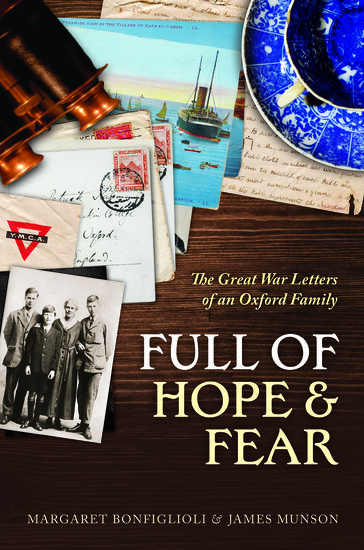
The Great War letters of an Oxford family

Living memory of the First World War is rapidly slipping away. During this centenary year, letters uniquely offer a glimpse into what life was really like at the time. In this collection of extracts from letters written by the Slater family, they deal with the pressures of separation, rationing, deaths of friends, and a growing fear that their eldest son would grow to fight on the Western Front.

Read More

Which witch?

By Anatoly Liberman
To some people which and witch are homophones. Others, who differentiate between w and wh, distinguish them. This rather insignificant phenomenon is tackled in all books on English pronunciation and occasionally rises to the surface of “political discourse.”

Read More
Book thumbnail image

What is the role of governments in climate change adaptation?

By Kai A. Konrad and Marcel Thum
Adaptation to climate change is currently high on the agenda of EU bureaucrats exploring the regulatory scope of the topic. Climate change may potentially bring about changes in the frequency of extreme weather events such as heat waves, flooding or thunder storms, which in turn may require adaptation to changes in our living conditions. Adaptation to these conditions cannot stop climate change, but it can reduce the cost of climate change.

Read More
Book thumbnail image

Why are women still paid less than men?

Forrest Briscoe and Andrew von Nordenflycht
The recent firing of Jill Abramson, the first female executive editor of the New York Times, after less than three years on the job focused the news cycle on gender inequity, with discussions of glass cliffs (women get shorter leashes even when they get the top jobs) and reports showing the persistence of glass ceilings and pay disparities (e.g. Abramson was paid less than her male predecessor).

Read More
Book thumbnail image

The downing of Malaysian Airlines Flight MH17

By Sascha-Dominik Bachmann
The downing of the Malaysian Airlines Flight MH17 on 17 July 2014 sent shockwaves around the world. The airliner was on its way from Amsterdam to Kuala Lumpur when it was shot down over Eastern Ukraine by an surface to air missile, killing all people on board, 283 passengers including 80 children, and 15 crew members. The victims were nationals of at least 10 different states, with the Netherlands losing 192 of its citizens.

Read More
Book thumbnail image

The exaltation of Christ

By Christopher Bryan
Every Good Friday the Christian church asks the world to contemplate a Christ so helpless, so in thrall to the powers of this age, that one might easily forget the Christian belief that through it all, God was with him and in him. And therein lies the danger of serious misunderstanding

Read More
Book thumbnail image

Mindful Sex

By Jeff Wilson
Mindfulness seems to be everywhere in North American society today. One of the more interesting developments of this phenomenon is the emergence of mindful sex—the ability to let go of mental strain and intrusive thoughts so once can fully tap into sexual intercourse.

Read More
Book thumbnail image

Debussy and the Great War

By Eric Frederick Jensen
When war was declared in the summer of 1914, Claude Debussy was fifty-one. Widely regarded as the greatest living French composer, he lived in Paris in a fashionable, elegant neighborhood near the Bois de Boulogne.

Read More